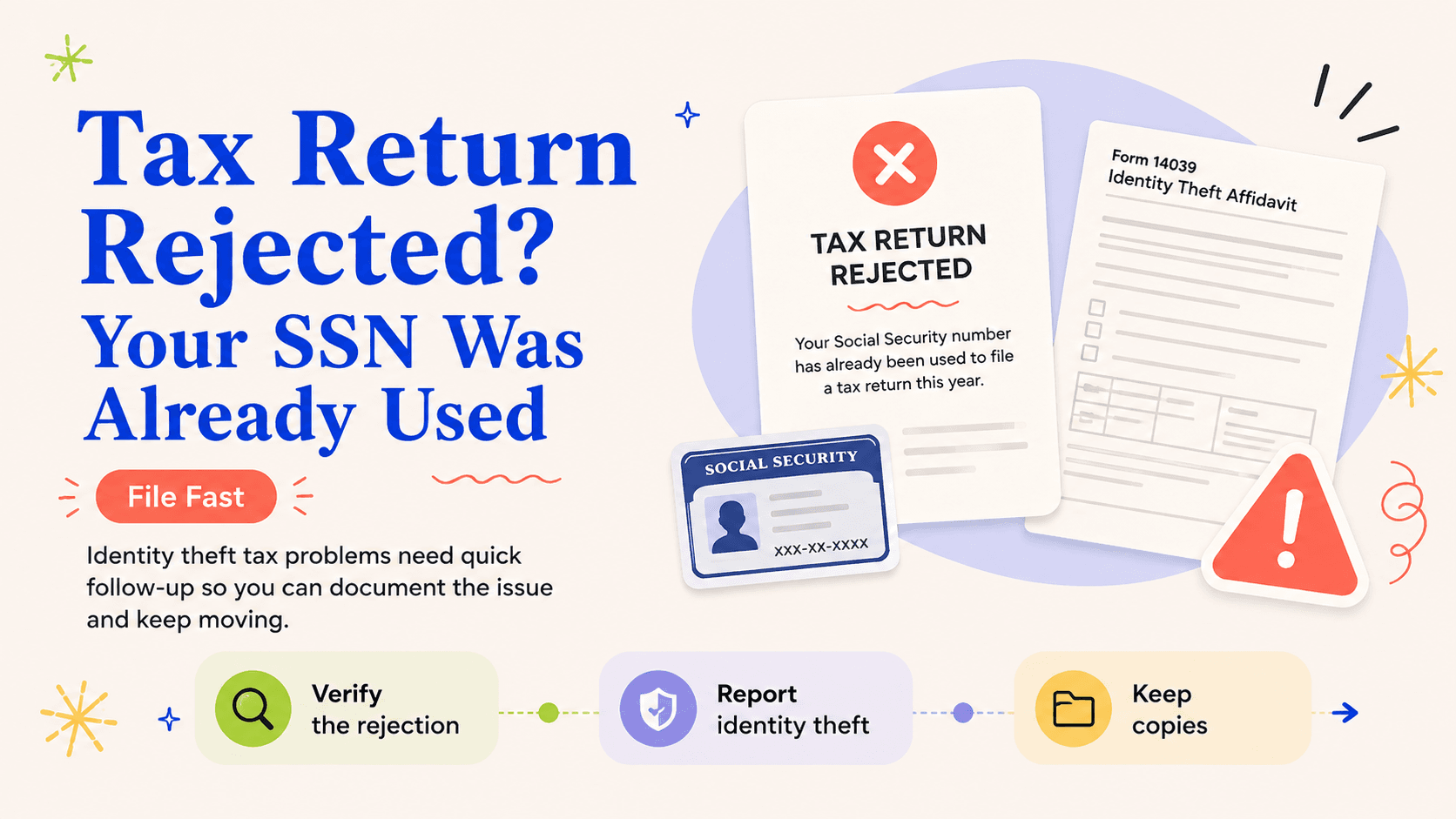
Your e-file is rejected because a return has already been filed using your Social Security number.
Read the exact IRS rejection or notice
A duplicate-filing problem can involve the primary taxpayer, spouse, or dependent. Save the rejection code and any IRS letter. The IRS says to follow the instructions in the letter, notice, or representative contact because different identity-verification paths apply to different cases.
Do not respond to an unexpected caller who claims you must pay to fix the problem. Navigate to IRS.gov independently and verify the notice number or use the contact information printed on a genuine IRS letter.
Do not file Form 14039 automatically
The IRS specifically warns that some identity-verification notices should be handled through their stated verification process rather than by filing Form 14039 on your own. Check the current IRS guidance for your notice or rejection before submitting the affidavit.
This matters because sending the wrong form can add complexity instead of speeding recovery.
Report the broader identity theft if your information was misused
Tax identity theft may be part of a wider incident. Review bank, credit, and Social Security records and use IdentityTheft.gov to report identity theft and obtain a recovery plan for non-tax systems as appropriate.
Keep the tax documents and FTC report in the same incident folder but follow the IRS’s own process for the federal tax account.
Get an IRS Identity Protection PIN
An IP PIN is a six-digit number known to you and the IRS that helps prevent someone else from filing a federal tax return using your SSN or ITIN. The IRS says eligible taxpayers can request one after verifying identity, and the number changes each year.
Use the current IP PIN on federal returns filed during that calendar year. Store it securely and do not provide it in response to a call, email, text, or social-media message.
Keep every IRS letter and response date
Tax identity-theft cases can involve verification, return processing, and later account notices. Record when you responded, what method you used, and what documents were included. Keep copies of mailed or uploaded submissions.
If a deadline is approaching, rely on the instructions for your exact IRS situation rather than a generic internet timeline.
Duplicate dependent cases now have their own e-file considerations
Current IRS guidance says that, beginning with 2024 returns, some taxpayers whose dependent was already claimed may still be able to e-file when the primary taxpayer uses a valid IP PIN, subject to the IRS rules and the facts of the return. Because these procedures can change, use the current IRS page for your filing year rather than an older blog post or forum answer.
Do not obtain or use an IP PIN for someone else unless you are authorized to act for that taxpayer or dependent under the IRS process.
Preserve the rejected return and the successful filing record
Keep the software rejection message, a copy of the return you attempted to file, any mailed return, Form 14039 if the IRS instructs you to use it, identity-verification letters, and later acceptance confirmation. These records show the sequence if processing becomes delayed or you receive another identity-theft notice.
If you use a tax professional, ask for copies of the rejection code and all identity-theft forms submitted on your behalf. Your records should not exist only inside the preparer’s software.
Protect the next filing season before it arrives
Once the immediate return is resolved, make sure you know how you will retrieve the next year’s IP PIN, because the IRS issues a new number each year. Confirm your IRS Online Account access and recovery information well before the filing deadline. Do not wait until the day you plan to transmit the return to discover that you cannot retrieve the current PIN.
Continue monitoring for IRS letters you did not expect. Verify each notice through IRS.gov or a known IRS contact channel before responding.
A filing-day recovery sequence
Save the e-file rejection exactly as your software displays it, including the code and whether the issue involves the primary taxpayer, spouse, or dependent. Then go to the current IRS identity-theft guidance and match the rejection or letter to the correct path. If the IRS has sent an identity-verification notice, follow that notice; do not mail Form 14039 automatically unless the IRS instructions for your case call for it.
If you need an IP PIN, use the IRS Online Account or the current alternative enrollment method described by the IRS. Keep the six-digit PIN private and enter it only where your tax software or trusted preparer expects it. If a paper filing is required, make copies of the return and every identity-theft attachment before mailing, and use the address specified for that filing situation.
After the return is accepted or the IRS confirms the identity-theft case, keep the entire file: rejection, notices, verification responses, affidavits, acceptance confirmation, and any later account adjustment. Before the next filing season, verify that you can retrieve the new annual IP PIN and that your IRS account recovery information is current. Future preparation is part of the recovery, because a stolen SSN can be reused in later years.
- Do not ignore the exact rejection code.
- Do not send Form 14039 unless current IRS guidance calls for it.
- Store every IRS notice and response.
- Retrieve a fresh IP PIN each year when enrolled.
- Verify suspicious IRS contacts independently.
Prepare for the next tax year
After the current return is resolved, note how you will retrieve the next IP PIN, whether your mailing address and IRS Online Account recovery information are current, and where the prior-year identity-theft documents are stored. A new IP PIN is generated each year, so last year’s number should not be reused. Review any new IRS notice promptly and verify it through IRS.gov. Tax identity theft becomes easier to manage when filing-season preparation is treated as part of the recovery rather than a separate future problem.