You open a breach notice at 7 p.m. and see that your name, date of birth, Social Security number, and email address may have been involved.
Start with the data list, not the company’s apology
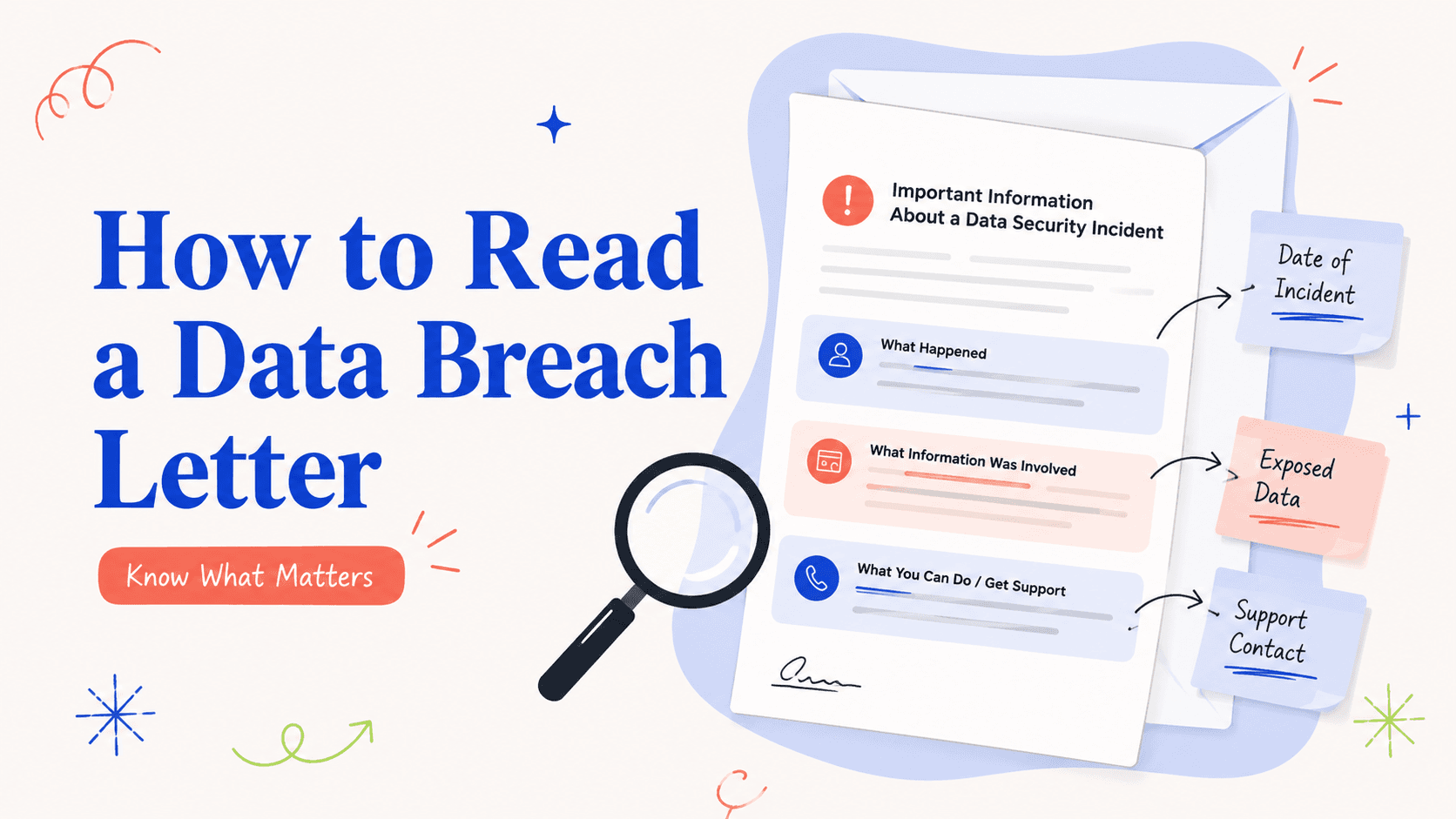
A breach notice can be several pages long, but the part that changes your response is usually the section describing what information was involved. Treat each data type differently. An exposed email address creates a different immediate risk from an exposed Social Security number, bank account number, or health-insurance identifier. Before changing anything, copy the exact list of affected data into a note and save the notice itself. That gives you a stable record if the company later updates the incident.
Do not assume that “may have been involved” means the same thing as confirmed misuse. A notice often tells you what the company believes was accessed, acquired, or present in the affected system. Your response should be proportionate: move fastest on credentials that can unlock other accounts, financial account details, and durable identifiers that cannot simply be changed.
Secure the accounts that can reset everything else
If the notice says passwords, login credentials, or an email account were involved, secure your primary email first because password-reset links for many other services land there. Change the email password to one that is unique to that account, review recovery email addresses and phone numbers, sign out unfamiliar sessions, and turn on multi-factor authentication if the provider offers it.
Next, move to financial accounts and any breached account that reused the same or a similar password. The goal is not to change fifty passwords in random order. The goal is to close the pathways that let someone take over additional accounts. If your password manager itself is affected, treat its master password and recovery settings as a top-tier account.
Decide whether a credit freeze belongs on today’s list
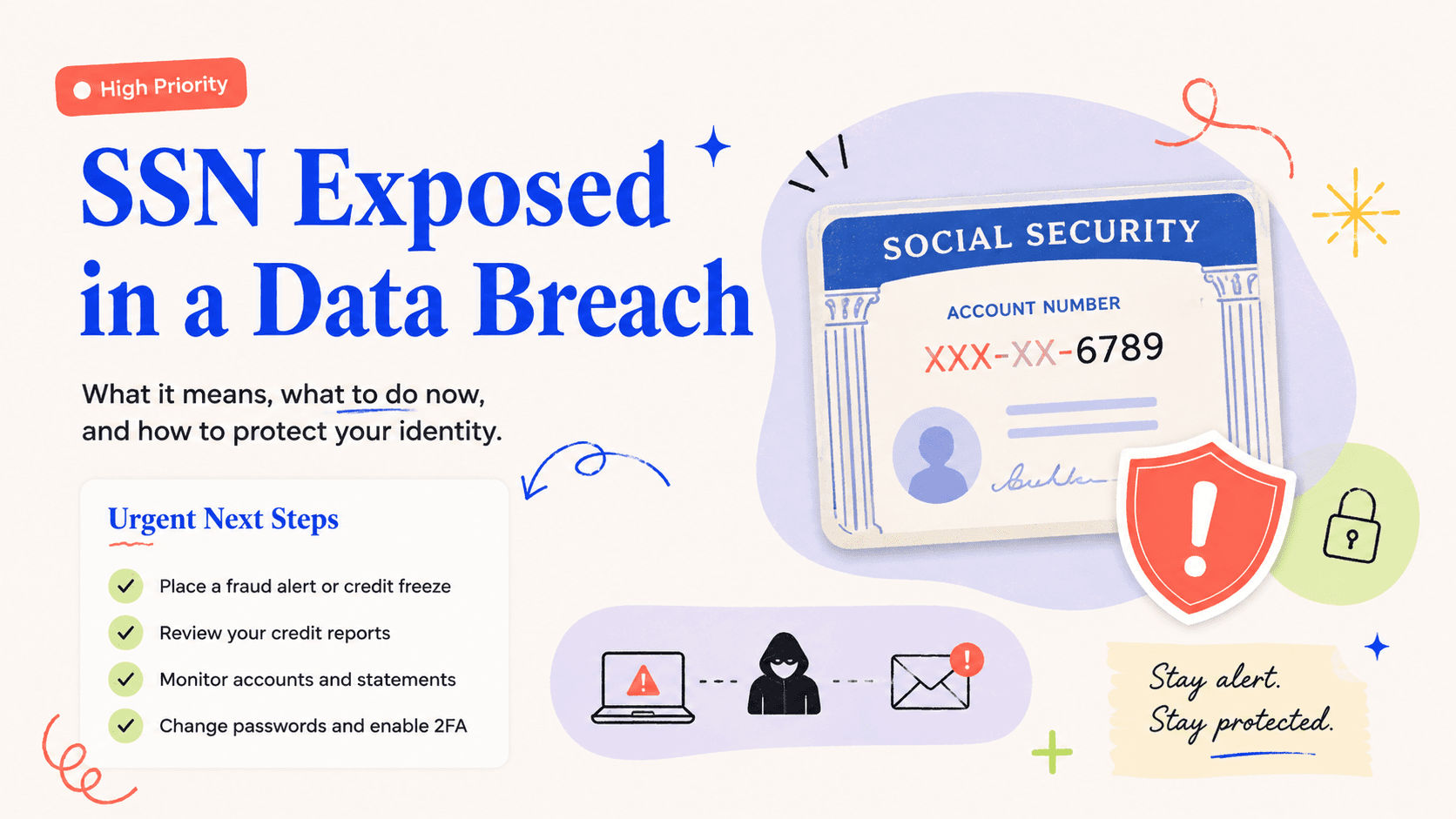
If a Social Security number or another identity element useful for opening new credit was exposed, a credit freeze is usually a strong next step. The FTC says freezes are free to place and lift, do not affect your credit score, and remain in place until you lift them. A complete freeze requires action with Equifax, Experian, and TransUnion separately.
A freeze is designed mainly to make new-account fraud harder. It does not undo unauthorized charges on an existing card, stop a thief from using an already-compromised bank login, or fix a fraudulent tax return. That is why it belongs inside a broader response rather than being treated as a universal one-click solution.
Pull your credit reports and establish a baseline
Use AnnualCreditReport.com, the centralized source for the reports you are entitled to under federal law, to review your credit files. The site currently says consumers can check reports from each of the three nationwide bureaus for free every week. Save or print the reports so you have a dated baseline.
Look for accounts you do not recognize, inquiries that do not match applications you made, incorrect addresses, and changes that deserve follow-up. An unfamiliar item is not automatically identity theft—creditor names can differ from retail brands—but it is a reason to investigate promptly instead of waiting for a future monitoring alert.
Use the FTC recovery system when misuse has already happened
If you find an account opened in your name, a fraudulent purchase, a debt you do not owe, or another actual use of your identity, move beyond breach preparation and into identity-theft recovery. IdentityTheft.gov asks what happened and can generate an FTC Identity Theft Report and a personalized recovery plan.
Keep a simple incident log from the start: date, organization, phone number or URL used, person or department contacted, case number, and what was promised. Recovery often involves several companies, and the log prevents you from re-creating the story every time you need to escalate a dispute.
What can wait until tomorrow
Not every task is equally urgent. Reading a company’s optional monitoring terms, organizing receipts, or replacing every weak password can wait until the high-leverage accounts are secured. If the notice offers legitimate free monitoring, note the enrollment deadline and verify the offer from a known company website rather than a link in an unexpected message.
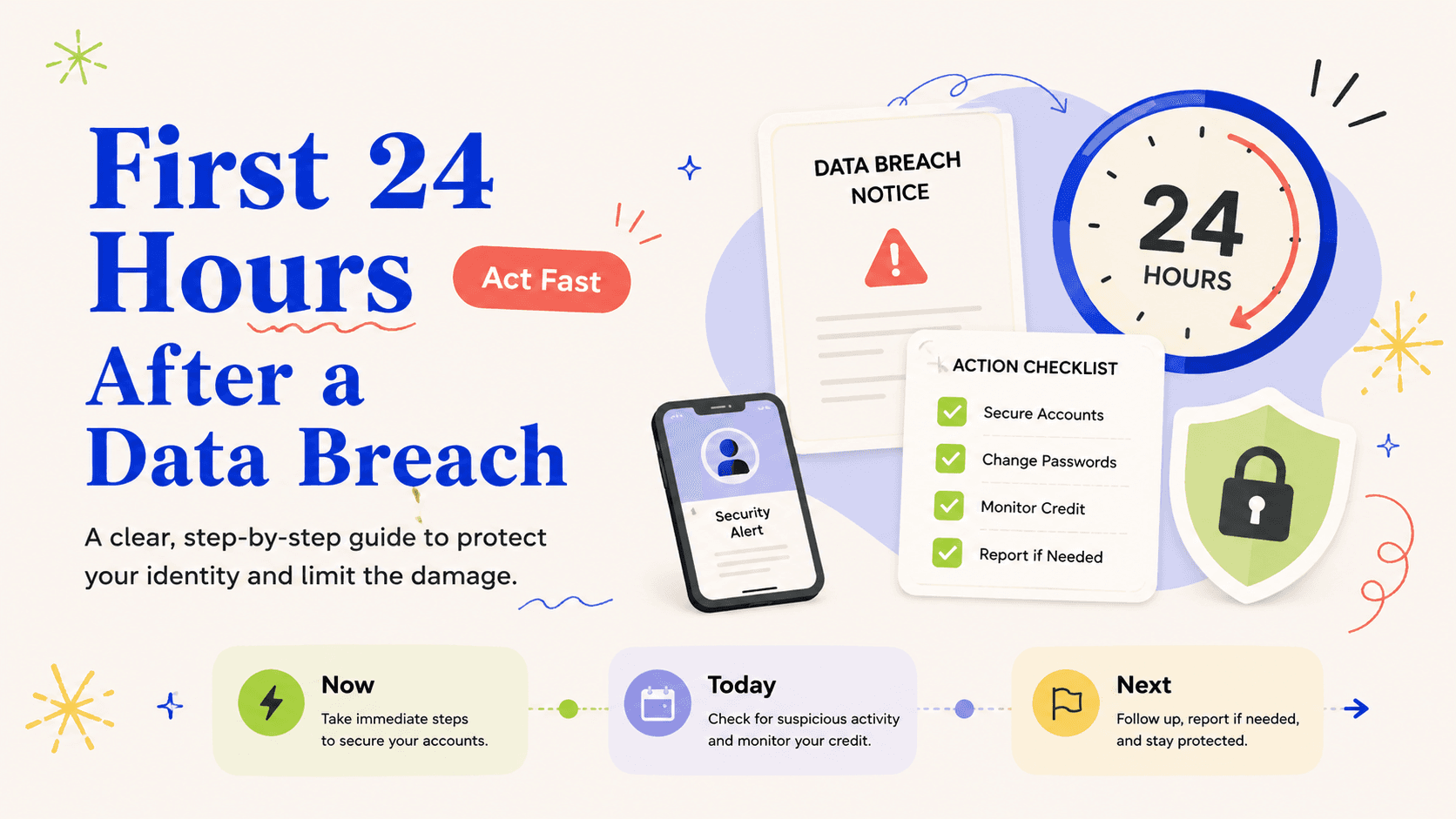
The first day should end with a clearer map: what data was exposed, which critical accounts were secured, whether freezes were placed, what your credit reports showed, and whether you need an FTC recovery plan. That sequence is more useful than trying to complete every possible identity-theft task before midnight.
Match the response to the data that was exposed
Create a small decision table before you start clicking through accounts. If the notice names a Social Security number, think about new-account fraud, tax misuse, and Social Security records. If it names a password, think about account takeover and credential reuse. If it names a bank account or payment card, think about the existing financial account rather than only the credit file. If it names medical or insurance information, add provider and insurer records to the list. This mapping prevents a common mistake: using one dramatic response, such as freezing credit, and assuming it solves every type of breach.
Also separate data that can be rotated from data that is durable. A password or card number can be replaced. A date of birth or Social Security number is harder to change, so the response relies more heavily on barriers, monitoring, and record review. That distinction helps determine which tasks are one-time cleanup and which need to remain part of your routine for months.
Use a clean device and known channels for the most sensitive changes
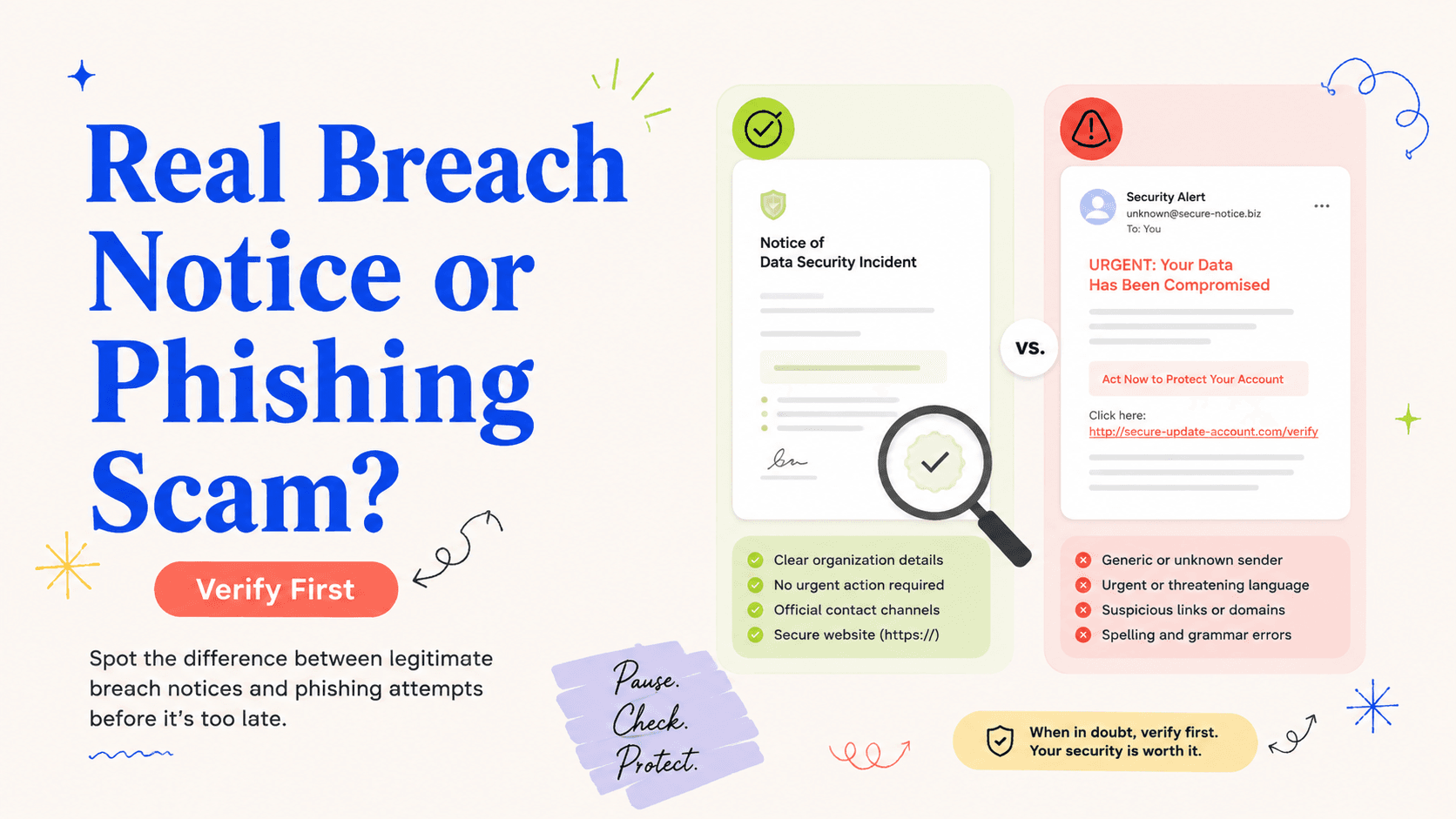
A breach notice can arrive during a period when scammers are actively impersonating the breached organization. For the highest-risk actions—changing an email password, signing into online banking, placing a credit freeze, or entering an SSN—navigate independently. Type the known domain, use a saved bookmark, or use the official app you already had. The goal is to prevent the response process itself from becoming another point of exposure.
If you suspect your computer or phone may be compromised for reasons beyond the company breach, prioritize critical account changes from another device you trust. Do not install a remote-access tool because someone who called about the breach told you to. A real breach may be the subject of follow-up scams, and the fact that the caller knows your name or the company involved does not prove the caller is legitimate.
Plan the next seven days before you stop for the night
End the first day by scheduling the work that does not need to happen immediately. That can include reviewing all three credit reports in more detail, checking Social Security or tax records if an SSN was involved, enrolling in a verified monitoring offer, replacing a bank or card number if the institution recommends it, and following up on any pending fraud case. Write the date beside each task so the incident does not disappear into an inbox after the initial urgency passes.
Set a separate reminder for the expiration of any free monitoring service and another for periodic report review. Long-lived identity information can be abused later, not only in the week of the breach. The first 24 hours should therefore produce both immediate protection and a manageable follow-up calendar rather than a false sense that the problem is finished once the first set of passwords is changed.