A two-page letter arrives with a long description of an investigation but only one sentence about the personal information that may have been exposed.
Find the four facts that control your response
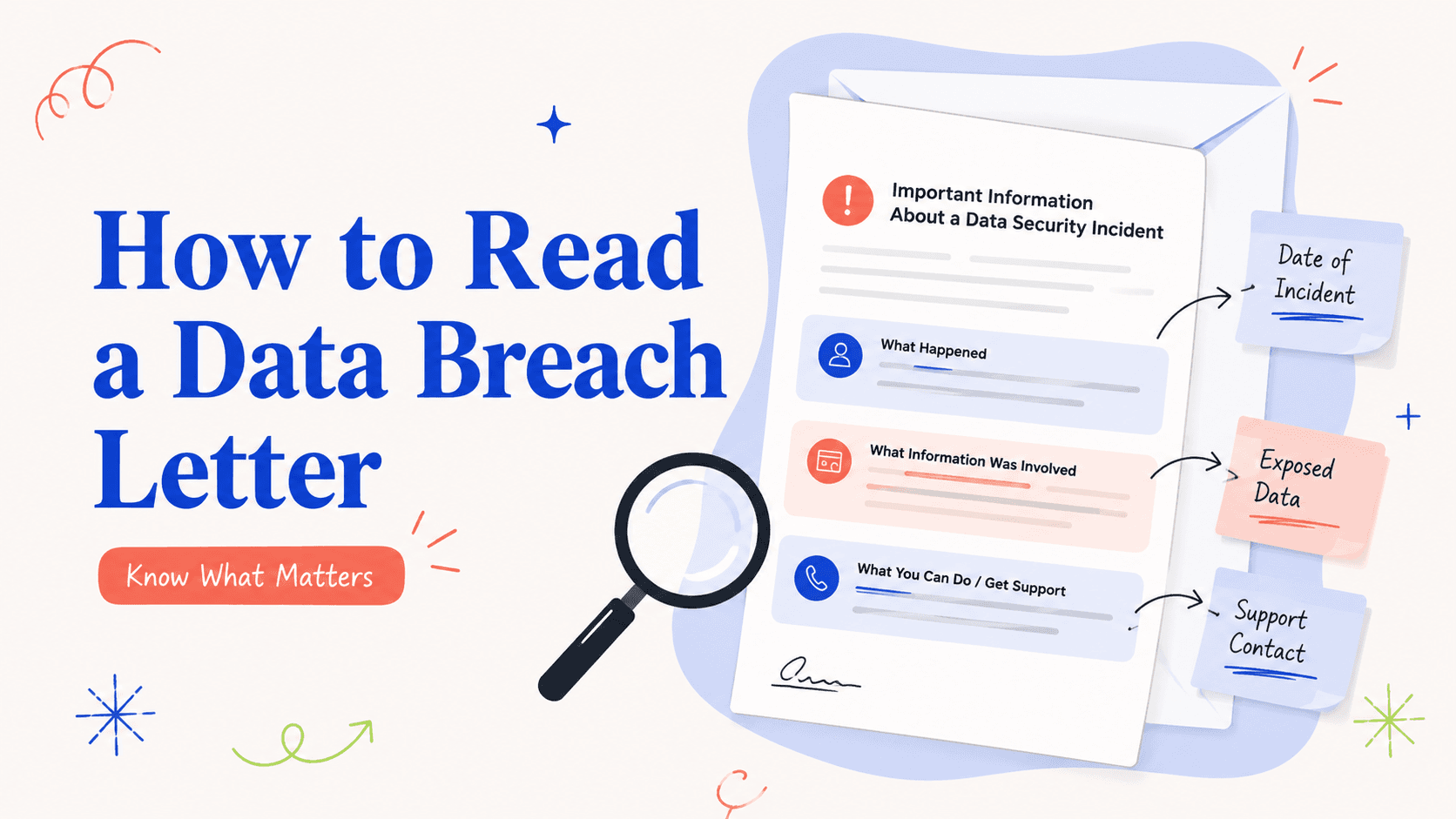
Start by highlighting four items: what happened, when the incident occurred or was discovered, what information about you was involved, and what the organization says it has done since. These facts let you separate operational detail from the information you need for your own response. If the notice uses vague language such as “certain personal information,” look for a later paragraph or appendix that names the categories.
Pay special attention to whether the notice distinguishes between information stored in the affected system and information the company believes was actually accessed or acquired. The wording can be cautious because an investigation may not be able to prove exactly what an intruder viewed. Your job is not to solve the forensic uncertainty; it is to understand the worst plausible use of the data categories listed for you.
Translate each data type into a concrete risk
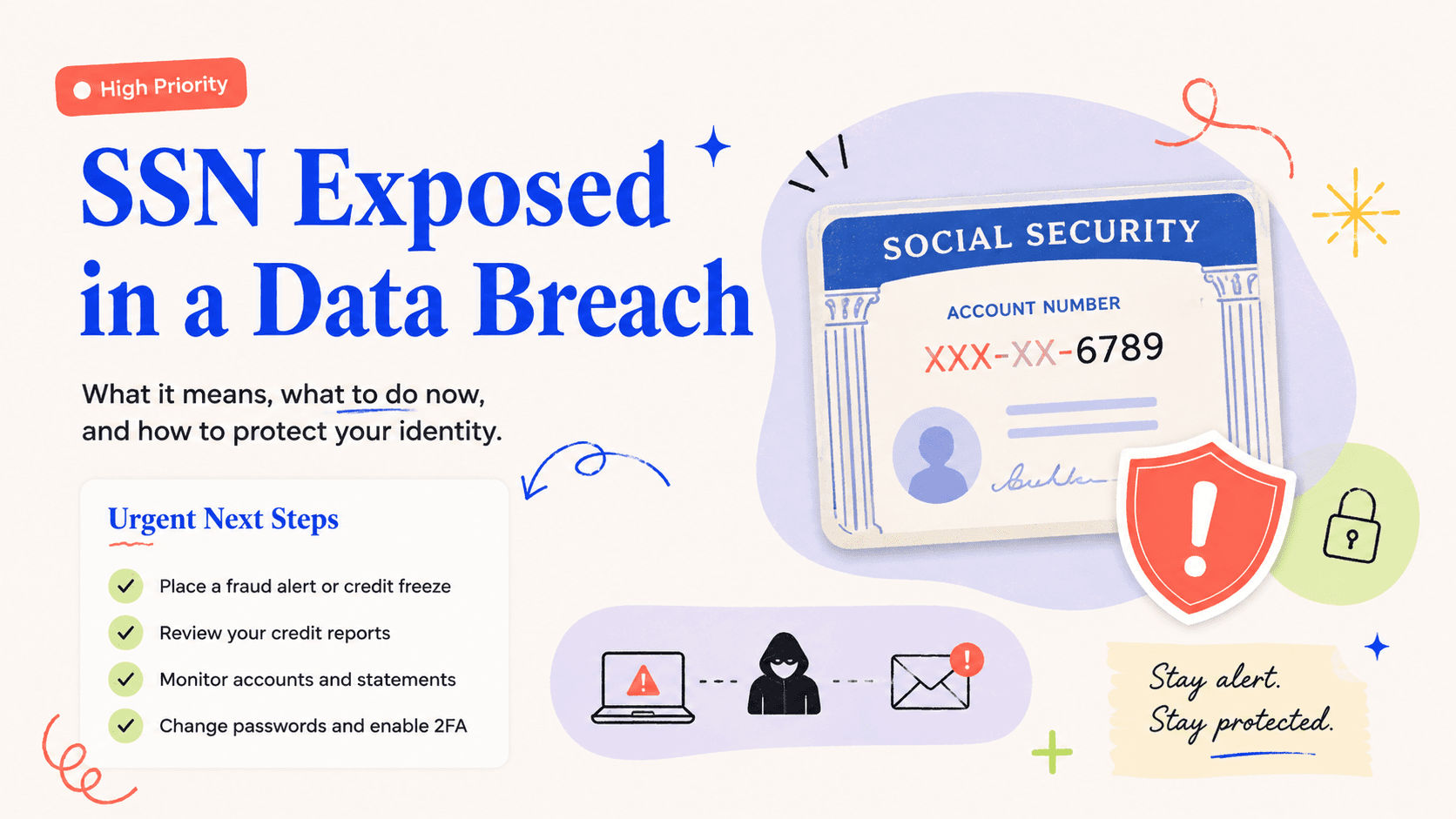
Names and email addresses can support phishing and impersonation. Passwords can enable account takeover, especially when reused. Payment-card numbers can lead to unauthorized charges. Bank account details can require direct contact with your bank. Social Security numbers are durable identifiers that can be used in attempts to open accounts or commit tax and employment-related fraud. Medical identifiers can create a separate problem if another person’s treatment or claims become mixed with your records.
Do not let a long list scare you into treating every item the same. Build a short response table: data type, possible misuse, first action, and where to monitor. That turns a stressful letter into a finite task list.
Check the enrollment deadline and the real provider
Many notices offer credit monitoring or identity-recovery services for a fixed period. If you plan to use an offer, record the deadline, activation code, and provider name. Then navigate to the provider through a known website or a carefully verified address rather than trusting a link in a forwarded message.
An offer of monitoring does not replace a credit freeze. Monitoring is designed to tell you about changes or suspicious activity; a freeze restricts access to your credit file for new-credit decisions. The two tools serve different purposes, and the most appropriate combination depends on what was exposed and what you need to do with your credit.
Save the notice like you would save a tax document
Keep the full notice, envelope or original email, and any attachment in a secure folder. Save a copy of the company’s incident webpage if it contains details specific to the event. Record the date you received the notice because later disputes may require you to explain when you first learned of the breach.
Also keep confirmations for steps you take after reading the notice. A freeze confirmation, fraud-department case number, or FTC report is much easier to use when it is stored with the original incident record rather than spread across inboxes and browser downloads.
Know when the letter is no longer the main problem
The breach letter is the starting point, not the center of the recovery process. If your credit report already shows an account you did not open, your bank shows an unauthorized transfer, or the IRS tells you a return has already been filed under your information, respond to that active fraud directly. IdentityTheft.gov can help organize recovery steps based on the type of misuse.
Keep the notice as evidence, but shift your attention to the institutions where the fraudulent activity is appearing. Those accounts and records now determine the next steps.
Separate the incident timeline from the notice timeline
Most breach letters contain several dates that describe different events: when suspicious activity happened, when the organization discovered it, when it finished reviewing the affected files, and when it sent your notice. Those dates can be far apart. Copy them into a simple timeline rather than assuming the date on the letter is the date of the intrusion. This is useful when you compare bank or credit activity with the period in which the information may have been exposed.
If the notice says the investigation is ongoing, revisit the organization’s official incident page later. Companies sometimes expand the list of affected people or data categories after additional analysis. Save the version you received and note any later change so your own record reflects what you knew at each stage.
Read the ‘what we are doing’ section critically
A company may describe password resets, law-enforcement contact, forensic investigators, or security improvements. Those steps can be relevant to the incident but do not necessarily protect your individual accounts. Translate every company action into the question, “Does this change anything I need to do?” For example, a company reset of its own customer passwords does not change a reused password on your email account, and a monitoring offer does not freeze your credit file.
Likewise, do not assume the absence of a specific recommendation means a tool is inappropriate. A notice may use generalized language designed for a broad audience. Your own response should follow the exact data categories listed for you and the official guidance attached to those data types.
Treat activation codes and support numbers as sensitive incident records
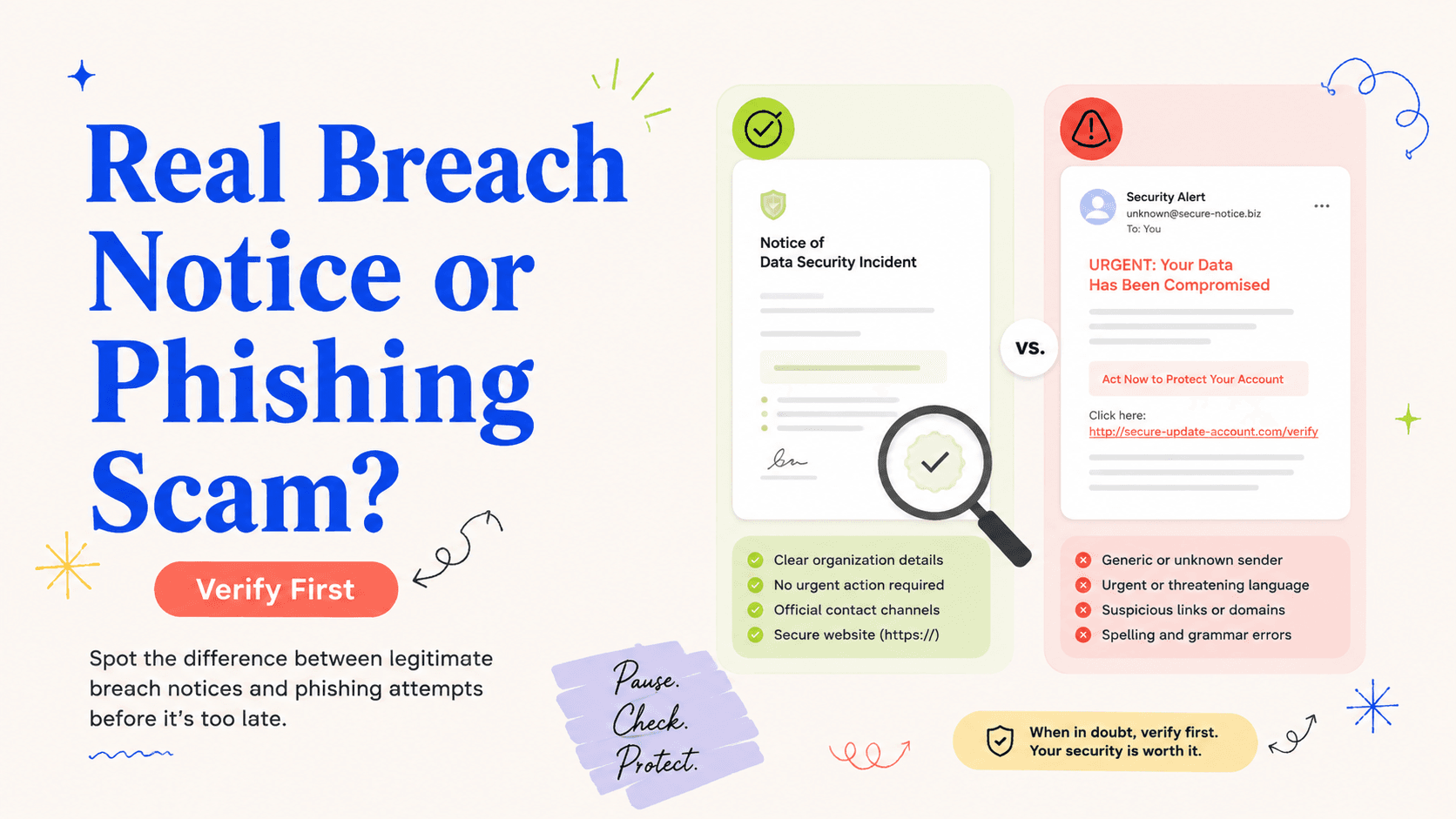
Some notices contain a unique monitoring code, claim number, or dedicated support line. Store those details with the notice, not in a public note or screenshot. Before using them, verify the provider through the breached company’s official website. Attackers can copy the visual style of a real notice while replacing the destination with a fake support center.
If you call a dedicated number, record the date, the department, and what the representative confirms about the incident. If the information differs from the letter, ask where the company has published the updated details. A short record of discrepancies is more useful than relying on memory if you later need to explain what the company told you.