A school or health-provider breach exposed your child’s Social Security number and date of birth.
Start by asking whether a credit file exists
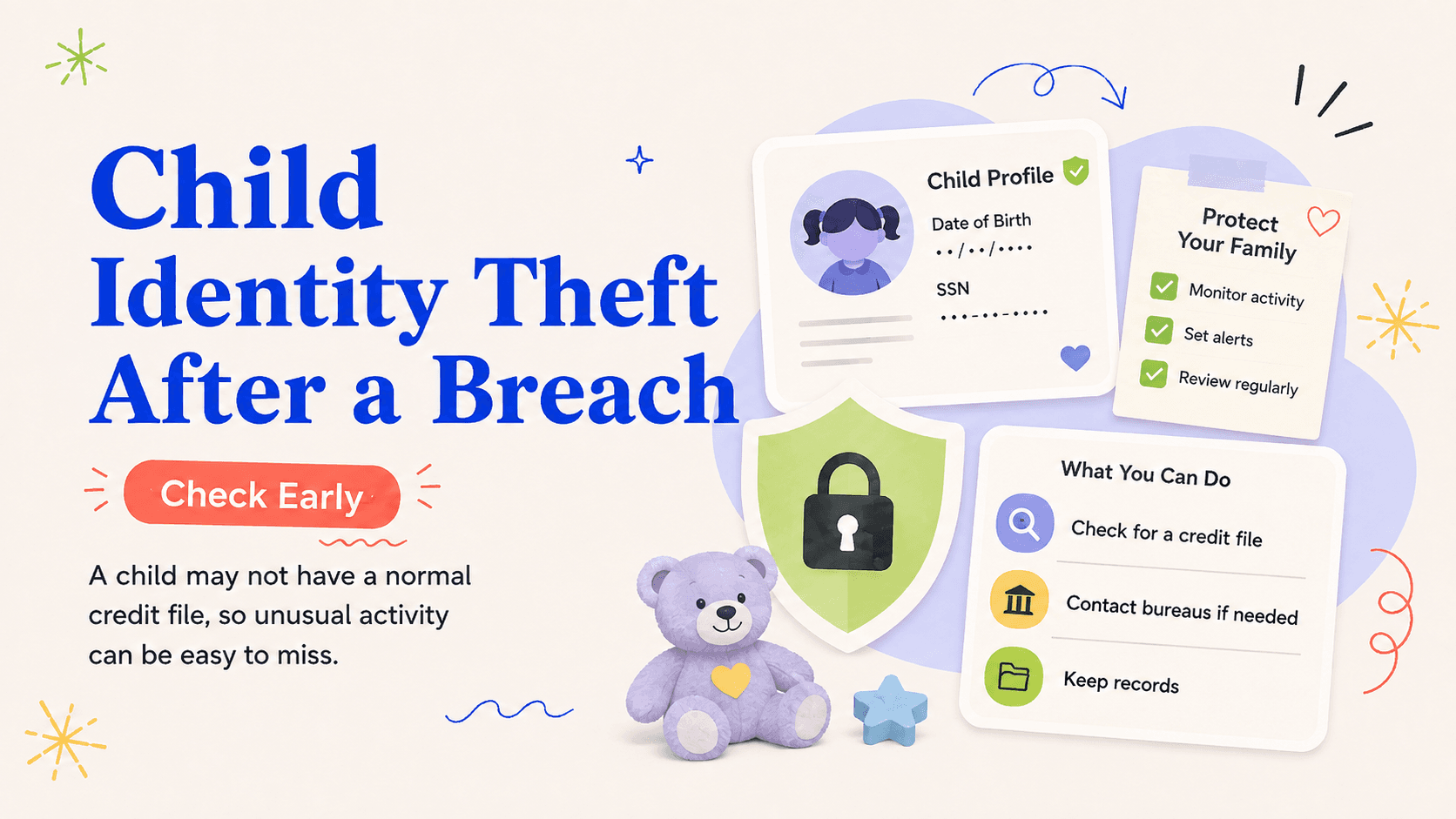
The FTC says that generally a child under 18 will not have a credit report. To check, contact the three credit bureaus and ask for a manual search for the child’s Social Security number. Be prepared to prove your identity, address, the child’s identity, and your relationship or guardianship.
A bureau may give different document instructions, so follow each bureau’s current process rather than sending one generic packet to all three.
Freeze a child’s credit before there is a reason to use it
For a child under 16, the FTC says a parent can request a free credit freeze. The freeze makes it harder for someone to open new accounts using the child’s information and stays until it is removed. Minors who are 16 or 17 may request and remove a security freeze themselves.
Complete the process with all three bureaus and store the confirmation documents for years, not weeks. The child may not need legitimate credit until much later.
Investigate unexpected bills, benefits, or tax notices
Warning signs can appear outside credit reports. The FTC lists overdue-bill contacts, denial of government benefits because the child’s SSN is already in use, IRS letters about income taxes, and student-loan problems as possible clues.
Do not wait for the child to apply for a first credit card if one of these signals appears earlier.
Close fraudulent accounts and remove them from the child’s file
If you find an account opened using the child’s information, contact the company’s fraud department, ask it to close the account, and request written confirmation that the child is not responsible. Contact the credit bureaus to remove fraudulent accounts from the child’s credit report.
Keep copies of the child’s identity documents protected. Send them only through verified channels that require them.
Report child identity theft to the FTC
IdentityTheft.gov accepts reports of child identity theft. Include the details of the fraudulent accounts or other misuse and keep the resulting plan with the child’s freeze and dispute records.
Because a child’s information can remain useful to an identity thief for years, preserve the documentation even after the immediate fraudulent account is removed.
Expect document-heavy bureau procedures for minors
A child may not have an existing bureau account that can be verified through ordinary online questions, so a parent or guardian may need to provide copies of identity and relationship documents. Follow each bureau’s current minor-freeze instructions exactly. Sending the wrong document or an unreadable copy can delay a freeze that you expect to remain in place for years.
Store the bureau correspondence separately from everyday school or medical paperwork. It can contain sensitive copies that should not be left in an unprotected email folder.
Create a transition note for the child’s future self
A freeze placed when a child is young may still exist when the child later applies for a student loan, apartment, phone plan, or first credit card. Keep a secure note explaining which bureaus were frozen, when, and where the confirmations are stored. Update it when your address changes or when the child reaches an age where the bureau process changes.
The note should not contain the child’s full SSN or passwords. It is a map to the records, not a new identity file.
Check non-credit signals when the child has no file
A manual search that finds no credit report is good news but does not rule out all misuse. Stay alert for IRS letters, benefit denials, medical claims, utility bills, or collection contacts tied to the child. Those signals can appear in systems outside the major credit bureaus.
If actual identity theft is found, keep the FTC report and all correction letters until well after the child begins managing credit independently.
A parent’s response sequence after a child SSN exposure
Start by saving the breach notice and collecting the identity documents the credit bureaus require for a minor freeze. Use each bureau’s current instructions, because the process can require proof of the parent or guardian’s identity, proof of address, the child’s identity, and evidence of the relationship. Request a manual search for an existing credit file and a freeze with all three bureaus.
If a bureau finds a credit file or account, compare the details and contact the creditor’s fraud department. Ask it to close the account and provide written confirmation that the child is not responsible. Report the child identity theft at IdentityTheft.gov and use the resulting documentation in bureau correction requests. Keep copies of every letter because the child may not discover another fraudulent use until years later.
Then broaden the check beyond credit. Watch for IRS letters, benefit problems, medical claims, utility bills, or collection notices tied to the child. Create a secure long-term record that tells the future adult where the freeze confirmations and fraud documents are stored. Do not put the full SSN in that index. The goal is to make the protection durable without creating another exposed identity file.
- Manual credit-file search at all three bureaus.
- Minor freeze at all three bureaus.
- Fraudulent accounts closed in writing.
- FTC child identity-theft report if misuse is found.
- Long-term storage of confirmations and corrections.
Plan for years, not weeks
A child’s freeze and fraud documentation may need to remain useful until the child is old enough to manage credit independently. Keep a secure index of the three bureau confirmations, the FTC report if one exists, creditor correction letters, and any tax or benefit records. Review the file when the family moves or contact information changes. Before the child applies for credit later, retrieve the records early so the freeze can be lifted deliberately rather than during an application deadline.