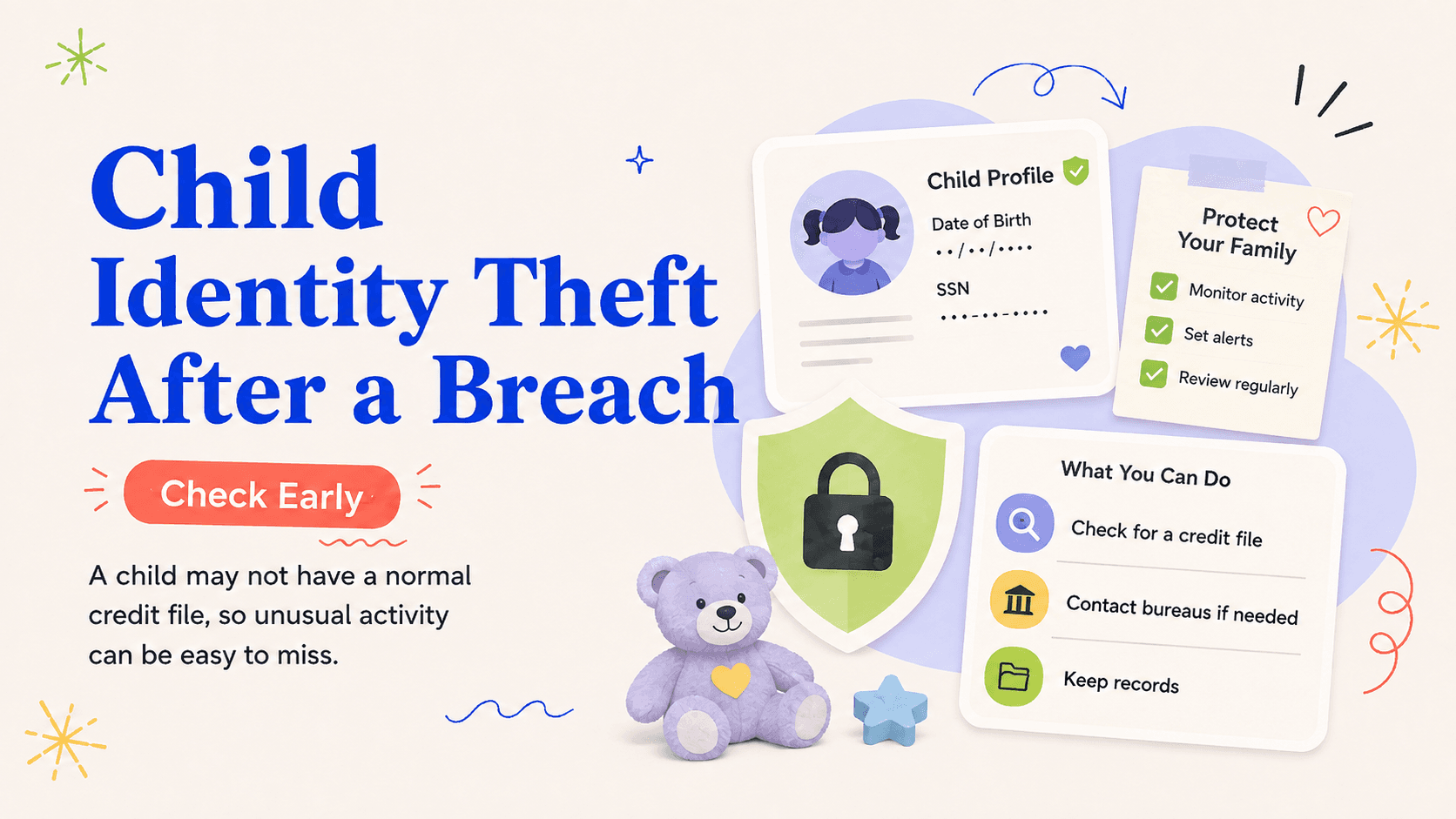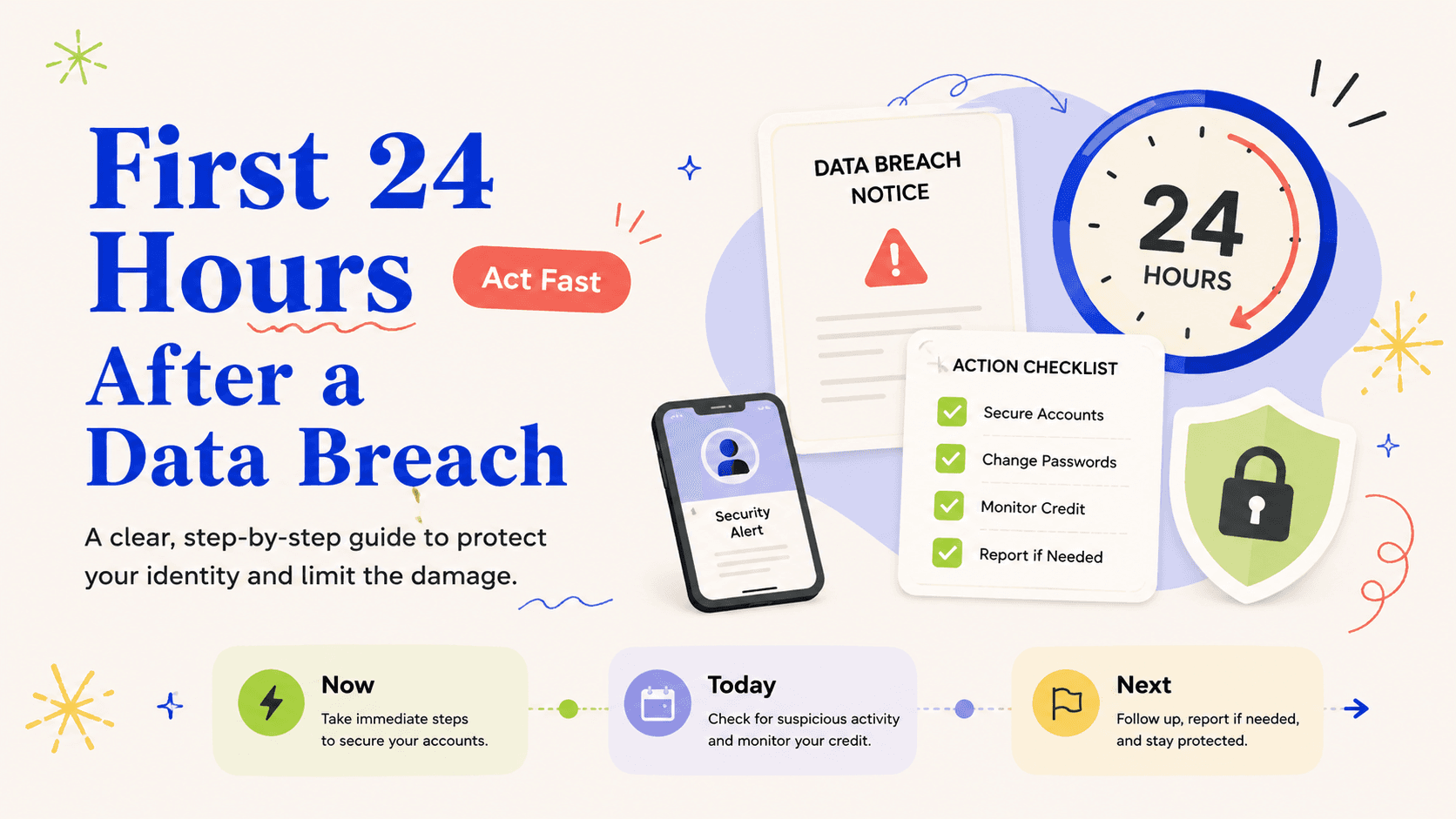
A school or health-system breach exposed your child’s name, date of birth, and Social Security number, but the child has never applied for credit.
Why a child can be a valuable identity-theft target
Start by treating a child credit freeze after a data breach as a specific response problem rather than as proof that every part of your identity has been taken over. FTC guidance notes that child identity theft can go undetected for years because a child normally has little reason to review credit activity. Ask the bureaus whether a file exists and follow their current process for a minor rather than assuming the child should already have a normal credit report.
Retain the notice and record two things alongside it: the date it arrived and the specific data element or account it describes. The freeze can restrict access to the credit file or cause a file to be created for the purpose of freezing it, depending on the bureau’s process.
First determine whether the child has a credit file. A minor ordinarily should not have a normal credit history, so a bureau's response may be that no file exists. FTC child-identity guidance explains how a parent or guardian can check and what documentation may be needed. Do not create unnecessary credit activity in the child's name just to test the system.
Check whether a credit file already exists before assuming the answer
The first move should reduce the most immediate pathway to misuse. Contact Equifax, Experian, and TransUnion separately and use each bureau’s official minor-freeze instructions.
Rather than juggling every consequence at once, work through them by priority. Prepare proof of the child’s identity and your authority as parent or guardian because the bureaus must verify both relationships before restricting the file.
A child credit freeze is handled separately at each nationwide credit bureau. Follow each bureau's current minor-freeze instructions and be prepared to prove both the child's identity and your authority to act for the child. Requirements can include birth records, government identification, and proof of address; send them only through the bureau's verified process.
Contact all three bureaus for the minor-freeze process
The three bureaus control their own freeze records, so completing one child freeze does not automatically create the other two.
Requests for identity documents warrant a quick legitimacy check before compliance. Mail or upload sensitive birth certificates, SSN records, or guardianship documents only through the bureau’s verified process and retain copies of what you sent.
Keep the confirmation or PIN information from each bureau in a secure place you can find years later. A freeze may stay relevant until the child needs legitimate credit, housing, or another service as an adult. Losing the records can make a future lift more cumbersome, so store the documentation with other long-term family identity papers rather than in an everyday email folder.
Store freeze confirmations like long-term identity documents
This step is conditional: a credit freeze matters only where the exposure could lead to new credit being opened. The freeze is a barrier to new-credit access; if a fraudulent account already exists, you also need to dispute or block that specific account and contact the creditor.
Credit monitoring needs a starting line: pull that dated baseline from annualcreditreport.com before anything else. Keep notes on which bureau found an existing file, which one created a protected file, and the date each freeze became effective.
Know what to do if a fraudulent child account already exists
These records matter now, while resolving things, not just as an archive for later. Store confirmation letters or PINs according to the bureau’s current system in a secure long-term location that a future caregiver or the child can locate when appropriate.
When misuse is no longer hypothetical but confirmed, recovery replaces prevention as the goal. If you discover actual child identity theft, FTC guidance recommends reporting it at IdentityTheft.gov and contacting the companies where fraud occurred.
A freeze addresses new-credit access, not every kind of child identity misuse. Watch for IRS notices, health-insurance claims, government-benefit issues, or collection letters in the child's name. Those systems need their own corrections even when the child's consumer credit file is successfully frozen.
A child freeze does not protect tax, medical, or benefits systems
One control rarely fixes every consequence of a case like this. A credit freeze does not stop misuse of a child’s SSN for tax filings, employment, medical services, or benefits systems that do not depend on a credit file.
Also separate exposure from confirmed misuse. A bureau may report that no normal file exists; that result is different from finding a file with fraudulent accounts and should be documented accurately.
Avoid giving a child’s documents to unverified “monitoring” services
Expect follow-up scams that reference this process. A breach can prompt offers for paid child protection services that request extensive identity documents before you have verified who is receiving them.
A legitimate recovery process should be verifiable through an established channel. Use the nationwide bureaus and official government resources directly for the freeze and identity-theft recovery steps.
Plan how the freeze will be managed years from now
Before calling the initial response finished, get follow-up dates onto a calendar you'll actually check. Review the stored freeze confirmations after major family moves or name changes and when the child approaches an age where legitimate credit use may begin.
The credit side is protected when all three bureau processes are completed and any preexisting fraudulent account has a separate dispute record.
If a bureau finds an existing file with accounts or inquiries that do not belong to the child, move from preventive freezing to identity-theft recovery. Preserve the report, create the appropriate IdentityTheft.gov documentation, and dispute the fraudulent items. The goal is both to stop new use and to clean up any misuse that already occurred.
Review the freeze confirmations periodically as the child approaches an age when legitimate applications become more likely. A parent or guardian may need to lift or remove a freeze for housing, student financing, utilities, or other services once the child is old enough to apply. Do not wait until an application deadline to discover that a bureau needs updated identity or guardianship documents. Keeping the three bureau confirmations, the date each freeze was placed, and the current official lift instructions together makes the later transition easier while preserving the protection during the years when the child is not using credit.