You finish an Equifax freeze and assume your credit is frozen everywhere.
Why one bureau is not enough
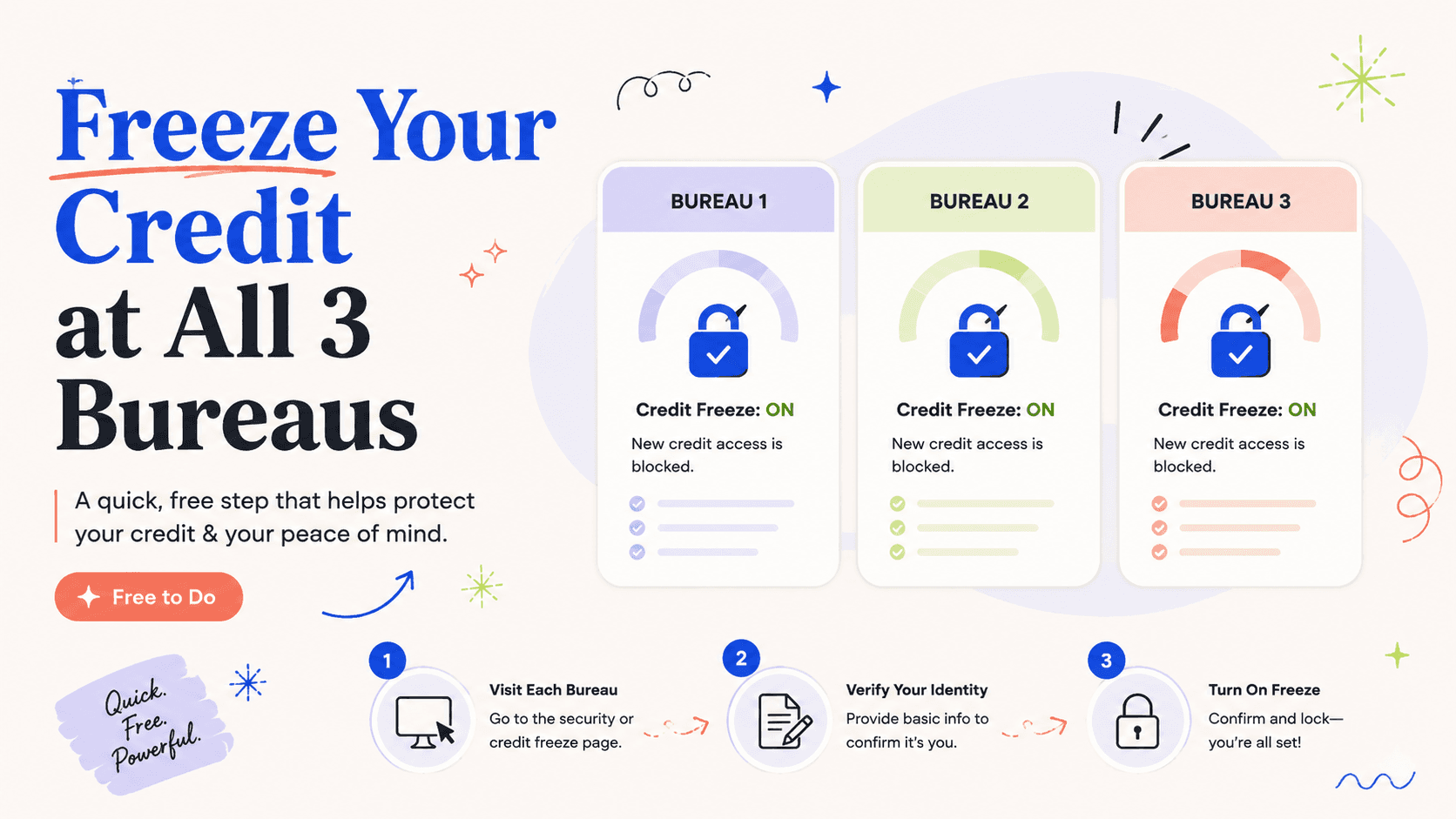
Equifax, Experian, and TransUnion maintain separate credit files. The FTC says you must contact all three to place a complete credit freeze. Freezing only one file can leave another bureau available to a lender that uses a different report.
Plan to complete the process in one sitting or use a written checklist so you do not lose track after the first confirmation screen.
Use the bureaus’ official freeze channels
Start from the credit-bureau contact information published by IdentityTheft.gov or the FTC and navigate to each bureau’s security-freeze service. Avoid sponsored search ads when possible and confirm the domain before entering sensitive information.
Each bureau may use a different account, authentication process, or confirmation method. That inconvenience is normal; the files are separate systems.
Save proof that each freeze was placed
Keep a secure record showing the bureau, date, account email or username, and any confirmation number or instructions supplied. Do not store passwords or recovery codes in an unencrypted note just because the task is temporary.
Later, when a lender says it cannot access your file, these records help you identify which bureau to manage without removing every freeze.
Know what a freeze does not block
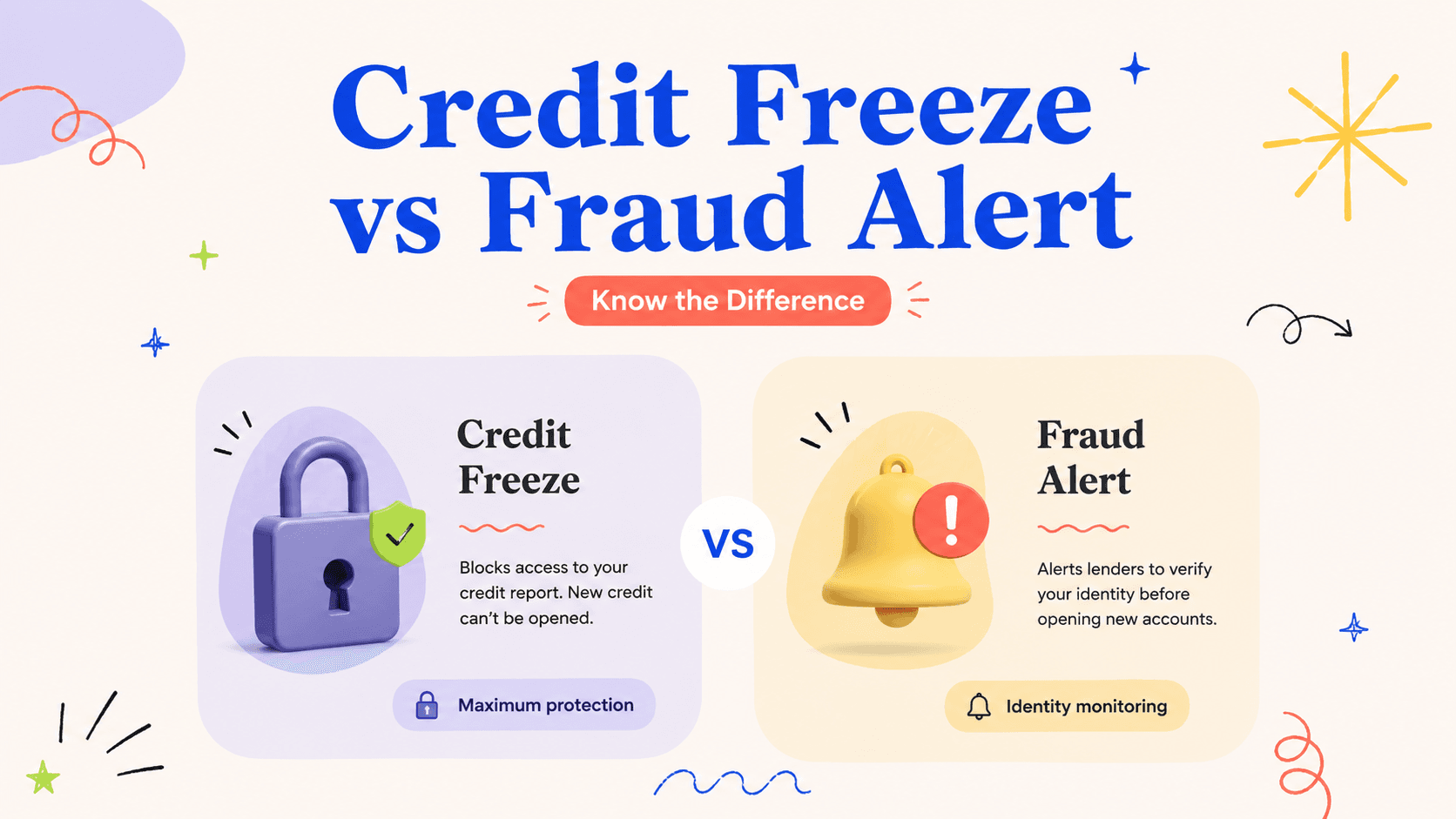
A freeze is aimed at access to your credit report for new-credit decisions. It does not stop you from using existing cards, checking your own report, or disputing errors. It also does not stop account takeover on a bank or card account that is already open.
That distinction matters after a breach. If login credentials or payment information were exposed, secure those accounts directly even if all three credit files are frozen.
Keep the freeze until you have a reason to lift it
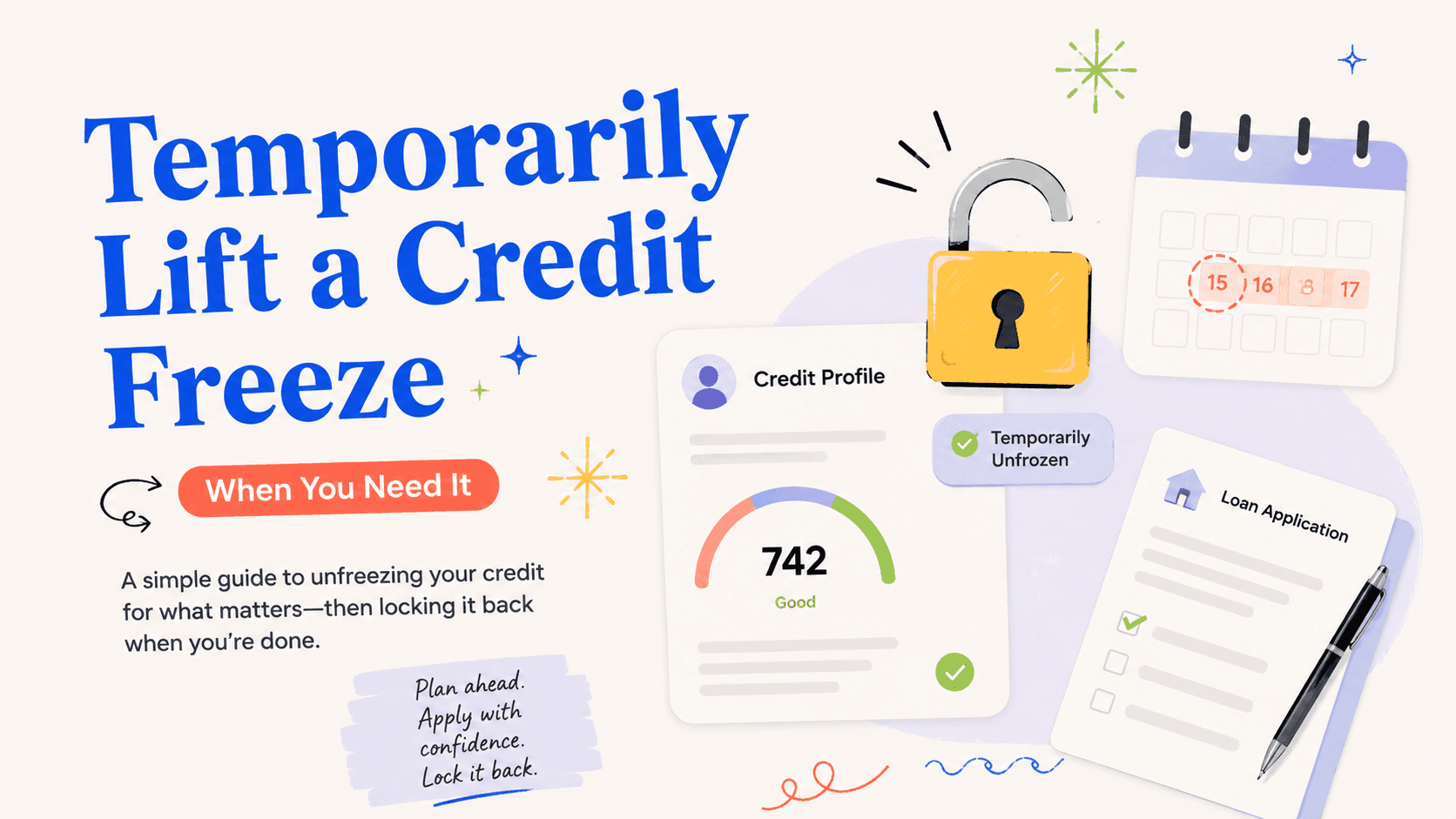
The FTC says a freeze lasts until you lift it. When you apply for a loan, card, apartment, or another transaction that needs access, ask which bureau the organization plans to check if possible. You may be able to lift only that file temporarily rather than opening all three.
After the application window closes, confirm that the freeze is active again. Treat lifting a freeze as a short, deliberate exception rather than a permanent reversal.
Prepare the identity information before starting
Each bureau has its own authentication process and may ask questions or request documents when it cannot verify you automatically. Have your legal name, recent addresses, date of birth, and other required identification information available before you begin. Work from a private connection and avoid public Wi‑Fi when entering sensitive identity data.
If one bureau cannot verify you online, follow that bureau’s official alternative process rather than abandoning the freeze. The fact that two files are frozen does not make the third irrelevant.
Keep freeze management separate from paid credit products
Credit bureaus sell monitoring and other services, but a federally regulated security freeze is free to place and lift. When navigating a bureau website, confirm that you are using the security-freeze flow rather than a paid lock or subscription unless you intentionally want that separate product. The names can sound similar while the legal and product terms differ.
Save the exact page or account area you used for the freeze so you can return later without searching through product marketing. A bookmark named for the bureau and ‘security freeze’ can reduce confusion during a future loan application.
Test your own recordkeeping before you need a mortgage or loan
After completing the freezes, verify that you can still sign into each bureau account and that your recovery email or phone is current. You do not need to lift the freeze as a test; the goal is simply to make sure you know where the controls are and can recover access if you lose a password.
Years can pass between placing a freeze and needing to manage it. Update your secure records when your email, phone number, or address changes so an old recovery method does not turn a simple temporary lift into an urgent identity-verification problem.
A complete three-bureau freeze workflow
Before you start, open a secure incident note with three rows: Equifax, Experian, and TransUnion. Add columns for date placed, login email or username, confirmation, and whether recovery information was checked. Then use the bureau contact links published by the FTC or IdentityTheft.gov to reach the official freeze service for the first bureau. Complete the identity-verification steps and save the result before moving to the next row.
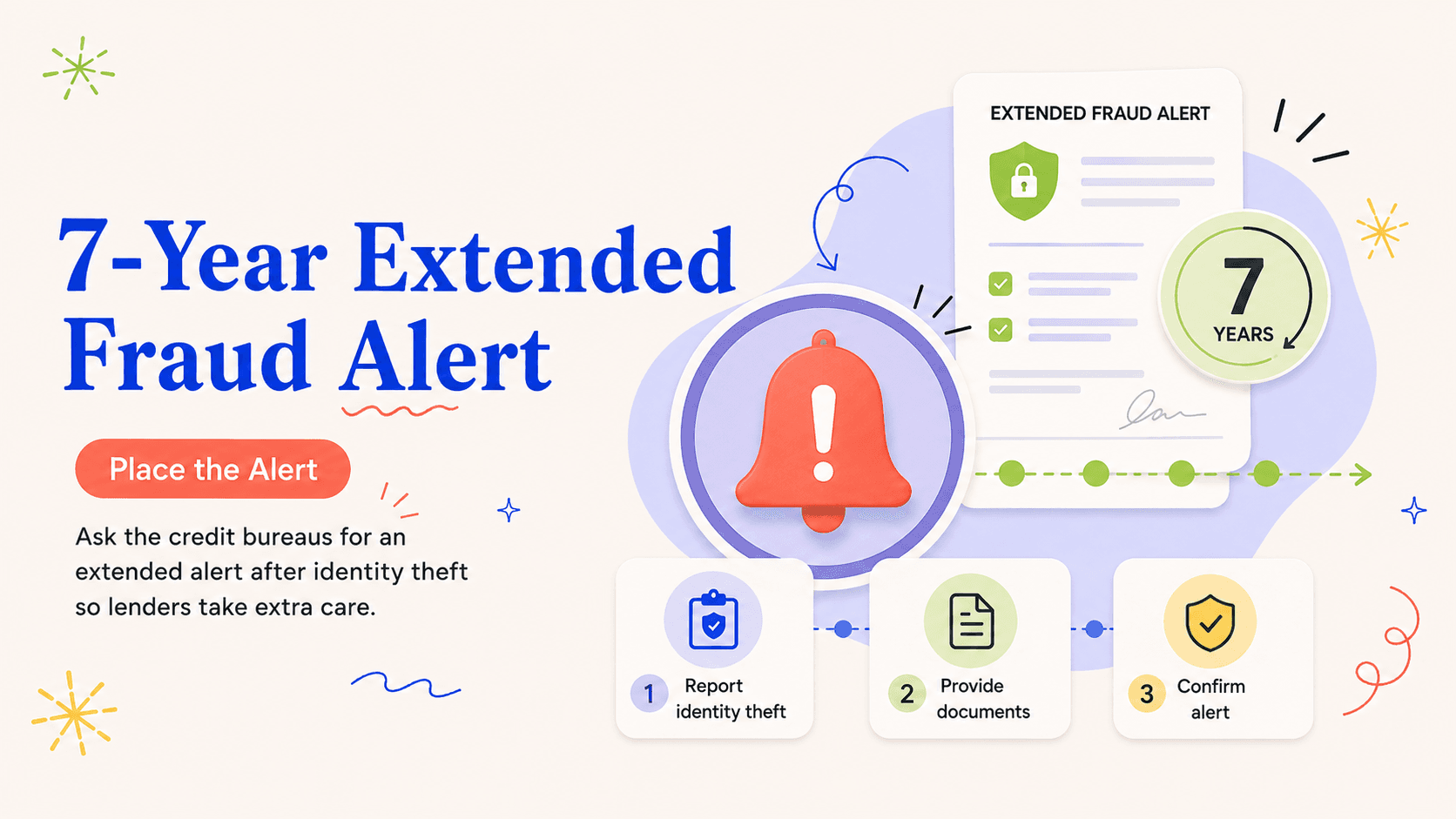
Repeat the process independently for the second and third bureaus. Do not assume that a confirmation from one bureau means the others were notified; that automatic cross-notification applies to an initial fraud alert, not to credit freezes. If one bureau requires a mailed or document-based process, mark that row as pending and complete it through the bureau’s official instructions. Your freeze is only as complete as the last unfinished bureau.
When all three rows show active, review how you will regain access later. Make sure the recovery email or phone number for each account is current, store any credentials securely, and bookmark the exact freeze-management page. The next time you apply for credit, you should be able to identify the bureau, set a temporary lift, and return the file to frozen status without searching the web under time pressure.
- A freeze is free to place and lift.
- A freeze does not affect your credit score.
- Existing credit cards continue to work.
- Each bureau must be managed separately.
- Save evidence that the freeze was completed.
Before you move on
Once all three freezes are active, add a calendar reminder to review the recovery email and phone number on each bureau account after any future contact-information change. The protection can stay in place for years, and the main practical failure point is often not the freeze itself but losing access to the account used to manage it. Keep the FTC or IdentityTheft.gov bureau-contact page bookmarked as a fallback, and do not store bureau passwords or recovery codes in the same plain-text spreadsheet you use to track the incident.