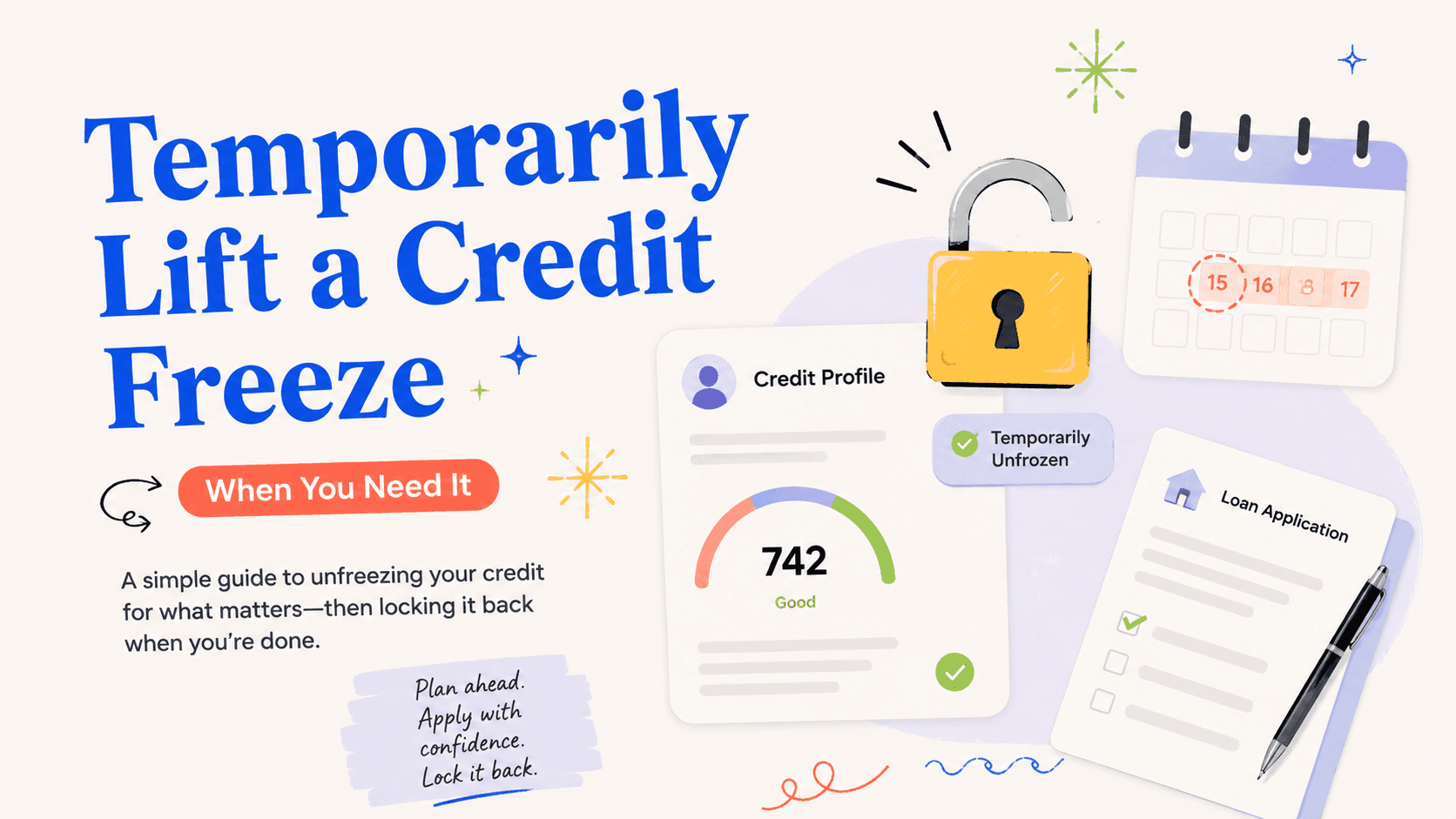
You are applying for a car loan tomorrow and all three credit files are frozen.
Ask the lender which report it expects to pull
Before changing all three freezes, ask the lender, landlord, or other requester whether it knows which bureau it will use. If it can tell you, you may only need to manage that one file. If it cannot, you may need to lift more than one.
This question saves work and reduces the time that unrelated files remain available.
Use the bureau account you used to place the freeze
Navigate directly to the bureau’s official freeze-management service and authenticate with the account or credentials you created when placing the freeze. Avoid links in unsolicited messages that appear right when you are applying for credit.
Choose a temporary lift rather than a permanent removal if you only need access for a specific application period.
Keep the time window tight but realistic
Do not set a two-hour window if the lender may not run the report until the next business day. Ask when the credit check is expected and leave enough time for the application workflow to complete. At the same time, avoid leaving the file open for weeks simply because that is easier.
The FTC says placing and lifting a freeze is free. The main cost is coordination, so a short planning call can prevent repeated lifts.
Do not confuse a lift with losing your protection permanently
A temporary lift is a controlled exception. Your existing accounts still work while a freeze is active, and the freeze does not affect your credit score. You do not need to remove it permanently merely because you are taking out legitimate credit.
After the application, confirm the bureau shows the freeze active again. Save any confirmation if the bureau provides one.
If the lender still cannot access the file
Confirm the bureau name, your identity information on the application, and whether the lift has started. A lender may use a different bureau than expected or perform another check later in the process.
Do not repeatedly remove protection across all bureaus without knowing what failed. A specific error is easier to solve than a broad unfreeze.
Coordinate the lift with the full application process
A lender may check credit at more than one point. Mortgage and some other applications can involve an early pull and another review close to funding. Ask whether a second check is expected before you set the lift period. The objective is to avoid both extremes: leaving the file available for an unnecessarily long time and having the application fail because the lift expired too early.
If multiple lenders will shop the same application during a short period, ask how they handle bureau access. You may need a broader window than a single-business transaction, but it should still be deliberate.
Confirm identity details match the application
A successful lift does not guarantee the lender can pull the file if the application uses a different name format, address, or other identity detail. If the lender reports an error, first confirm which bureau it used and whether the personal information on the application matches your credit file closely enough to identify you.
Do not respond to a failed credit pull by permanently removing every freeze. A targeted troubleshooting sequence is more secure and usually faster.
Restore a normal protected state after the transaction
If you used a date-range lift, verify the file is frozen again after the period ends. If you removed the freeze permanently because the bureau process required it for a particular situation, place a new freeze once the legitimate credit check is complete. Keep the updated confirmation in your incident records.
Your lender does not need your bureau password or freeze-account credentials. You manage the freeze; the lender simply needs the report to be available when it performs the authorized check.
Example: preparing for a mortgage credit pull
Suppose your reports have been frozen for a year and a mortgage lender says it will pull Experian today and may run another report shortly before closing. Ask whether the second review is expected to use the same bureau and roughly when it will occur. If the lender can answer, you can choose a lift window that covers the actual workflow instead of removing all three freezes indefinitely.
Sign in to the bureau’s official freeze-management account and schedule the temporary lift. Record the start and end date in your application notes. Then tell the lender that the file is available; do not provide the lender with your bureau password, PIN, or account credentials. If the pull fails, confirm the bureau name and the identity details on the application before changing any other freezes.
After the lender confirms the report was received, leave the date-range lift to expire or restore the freeze manually if you used a different method. Check the account afterward to confirm protected status. If the loan process later requires another check, repeat the same narrow procedure. This creates a small, controlled exception instead of turning a temporary credit need into a permanent reduction in protection.
- Ask which bureau will be used.
- Ask whether another pull is expected later.
- Use a date range that matches the real workflow.
- Never share your freeze-account credentials with the lender.
- Confirm the freeze is active again afterward.
Avoid emergency unfreezing later
If you know a major application is coming, check your bureau logins several days before you need the lift. Recovering an old account, updating a phone number, or satisfying identity verification can take longer than clicking the temporary-lift button. A short preparation window keeps the lender’s deadline from pressuring you into removing every freeze permanently. After the transaction closes, update your incident note with the bureau used and the date protection was restored so the next application starts from accurate information.