You heard that a company involved in a breach you were part of has settled a lawsuit, and you want to know whether you're owed anything and how to file a legitimate claim.
A settlement is a different process than the breach notice itself
The letter that told you about a breach and a class action settlement over that same breach are two different things, sometimes arriving months or years apart. The breach notice comes from the company right after the incident. A settlement — if one happens — usually comes from a lawsuit filed afterward, and the settlement administrator sends its own separate notice once the deal is approved by a court.
Not every breach leads to a settlement, and not every settlement provides cash — some offer only extended credit monitoring, some offer a small flat payment, and larger, well-publicized breaches have sometimes provided both, plus reimbursement for documented time and out-of-pocket losses.
How eligibility usually works
You typically qualify if you fall into one of two categories: you received an official breach notification letter or email from the company, or you were a customer, employee, or user of the company during the “class period” defined in the settlement, whether or not you personally received a notice.
Compare the company name, the type of incident, and the date range in your own breach notice against the class definition published on the settlement's official site. If your notice matches, you're very likely covered even without any further proof.
Finding the real settlement site
Legitimate settlement sites are almost always named after the case — a domain built around the company name plus “settlement,” run by a professional settlement administrator the court appointed to handle claims. If you received a settlement notice by mail or email, the URL will be printed directly on it.
If you're searching for a settlement you heard about secondhand, search the company name plus “class action settlement” and look for the case to be described consistently across independent news coverage, not just on the claim site itself — a real settlement generates its own paper trail of court filings and press coverage well before the claim deadline.
What a legitimate claim form asks for — and what it never asks for
A real claim form takes a few minutes: your name and address, a Class Member ID or Notice ID from your letter if you have one (or a lookup by name and the last four digits of your Social Security number if you don't), and, for reimbursement claims, documentation of time spent or money lost responding to the breach.
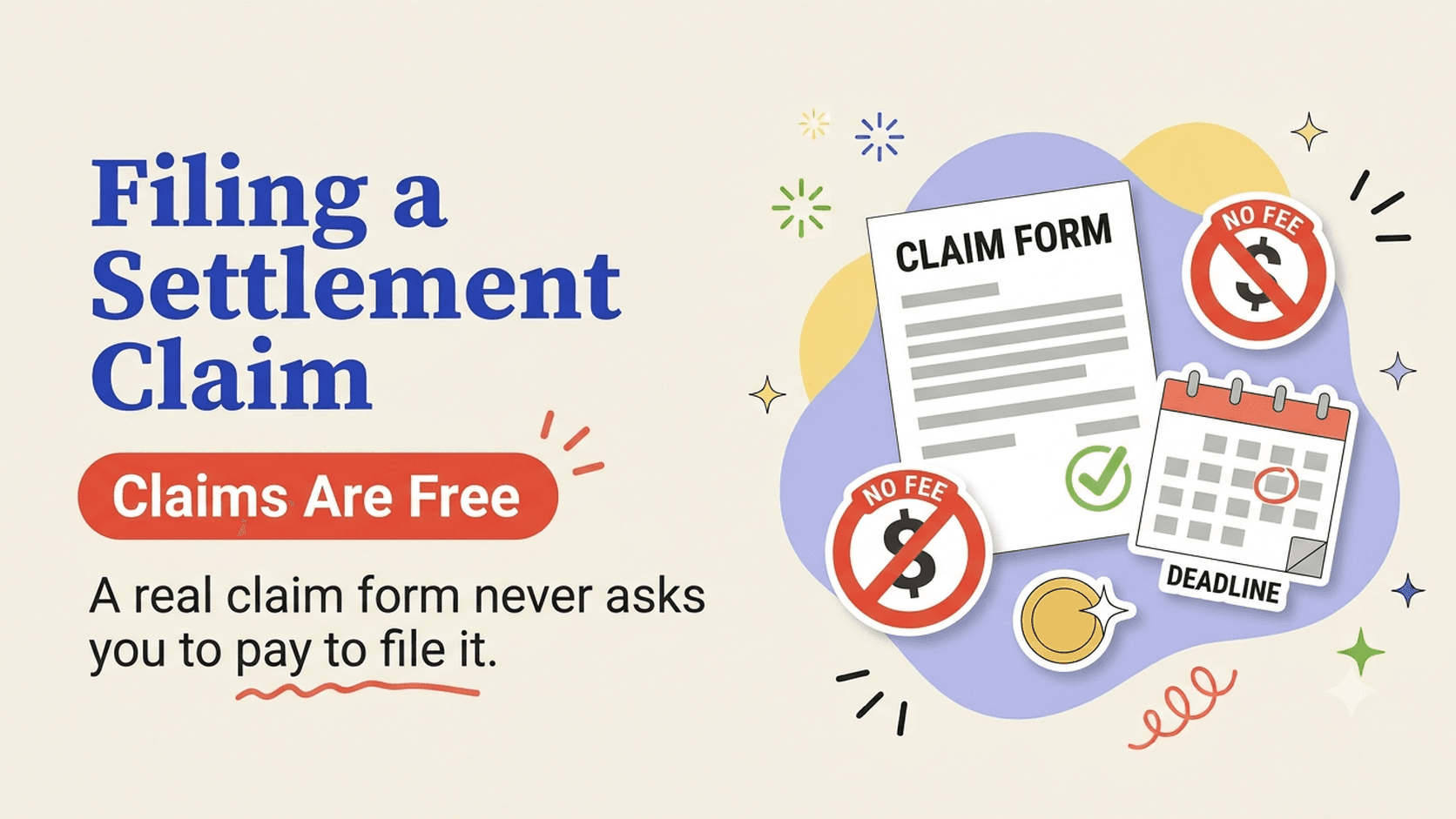
Filing a claim is always free. Any site that asks you to pay a fee, a “processing charge,” or a “release fee” before it will accept your claim is not a legitimate settlement administrator — report it and do not enter any information.
Setting realistic expectations about the payout
Cash payments from data breach settlements are often modest once divided across the full class — sometimes a flat amount in the tens of dollars, occasionally reduced further if the number of claims filed exceeds what the fund can pay in full. Settlements that also fund credit monitoring, like the FTC and state settlement following the 2017 Equifax breach, directed a large share of the money toward monitoring services rather than direct cash to every class member.
Reimbursement claims for documented losses — time spent freezing accounts, fees for a credit freeze in a state that once charged for one, or provable fraud losses tied to the breach — can pay more than the flat cash option, but they require you to keep receipts or records, which is why saving documentation from the moment you learn of a breach matters even before any settlement exists.
Deadlines are hard, and extensions are the exception
Claim deadlines set by the court are generally firm — file after the cutoff and the administrator has no obligation to accept it. Occasionally a settlement reopens an extended claims period well after the original deadline (the Equifax settlement did this), but that is a decision made publicly by the settlement administrator, not something you can request individually.
If you find a settlement you may be eligible for, file the claim as soon as you've confirmed it's legitimate rather than waiting — there's no advantage to filing late, and there's a real risk of missing the window entirely.
A settlement notice that arrived years after the breach itself
You remember getting a breach letter from a retailer's payment processor a couple of years ago and didn't think much more about it. Now an email arrives referencing a class action settlement with a claim deadline a few months out.
You dig up the old breach letter, match the company name and the incident dates against the settlement site's class definition, and confirm they line up. You file the claim form using the Notice ID from the original letter, choose the documented-loss option because you kept the receipt for the replacement card fee your bank charged at the time, and save a copy of the submitted claim confirmation for your own records.
A note on taxes
Whether a settlement payment is taxable can depend on how it's categorized — reimbursement for a documented loss is often treated differently than a general cash award. This is genuinely a tax question, not a settlement-administration one, and the settlement site itself is not the right source for tax advice. If the payment is more than a token amount, or if you're unsure how to report it, it's worth a short conversation with a tax preparer rather than guessing.
Frequently asked questions about breach settlement claims
- Do I need a lawyer to file a claim? No — claim forms are designed for class members to file themselves directly with the settlement administrator, without hiring an attorney.
- What if I moved and the settlement notice never reached me? Most settlement sites let you search for your eligibility using your name and other identifying details rather than requiring the original mailed notice, so a missed notice doesn't automatically mean you can't file.
- Can I be part of more than one settlement from the same breach? Generally no — a single class action settlement resolves the claims covered by its release, so there's typically one settlement per underlying case, though a large breach can sometimes generate separate settlements against different defendants (for example, the company that was breached and a separate vendor involved).
- What if I want to sue individually instead of joining the class? Settlement notices typically include an option to exclude yourself (“opt out”) from the class by a specific deadline if you want to preserve the right to pursue your own separate claim — that decision has real trade-offs and is worth researching carefully before the opt-out deadline passes.
What to keep after you file
Save the claim confirmation number, the settlement site's URL, and the date you filed. If the settlement pays by check or prepaid card months later, having your own record of when and how you filed makes it much easier to follow up with the administrator if a payment never arrives.