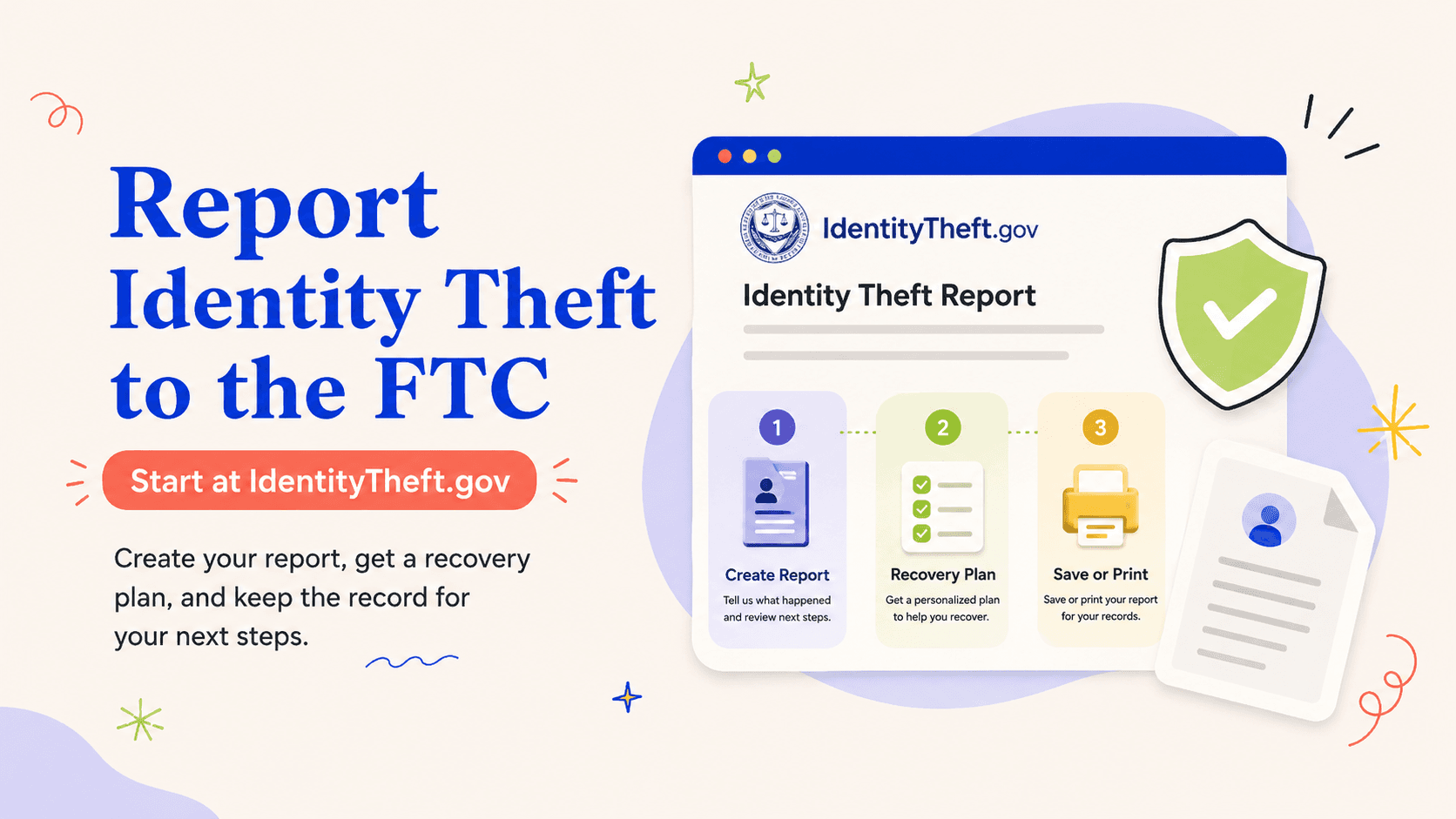
How to Report Identity Theft to the FTC at IdentityTheft.gov
What the federal reporting process does, what to gather before you start, and how the resulting report fits into recovery.
8–12 min readRead guide →
One situation per guide. No product reviews, no generic cybersecurity filler, and no legal-outcome promises.
What the federal reporting process does, what to gather before you start, and how the resulting report fits into recovery.
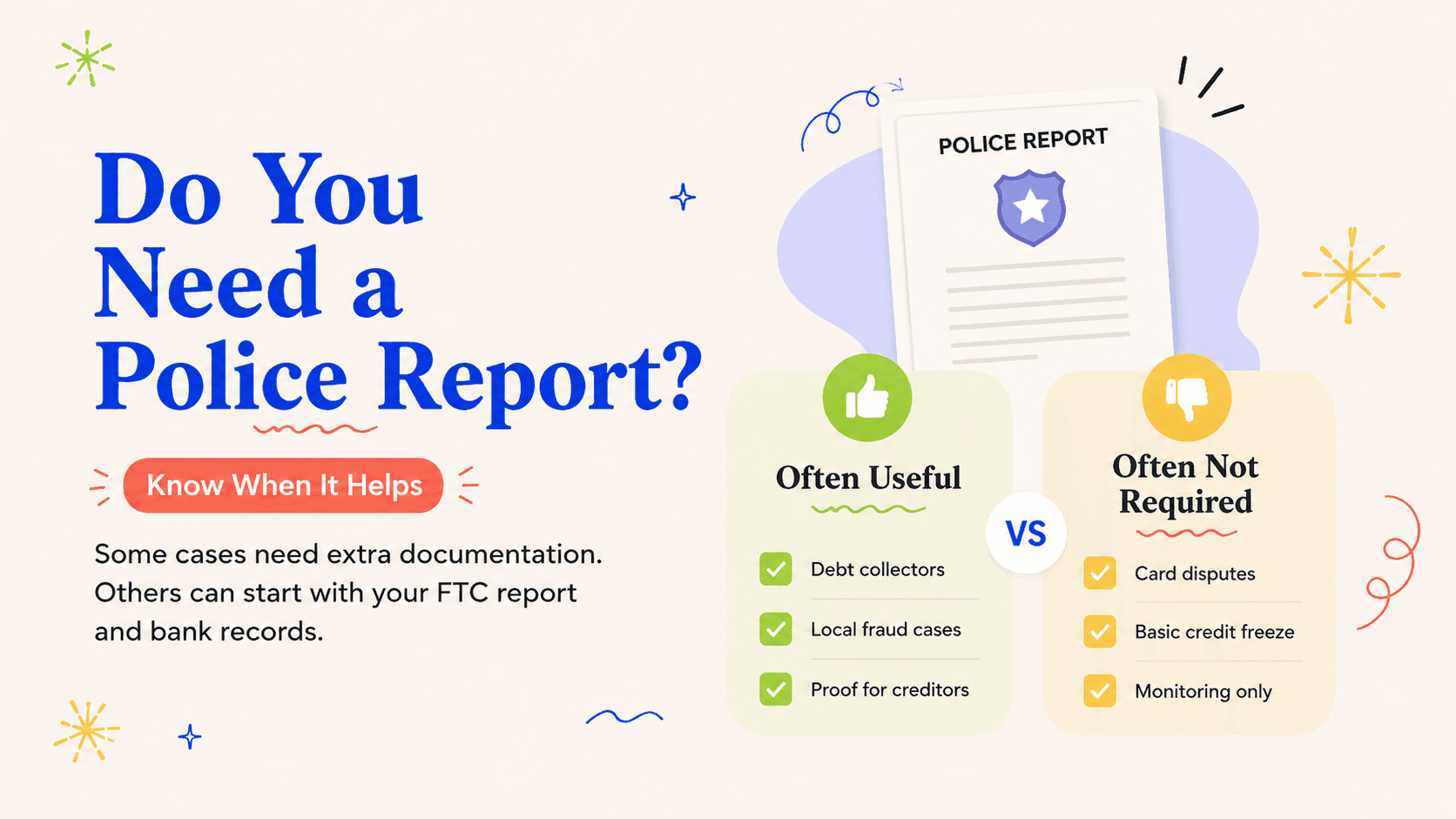
A local police report can be useful or required in some recovery situations, but it is not the same document as an FTC Identity Theft Report.
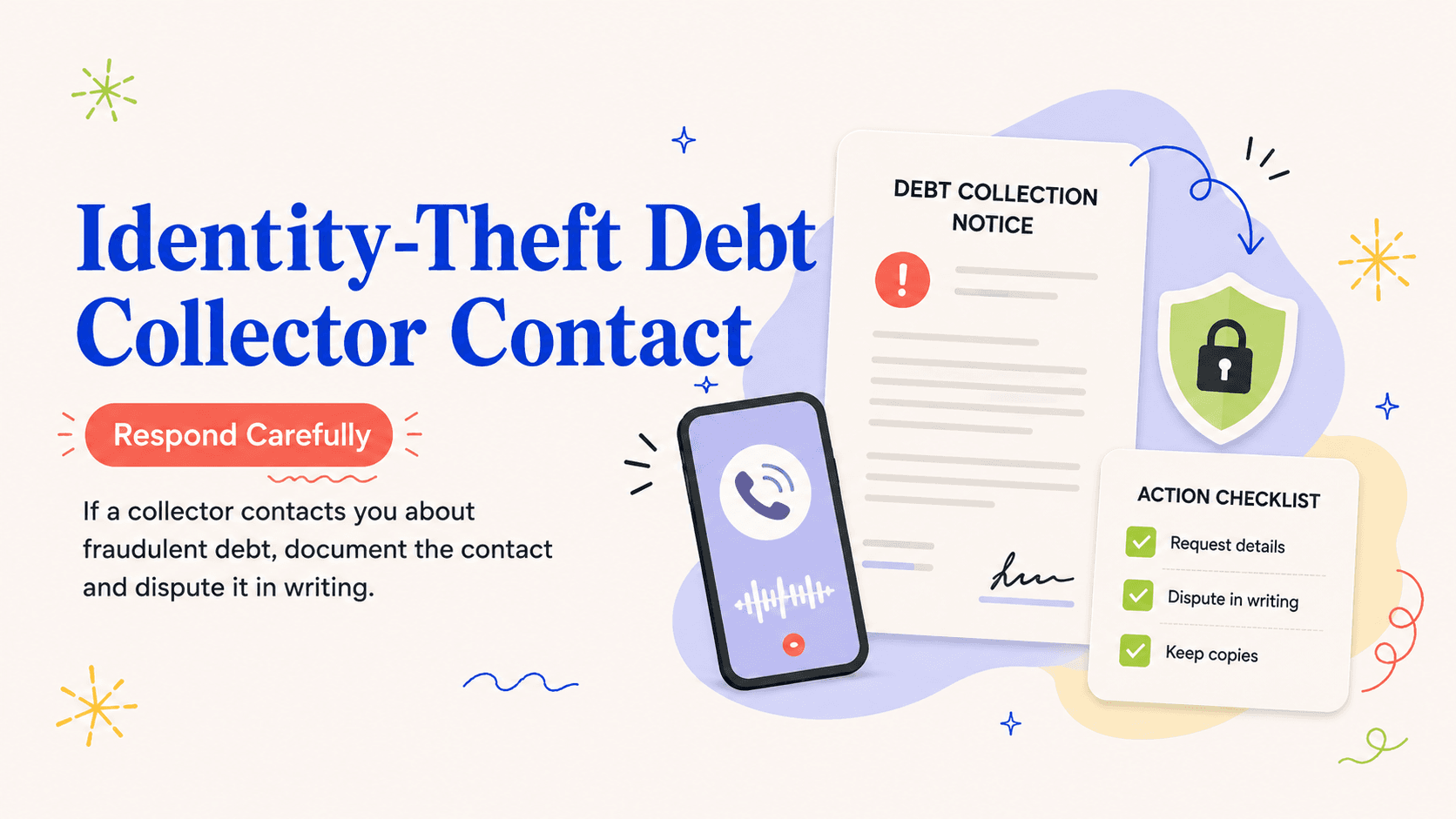
If a collector contacts you about identity-theft debt, verify the collector, preserve the validation notice, dispute in writing, and document the theft.
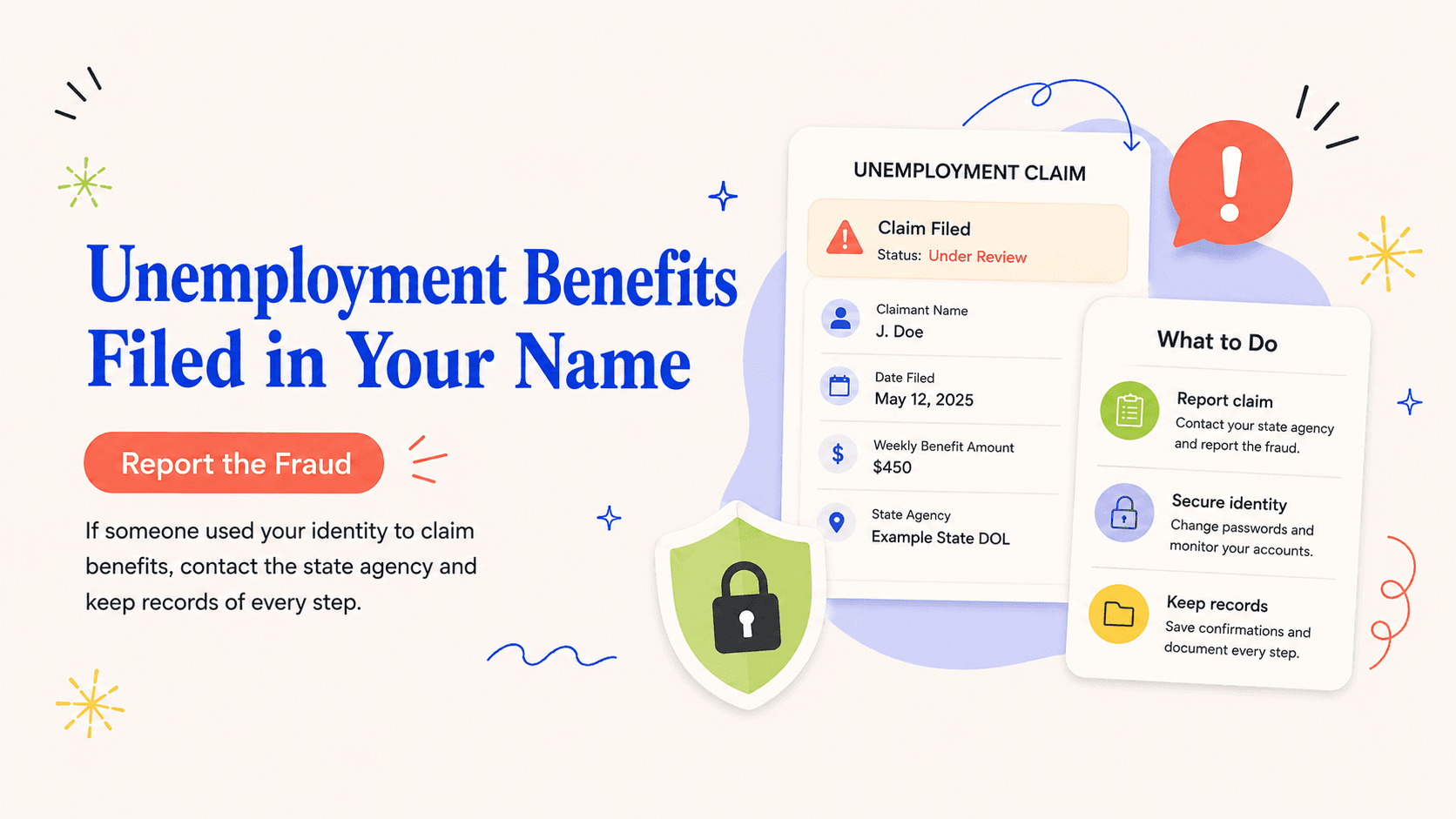
An unexpected unemployment claim, debit card, or 1099-G can mean your identity was used for benefits fraud. Report it to the issuing state and preserve the tax record.
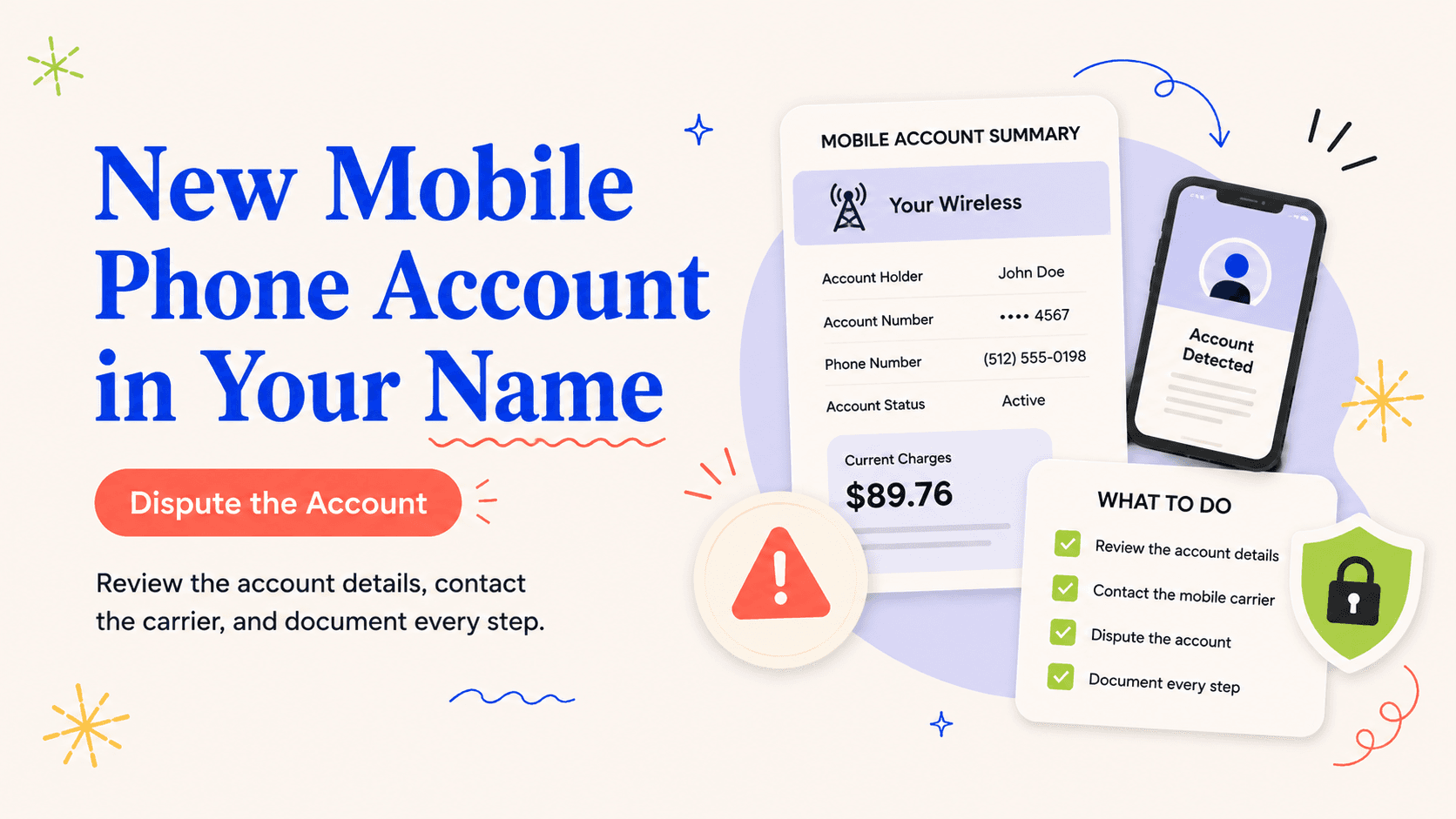
How to respond when identity thieves use your information to open a cellular account or device line you did not authorize.
Steps for a fraudulent electric, water, cable, or similar service account that appears after your identity information is stolen.
A documentation-first approach when a debt collector contacts you about an account created through identity theft.
A step-by-step response when a bank, lender, or creditor confirms a new account that you did not authorize.
How identity-theft victims can ask a business for documents tied to fraudulent accounts or transactions and keep the request organized.
A practical incident-file system for breach notices, calls, disputes, confirmations, and evidence without turning recovery into a pile of screenshots.
How to respond when a vehicle loan or lease appears after identity theft, including lender records, credit reports, and downstream collection risks.