A collection letter says you owe for electric service at an address where you have never lived, and a recent breach exposed your Social Security number.
Verify the service address and provider before paying anything
Start by treating a utility or similar service account opened in your name as a specific response problem rather than as proof that every part of your identity has been taken over. IdentityTheft.gov lists utilities as a specific account type because stolen information can be used to obtain cable, electric, water, or similar service. Confirm the provider, service address, account dates, and balance through an independently located contact channel before sharing personal documents or making a payment.
Before making any calls, secure the notice, write down its arrival date, and pin down the exact account or data element it references. A fraudulent utility account can produce a service balance, collection activity, or specialized consumer record even when it never appears as a standard credit card.
Contact the utility through a verified customer-service or fraud channel and ask for the service address, opening date, account number, and current balance. Do not pay simply to make the letter disappear before the company confirms whether the account is genuinely tied to your identity; payment can complicate later explanations about an account you say you never opened.
Tell the provider the account was opened through identity theft
The first move should reduce the most immediate pathway to misuse. Tell the provider’s fraud or identity-theft team that you did not open the account and ask it to close or flag the service while the claim is investigated.
Sort the possible consequences by urgency and work down the list rather than sideways across all of them. If the same identity information was used for phone service, a loan, or another address, handle those as separate accounts rather than assuming the utility case will clear them automatically.
Tell the utility the service was not authorized and ask what identity-theft documentation it requires. If the account is still active, ask whether the company can stop further charges while the review is open. Obtain a case number and request the final result in writing, especially if a balance has already been sent to collections.
Look beyond the utility bill for linked records
The service provider owns the account record, and IdentityTheft.gov also points consumers to state public utility commissions for additional help with certain unresolved utility problems.
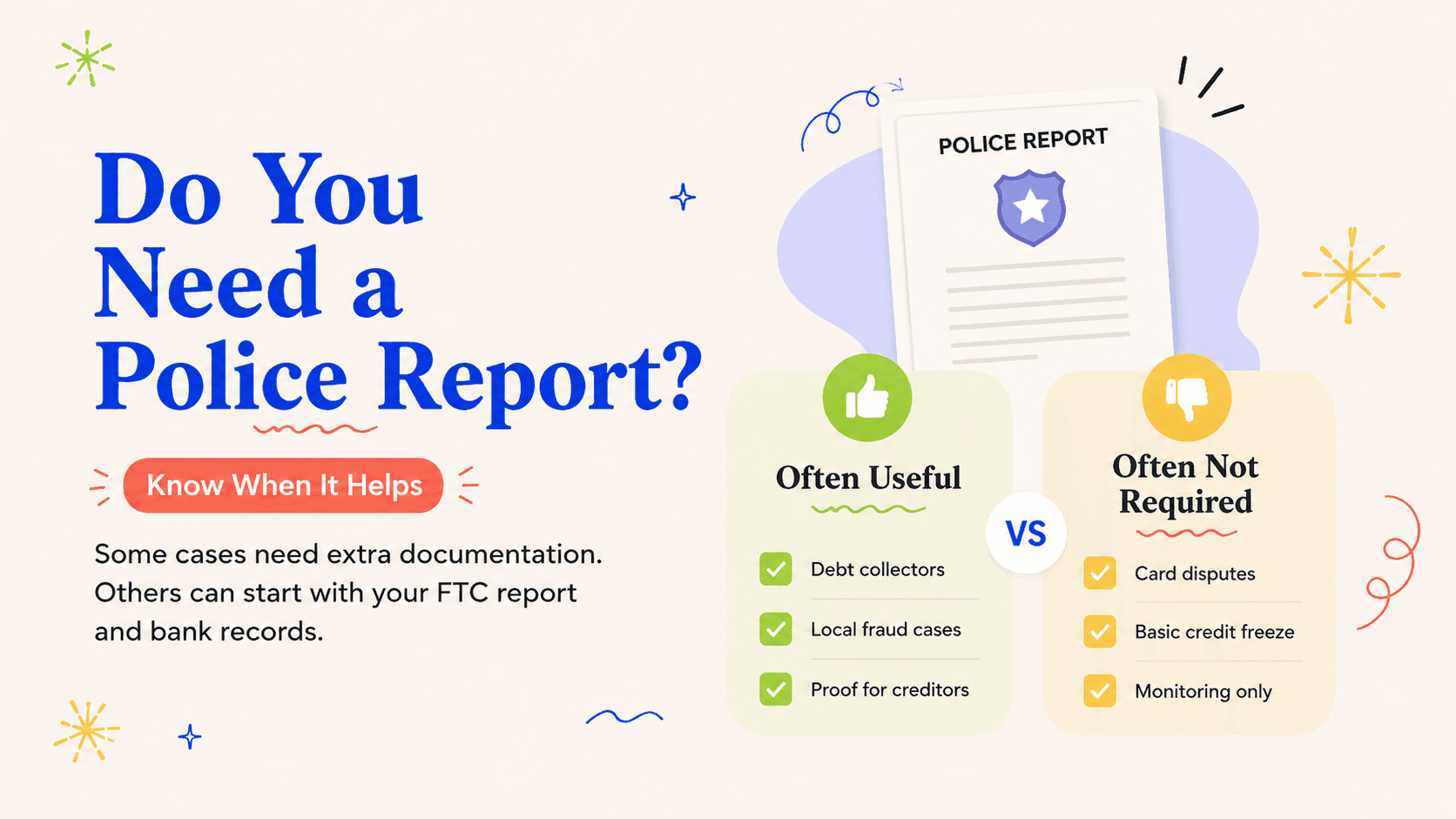
Identity document requests should be checked against the official channel before you act on them. Ask how the provider wants an FTC report or identity documents submitted and use only its verified upload, mail, or in-person process.
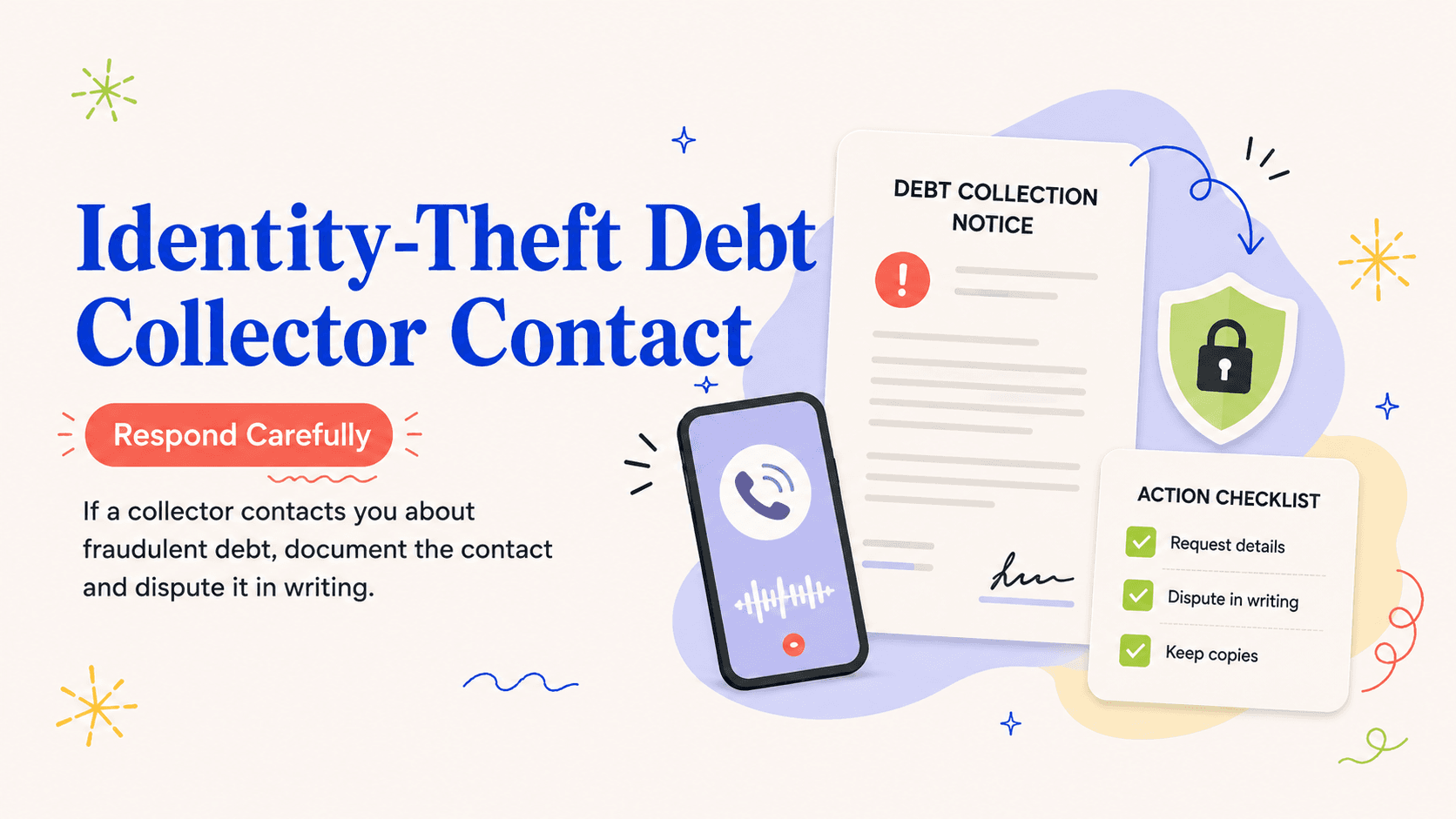
Review your credit reports and any collection notice connected to the utility account. Utility service does not always appear as a standard credit tradeline, but unpaid balances can reach collectors. If a collector is involved, dispute the identity-theft debt through the collector's verified process and keep the utility's fraud determination with that correspondence.
Check credit and collection files for spillover
The case for a credit freeze rests entirely on whether new-account fraud is a real possibility here. Review credit reports and collection entries because an unpaid fraudulent account can migrate from the provider to a collector even if the original service is closed.
The starting point for credit monitoring, when it's called for, is a dated report pulled from annualcreditreport.com. Look for other service addresses, telecom accounts, hard inquiries, or collection notices that share the same dates or stolen identity details.
Use formal identity-theft documentation when the provider asks
Notes and documentation collected along the way are functional, not just for the record. Keep the first bill or collection notice, proof that you never lived at the service address when relevant, case numbers, and written closure or zero-balance confirmation.
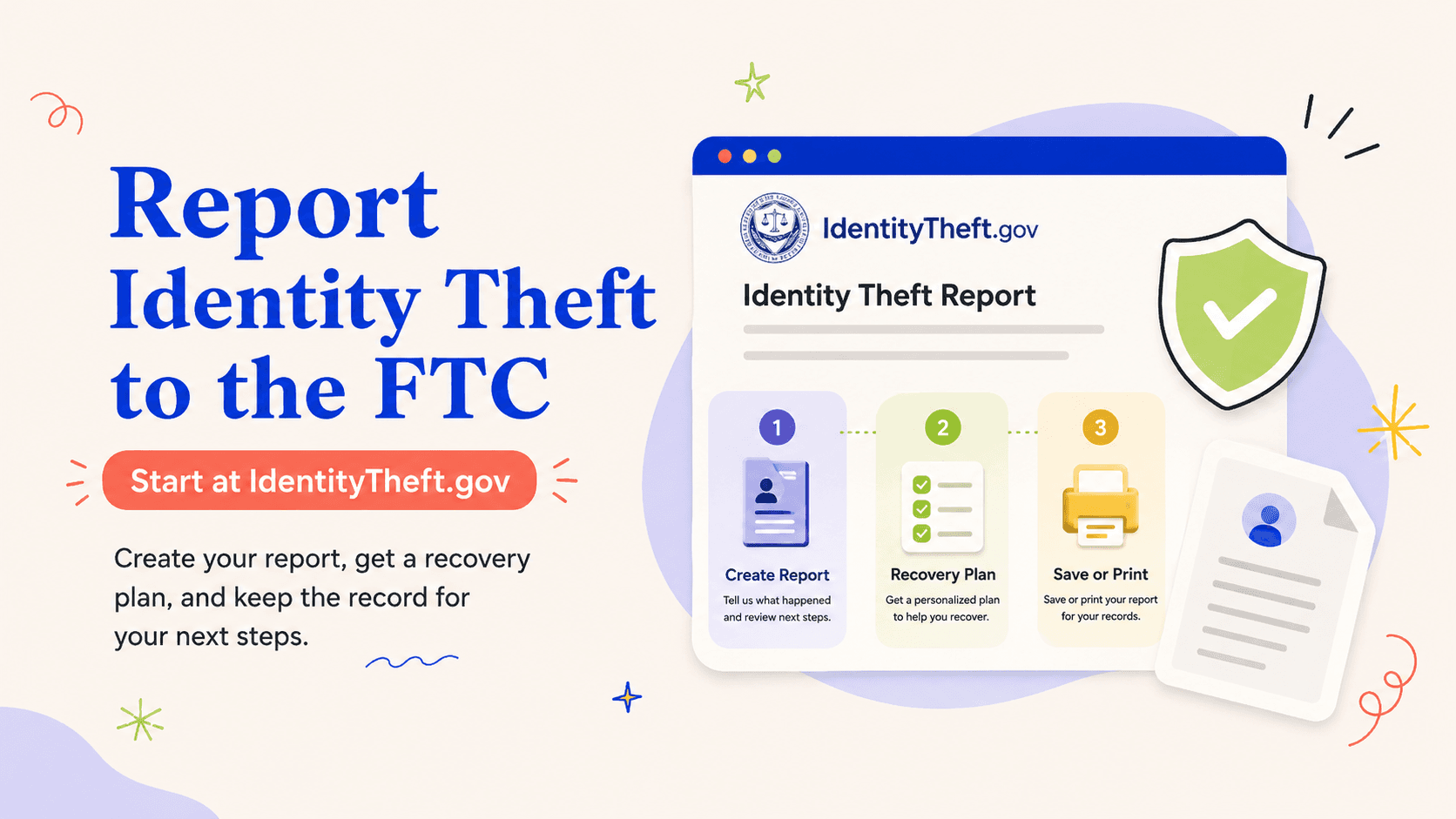
Real, confirmed misuse takes this out of the breach-response phase and into recovery mode. An FTC Identity Theft Report can help show the provider, bureaus, and collectors that the account resulted from identity theft.
The service address is an important clue. Compare it with addresses on your credit reports and other identity-theft records. An unfamiliar address appearing across a utility account, lender application, and credit file can reveal a broader pattern; a single data-entry error should be verified before it is treated as evidence of a larger takeover.
Closing service is not the same as clearing the debt
One control rarely fixes every consequence here. Service termination does not by itself delete a collection tradeline or specialized utility record created before the fraud was discovered.
Also separate exposure from confirmed misuse. Roommates, landlords, and bundled services can create naming confusion, so verify the account holder and service address before treating a legitimate household bill as fraud.
Watch for fake collection calls using the real service address
Expect follow-up scams that refer to the disputed account. Collectors or impostors may threaten immediate shutoff at your real home even when the disputed account is at a different address.
A legitimate recovery process should be verifiable through an established channel. Call the utility through a number on its official website or your legitimate bill to confirm whether any balance is tied to your actual service.
Confirm every downstream record was corrected
Set concrete calendar reminders as the closing step; memory alone rarely holds up over weeks or months. Ask for written resolution and check later credit or collection records to confirm the fraudulent account did not reappear under a new collector.
The case is closed only when the service account, balance, and any downstream reporting all reflect that you are not responsible for the fraudulent account.
Create an IdentityTheft.gov report when the account is confirmed fraudulent and use the recovery plan for the affected businesses and reporting companies. The incident is contained only when the utility stops billing you, any collection path is corrected, and related report entries or addresses have been investigated.