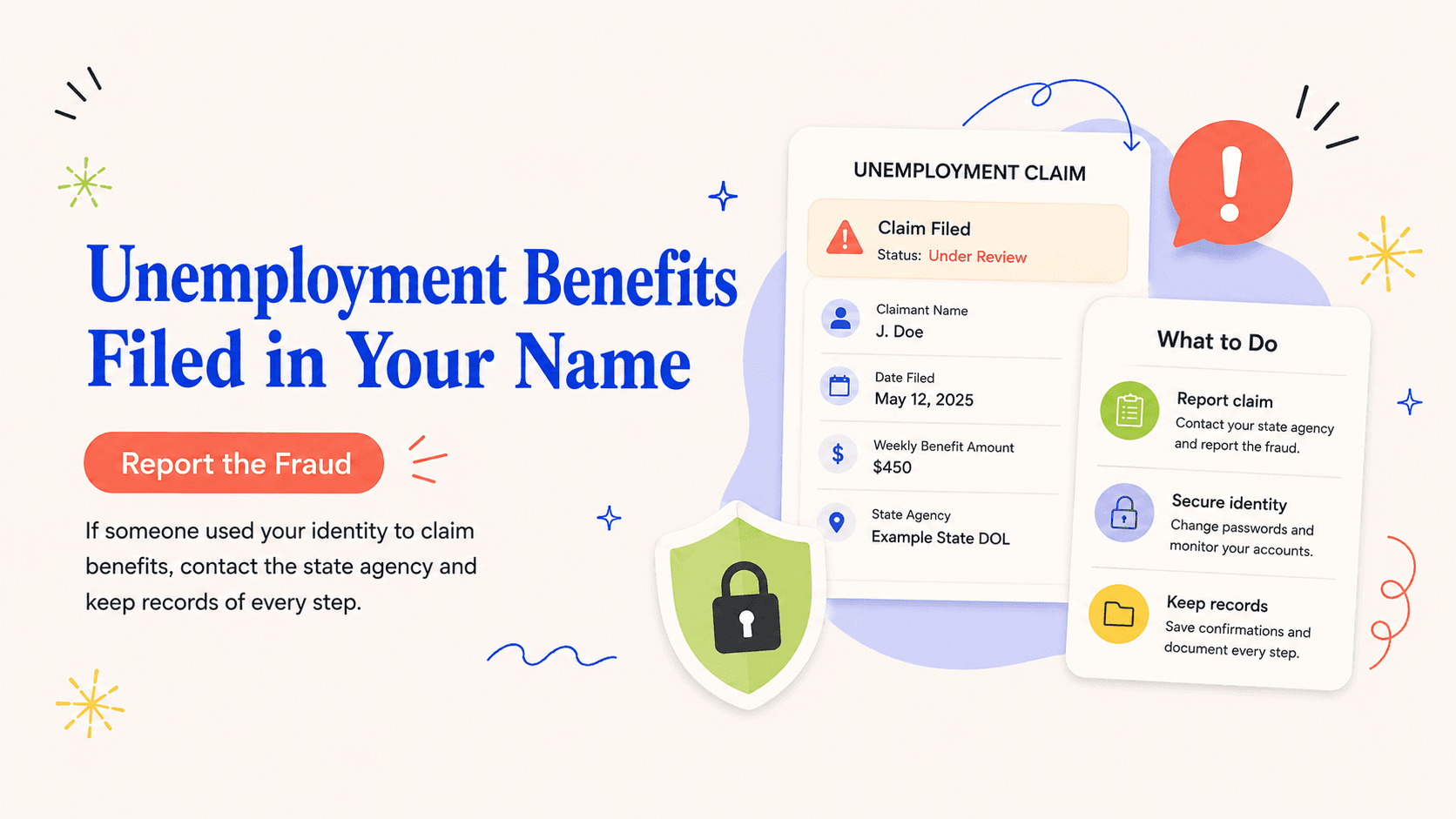
You are still working but receive a state unemployment notice or 1099-G for benefits you never claimed.
Recognize the warning signs of unemployment identity fraud
The U.S. Department of Labor says victims may discover unemployment identity fraud through mail about a claim they never filed, unexpected payments or debit cards, a request to verify an unemployment claim, a 1099-G showing benefits they did not receive, or a notice from an employer about a claim in their name. Claim hijacking can also show up when a real claimant suddenly stops receiving benefits and finds banking or address information changed.
If any of those signs appear after a data breach exposed your name, date of birth, SSN, or address, treat the notice as a real administrative problem even if you never applied for unemployment. Do not throw the letter away just because the claim is fraudulent.
Go to the verified state reporting directory
Unemployment insurance is administered by states, so the reporting destination depends on the state associated with the claim. DOL maintains a state-by-state directory with official reporting links and phone numbers and warns consumers not to send personal information to unverified sites or respond to unknown emails or texts claiming to be a state unemployment agency.
Use the DOL directory as your starting point even if the notice comes from a state where you never lived or worked. Fraudulent claims can be filed across state lines. Record the state, claim number, notice date, and reporting confirmation.
Report the claim to the issuing state, not just the FTC
The state workforce agency controls the unemployment claim record and is the organization that can flag or correct the fraudulent claim in its system. Submit the state’s identity-fraud report using the verified contact from DOL. If the form asks for documents, follow the state’s instructions rather than emailing sensitive records to an address from an unsolicited message.
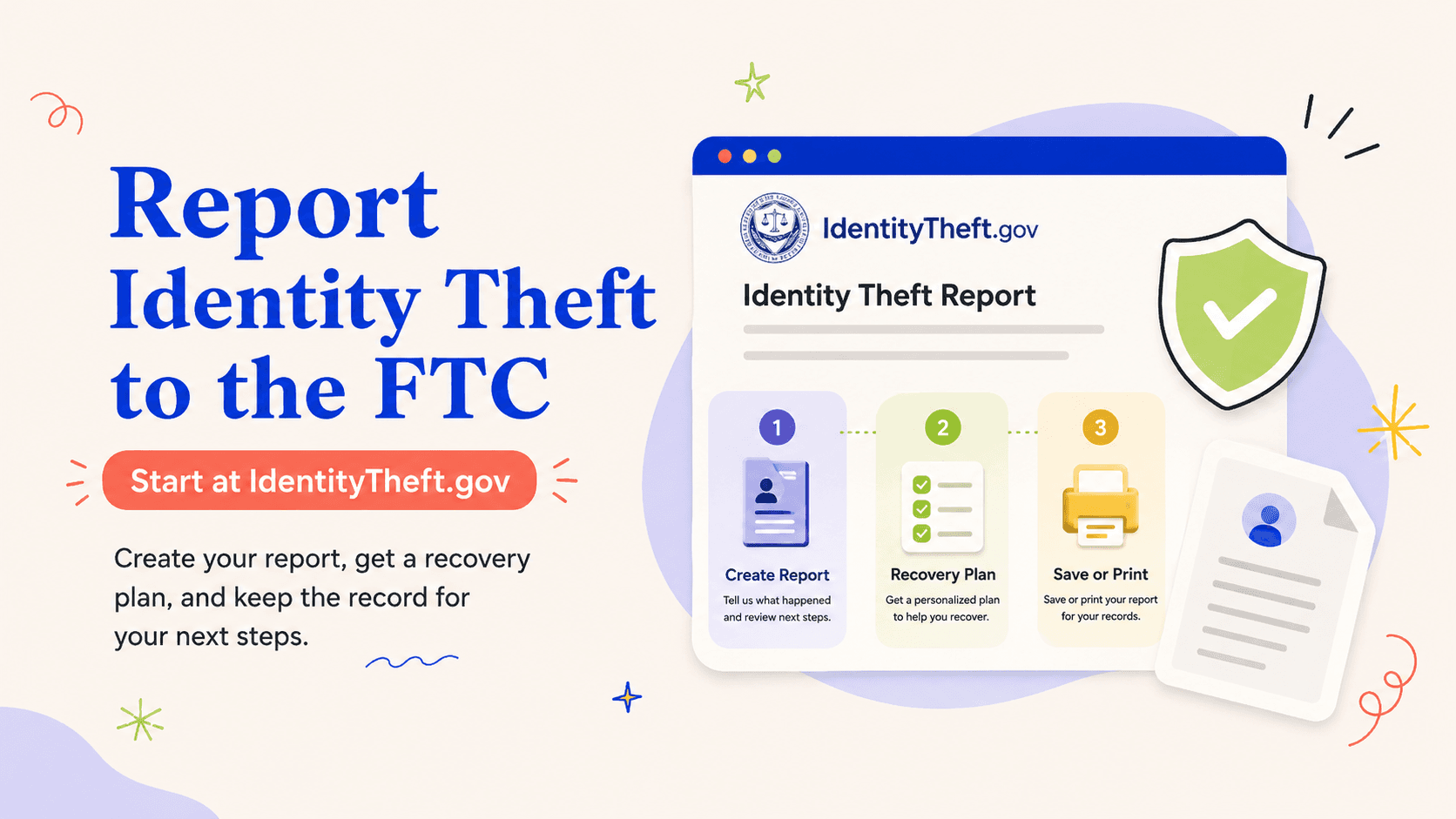
You can also report broader identity theft at IdentityTheft.gov for your recovery file, but that does not replace the state unemployment report. Keep the two records linked by date and claim number so you can show that the same stolen identity was used in more than one place.
If a 1099-G arrived, request a corrected form from the state
IRS guidance says that if a 1099-G reports unemployment benefits you did not receive, report the fraud to the issuing state agency and request a corrected Form 1099-G. Save the incorrect form and your correction request rather than discarding it, because it documents why the state’s original tax record does not match your income.
The state, not the IRS, generated the unemployment-benefit record, so the state is the place to correct the form. Use the contact route the state provides for 1099-G identity fraud when one exists.
Do not add fraudulent benefits to your tax return
IRS says taxpayers should include only unemployment income they actually received. If the incorrect 1099-G reports benefits paid to an identity thief, do not report that fraudulent amount as your income simply because the form exists.
IRS also says you should not delay filing your tax return while the unemployment identity-fraud report is being investigated and you are waiting for a corrected 1099-G. Keep proof that you reported the problem to the state in case the tax record needs follow-up later.
Tell your employer if it received a claim notice
DOL lists an employer notice about a claim you did not file as a warning sign. If your employer contacts you, confirm in writing that you did not submit the claim and ask the employer to preserve the notice or state request it received. The employer may have its own response process with the state agency.
Do not assume your employer caused the problem. In many cases the employer is simply receiving a verification request because a fraudster used your employment history or SSN in a claim.
Secure the identity data that made the claim possible
Unemployment identity fraud often means a criminal had enough personal information to pass at least part of a state claim process. If the same breach exposed your SSN, freeze your credit, secure your primary email and phone, and review financial accounts for unrelated misuse. A benefits claim is evidence that the stolen data is being actively used.
If you are a real unemployment claimant and the issue is account takeover, immediately secure the unemployment account and any bank account used for deposits. DOL specifically describes claim hijacking as a situation where criminals change key data such as banking information after a legitimate claim is established.
Watch for claims in more than one state
DOL notes that notices can arrive from a state where you never lived or worked. IRS also warns that stolen identities have been used for fraudulent claims across multiple states. If one fraudulent claim appears, keep watching for additional state mail and tax forms instead of assuming the issue is isolated.
Maintain a separate entry for each state claim with its claim number, report date, and confirmation. That prevents one state’s case from being confused with another when you later compare tax records or employer notices.
Ignore follow-up messages that bypass official state channels
Once your name appears in an unemployment fraud case, scammers may send texts or emails pretending to help “release” funds or verify your identity. DOL explicitly warns consumers not to click unknown links or send documents to unverified sites. Return to the official state website through the DOL directory instead.
This is especially important if the original breach already exposed enough information for a scammer to personalize the message. Familiar details do not prove that a message is legitimate.
Example: an unexpected 1099-G while you stayed employed
Imagine you worked all year but receive a 1099-G showing unemployment compensation from another state. You use the DOL directory to reach that state’s identity-fraud reporting page, submit the report, and request a corrected 1099-G. You save the original form, state confirmation, and any correspondence.
When filing your federal tax return, you report only the income you actually received rather than adding the fraudulent unemployment amount. You also freeze your credit and review your reports because the false claim shows that your SSN and other personal information were used successfully.