A credit report shows a new auto lender and a dealership inquiry, but you did not buy or lease a vehicle and the application date follows a breach of your SSN.
Verify the loan, lender, and vehicle without contacting a random seller
Start by treating a fraudulent auto loan or lease opened with your identity as a specific response problem rather than as proof that every part of your identity has been taken over. It can create a large balance, hard inquiries, a tradeline, collection activity, and possible vehicle-related notices under your identity. Confirm the lender’s identity through an official website and ask for the application date, dealer, vehicle information, balance, and mailing address associated with the account.
Contacting anyone can wait a moment — first save the notice, record the date received, and note the specific data or account it flags. Do not call a phone number from an unexpected repossession text or dealer message until you know it belongs to the actual lender or servicer.
Contact the lender or leasing company through a verified fraud channel and state that you did not apply for or authorize the vehicle financing. Ask for the account number, opening date, dealer or application channel, vehicle information, and the lender's fraud case number. Those details help separate a real fraudulent loan from a scammer inventing a past-due balance.
Tell the lender the application was not yours
The first move should reduce the most immediate pathway to misuse. Tell the lender’s fraud department you did not apply for the vehicle financing and ask it to stop further disbursement, servicing, or collection while the claim is reviewed.
Trying to fix everything simultaneously is a common misstep; a step-by-step order works better. Freeze all three nationwide credit files because a thief who successfully obtained vehicle financing may attempt other new-credit products.
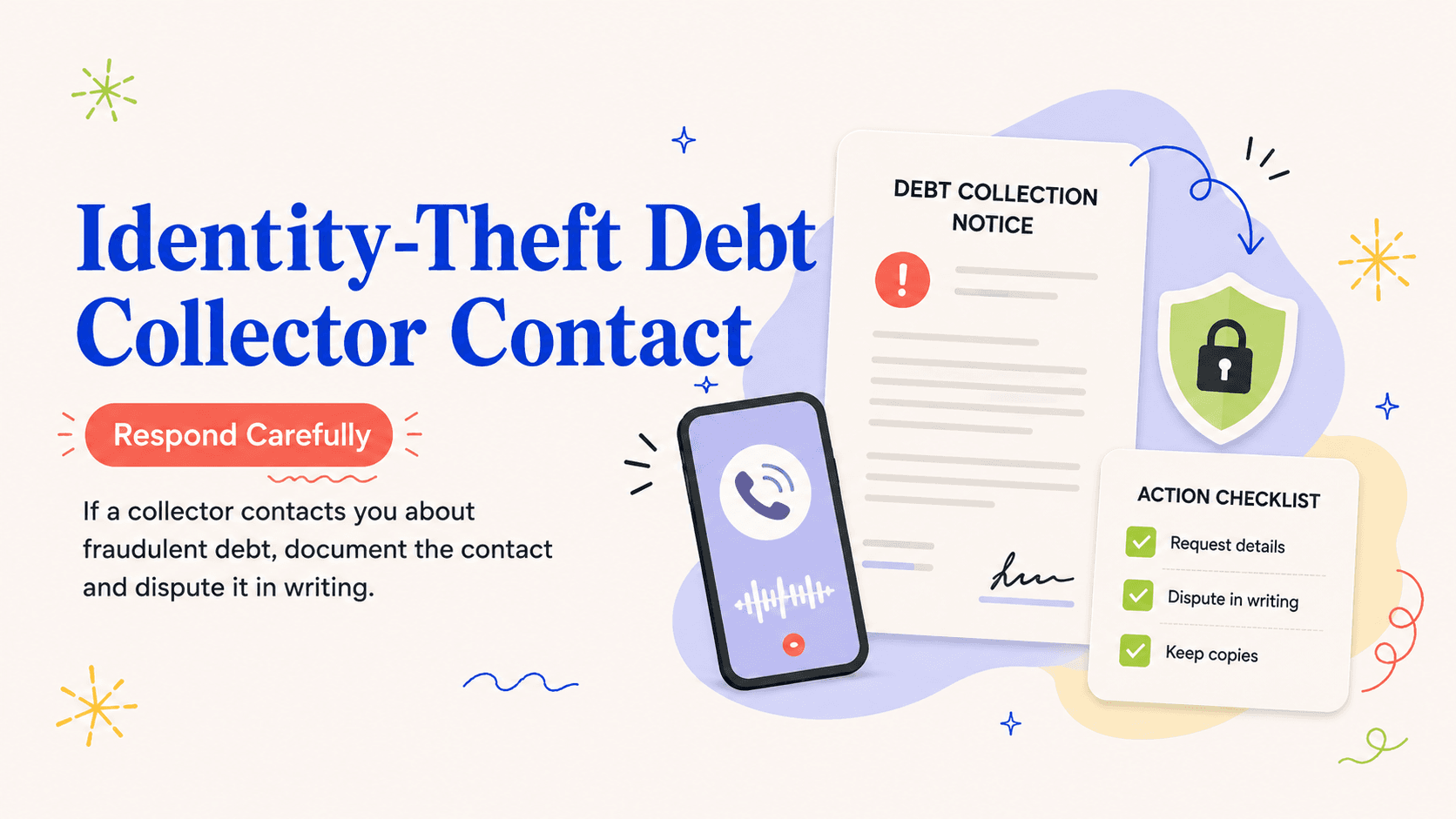
Ask what documents the lender requires to investigate and whether it can stop collection activity while the fraud review is open. If the account has already been assigned to a collector, notify the collector separately that the debt is disputed as identity theft. Keep the lender and collector correspondence together so the same balance does not get treated as two unrelated problems.
Freeze the path to additional vehicle or credit applications
The lender controls its loan or lease account, while dealers, credit bureaus, and collectors may each hold separate records created during the same fraudulent application.
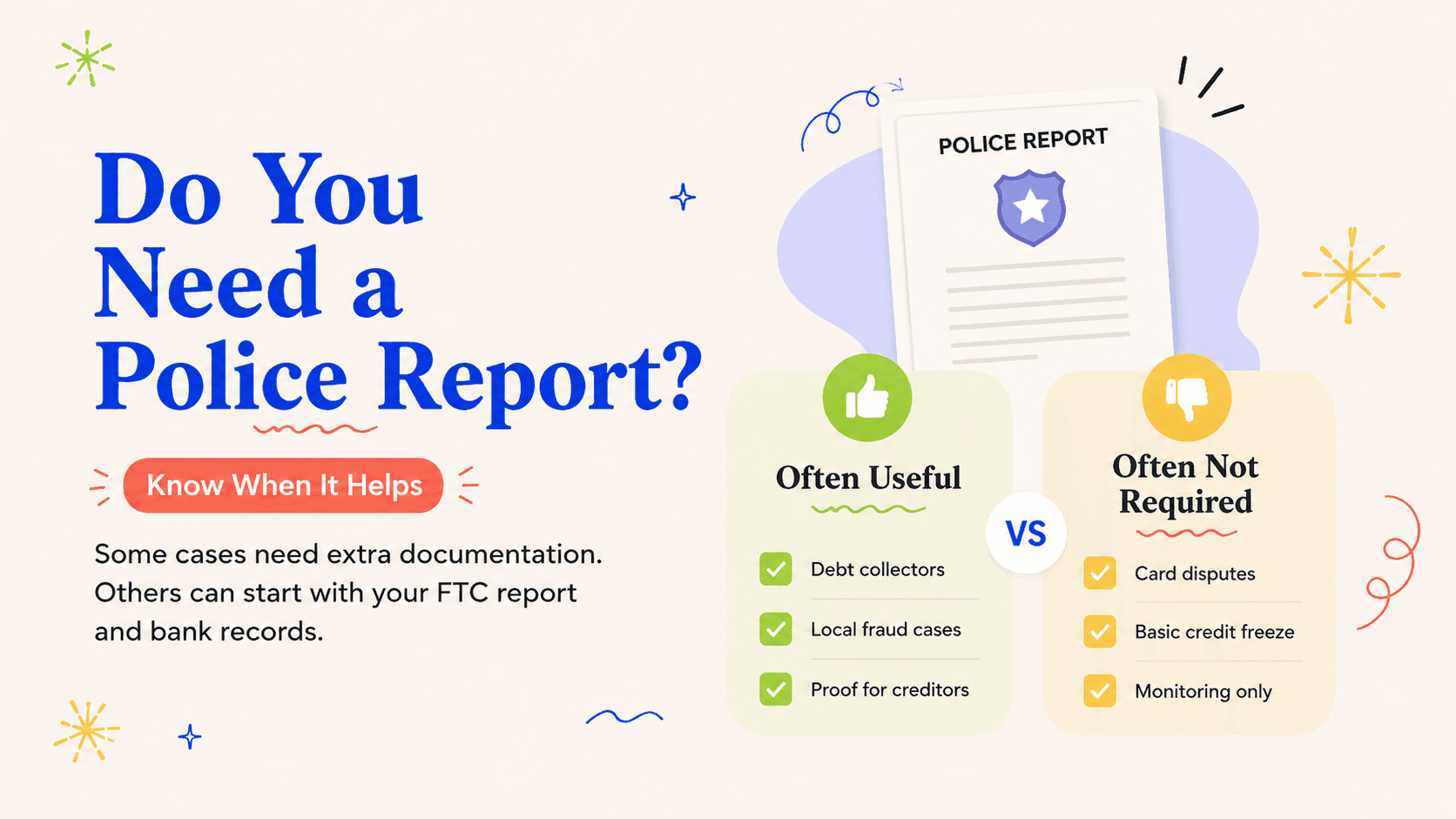
Any ask for identity paperwork should be verified against the official source before you respond. Submit the FTC report and identity documents only through the lender’s verified fraud channel and keep a copy of the complete packet.
Review all three credit reports for the auto loan or lease, related hard inquiries, and other applications around the same date. Vehicle financing often involves a credit pull, so an unfamiliar inquiry may show where the application began. Freeze the files if ongoing new-credit fraud is a concern while the lender investigates.
Map inquiries, tradelines, addresses, and possible collections
The relevance of a credit freeze hinges on whether the compromised data could be used for new-account fraud. Review all three reports for the lender tradeline, dealership or lender inquiries, unfamiliar addresses, and any collection account tied to the vehicle.
A dated baseline from annualcreditreport.com is the first move for credit monitoring, wherever it's warranted. Watch for insurance, toll, tax, registration, or collection correspondence that might point to the same vehicle identity misuse even if those systems are not on a credit report.
Request application records that can document the fraud
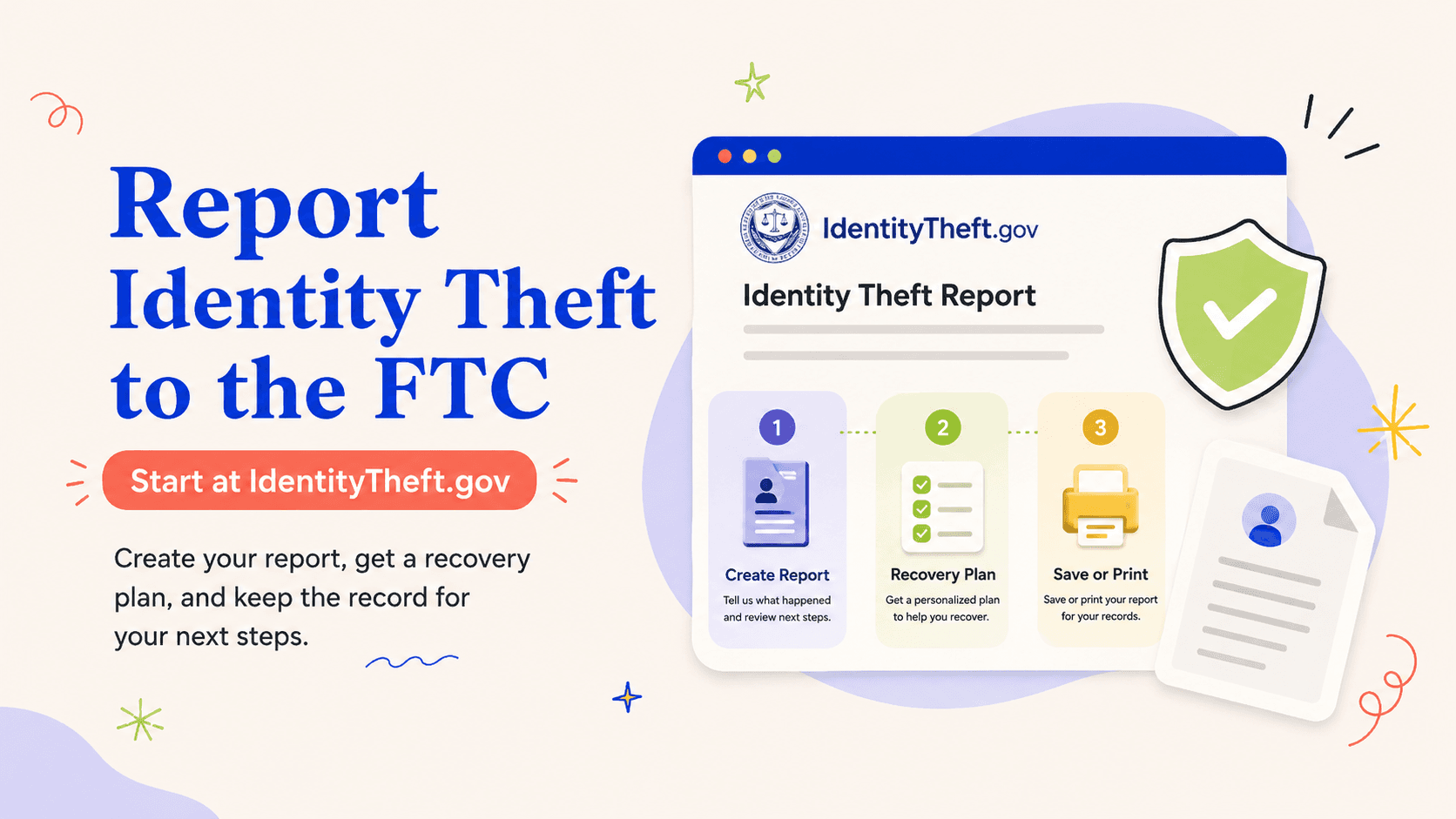
Recording details as you go is part of resolving this — it isn't a separate, later task. Request application or transaction records when useful because IdentityTheft.gov explains rights to certain documents related to the theft.
The instant misuse is confirmed, this situation becomes a recovery case rather than a watch-and-wait one. Use an FTC Identity Theft Report to keep the lender and bureau disputes aligned and to document that you did not authorize the account.
Create an FTC Identity Theft Report when the fraudulent financing is established and use it with the lender and consumer reporting companies as their procedures require. Request application or transaction records through the verified identity-theft process if those records will help document the misuse. Do not contact a suspected dealer or individual in a way that could compromise an investigation.
A closed loan can still leave downstream reporting behind
One control rarely fixes every consequence of a case like this. A lender’s internal closure does not automatically remove an inquiry from every bureau or stop a separate debt collector that already received the account.
Also separate exposure from confirmed misuse. Dealer prequalification or a co-signed family purchase can create inquiries without a funded loan, so confirm the account status before filing a full identity-theft claim.
Watch for fake repossession or payoff demands
Expect follow-up scams that reference the loan. Fraudsters may threaten repossession at your home or demand a payoff to “clear” a vehicle you never owned.
A legitimate recovery process should be verifiable through an established channel. Verify the lender independently and do not send money to make a fraudulent balance disappear.
Recheck every credit file after the lender resolves the case
Close out the first phase with dated calendar reminders rather than a mental to-do list. Obtain written closure or zero-liability confirmation and then compare all three reports after the lender’s correction period.
The vehicle-finance case is resolved when no loan balance, inquiry, collection, or other lender record continues to treat you as the borrower.
After the lender resolves the account, verify the credit reporting, balance, and collection status rather than assuming they update instantly. If a title, registration, or government record is also implicated, contact the relevant state agency through its official channel. Financing cleanup and vehicle-record cleanup are separate systems even when the same fraudulent application caused both.