You receive a USPS confirmation for a move you never requested or important financial mail suddenly stops arriving.
Treat an unauthorized address change as an account-control problem
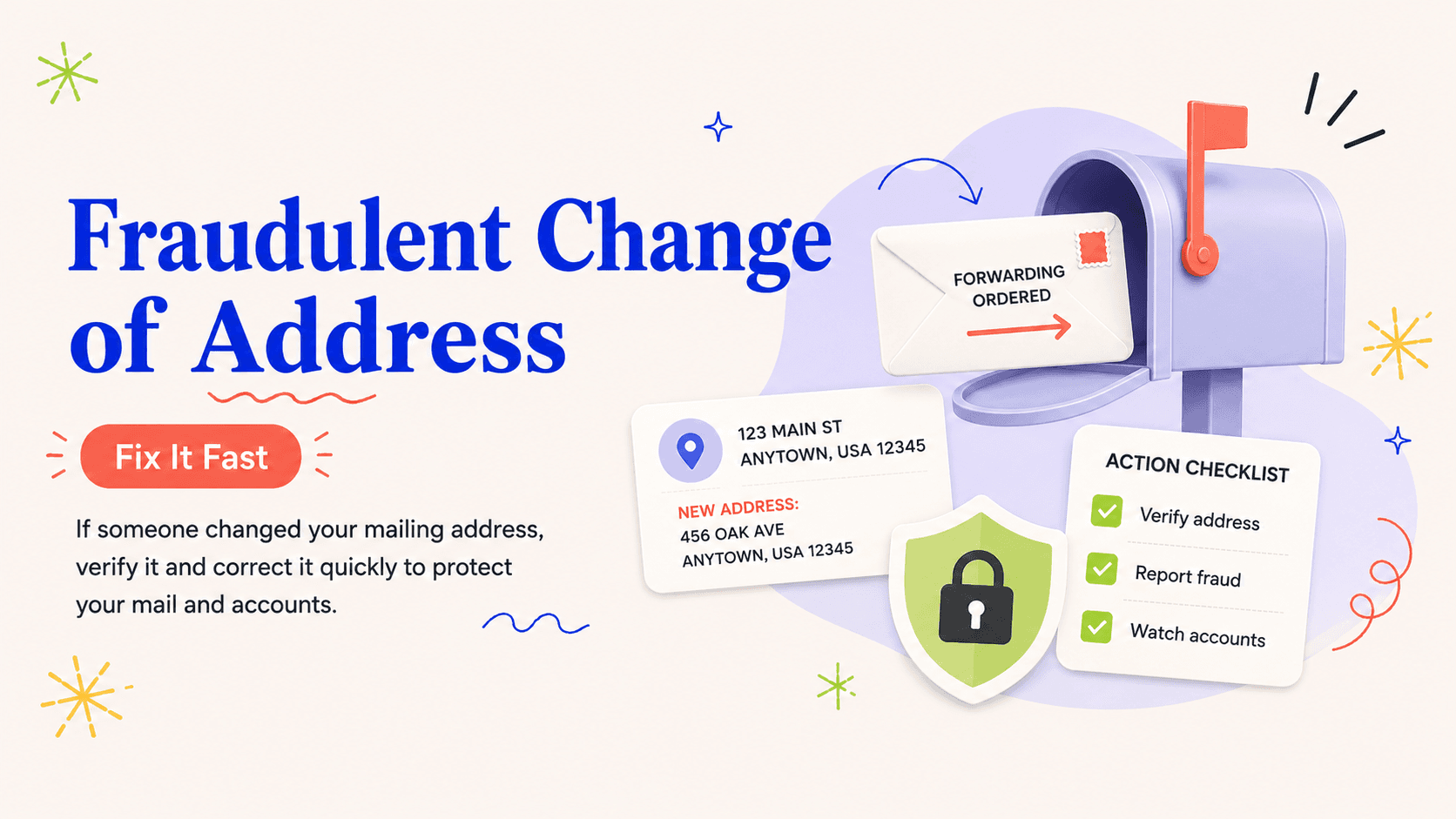
A false change of address can redirect bills, replacement cards, tax documents, and fraud alerts away from you. USPIS provides a reporting path specifically for identity theft, fraudulent change of address, fraudulent mail holds, and fraudulent Informed Delivery accounts. If the change was not yours, do not dismiss the confirmation as junk mail.
Start by preserving the confirmation letter, email, or other notice and noting when normal mail delivery changed. That timeline can help you distinguish a postal change from a company-specific address change at a bank or lender.
Confirm your current USPS change-of-address status through official channels
Use USPS.com or visit a local Post Office rather than following a link from an unexpected message. USPIS warns consumers to use USPS.com or a Post Office for legitimate address changes. The goal is to determine whether USPS has a forwarding order or other change associated with your name and address.
If you cannot confirm the status online or need help correcting it, use official USPS support or in-person service. Avoid third-party websites that charge for address changes or ask for unnecessary identity information.
Report the fraudulent change to Postal Inspectors
The Postal Inspection Service incident form includes an option for reporting a fraudulent change of address. Use that route when the postal change itself was unauthorized. Save the confirmation or reference number after submitting the report so you can add it to your broader identity-theft file.
If mail was stolen in addition to being redirected, note that separately in the report. A forwarding fraud, mail theft, and a bank account takeover can occur together, but each event has different evidence and may need its own response.
Check whether the thief changed addresses directly with companies
USPS explains that identity thieves may change an address directly with a vendor, bank, or financial institution rather than through the Postal Service. That means fixing the USPS forwarding problem is not enough. Review your bank, card, brokerage, loan, insurance, tax, and mobile accounts for unauthorized mailing-address changes.
Secure each affected account using the company’s fraud channel. Restore the correct address, change passwords where needed, review phone and email recovery methods, and ask whether statements or replacement cards were recently mailed to another address.
List the mail you expected but did not receive
Write down missing statements, checks, replacement cards, tax forms, benefit letters, or other sensitive mail. Contact the sender using a verified number and ask whether the item was mailed, returned, or redirected. If a check or payment card is missing, tell the issuer promptly so it can decide whether to stop, replace, or monitor it.
This inventory also helps identify which accounts a thief may be targeting. Missing routine advertising is less significant than a missing new credit card, bank statement, or government notice that could help a thief take over another account.
Secure digital channels that can authorize address changes
Many companies let customers change a mailing address through an online account. If your primary email or phone number was compromised, a thief may have used those channels to authorize changes. Review recent login history, remove unknown devices, reset the password, and strengthen multi-factor authentication on the accounts that control other services.
Do this before changing the address back when possible. Otherwise, the thief may simply sign in again and repeat the change. Your postal address, email, and phone are all recovery channels, so restore control of the entire chain.
Watch credit reports for new accounts tied to the new address
A fraudulent address can appear on a credit file when a thief opens or updates an account. Review all three credit reports for unfamiliar addresses, inquiries, or new accounts. If you find identity-theft information, use the bureau dispute or blocking process and connect it to your FTC Identity Theft Report.
Do not dispute a legitimate prior address merely because you no longer live there. Focus on information you can identify as wrong or connected to the theft. Clear facts produce a cleaner dispute record.
Consider freezes if the address change followed a data breach
If the unauthorized change appeared after your SSN, date of birth, or other identity data was exposed, place freezes with all three nationwide credit bureaus while you investigate. A fraudulent address change can be a preparation step for opening accounts or intercepting creditor mail.
A credit freeze does not fix USPS forwarding and does not secure an existing bank account. It is a separate containment measure for new-credit risk, so use it alongside the postal and account-recovery steps rather than instead of them.
Keep the postal report with your identity-theft chronology
Store the USPIS report reference, USPS confirmations, copies of missing-mail complaints, bank case numbers, and credit-report screenshots together. A single chronology makes it easier to explain the incident if another company asks when you first learned of the address change.
If local police or another agency becomes involved, provide copies rather than handing over your only originals. Keep sensitive records in a secure location because they may contain the same personal information the thief already misused.
Example: bank mail disappears after a false move request
Suppose a USPS confirmation says your mail will be forwarded to an address in another city, and you never filed a move. You preserve the notice, verify the problem through USPS, file a fraudulent-change report with USPIS, and restore your correct mailing status.
You then discover your bank profile also shows the unfamiliar address. You secure the bank login, restore the address, ask whether any cards were mailed, review transactions, and check credit reports for new activity. The postal report becomes one piece of a larger response rather than the only step you take.