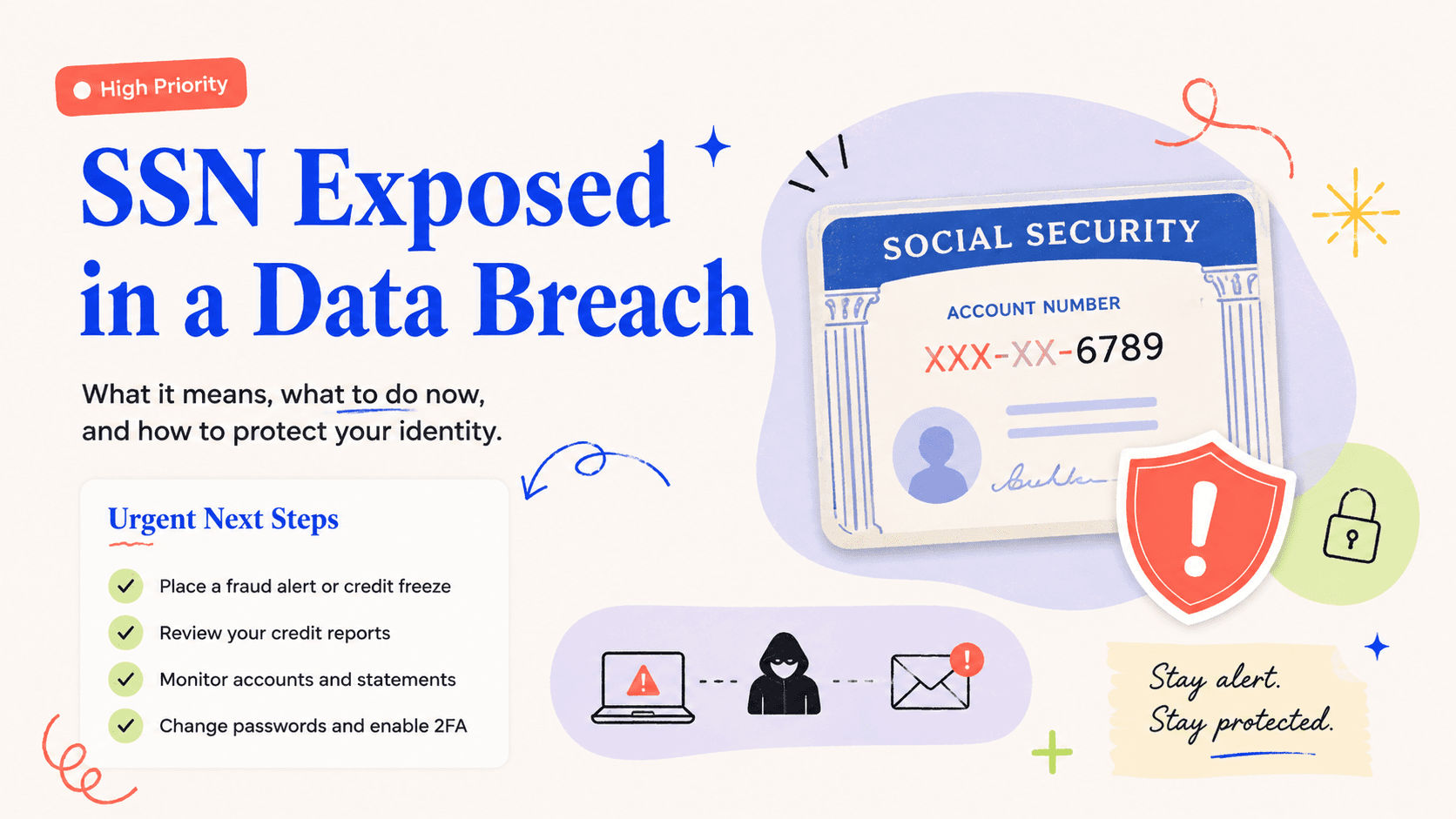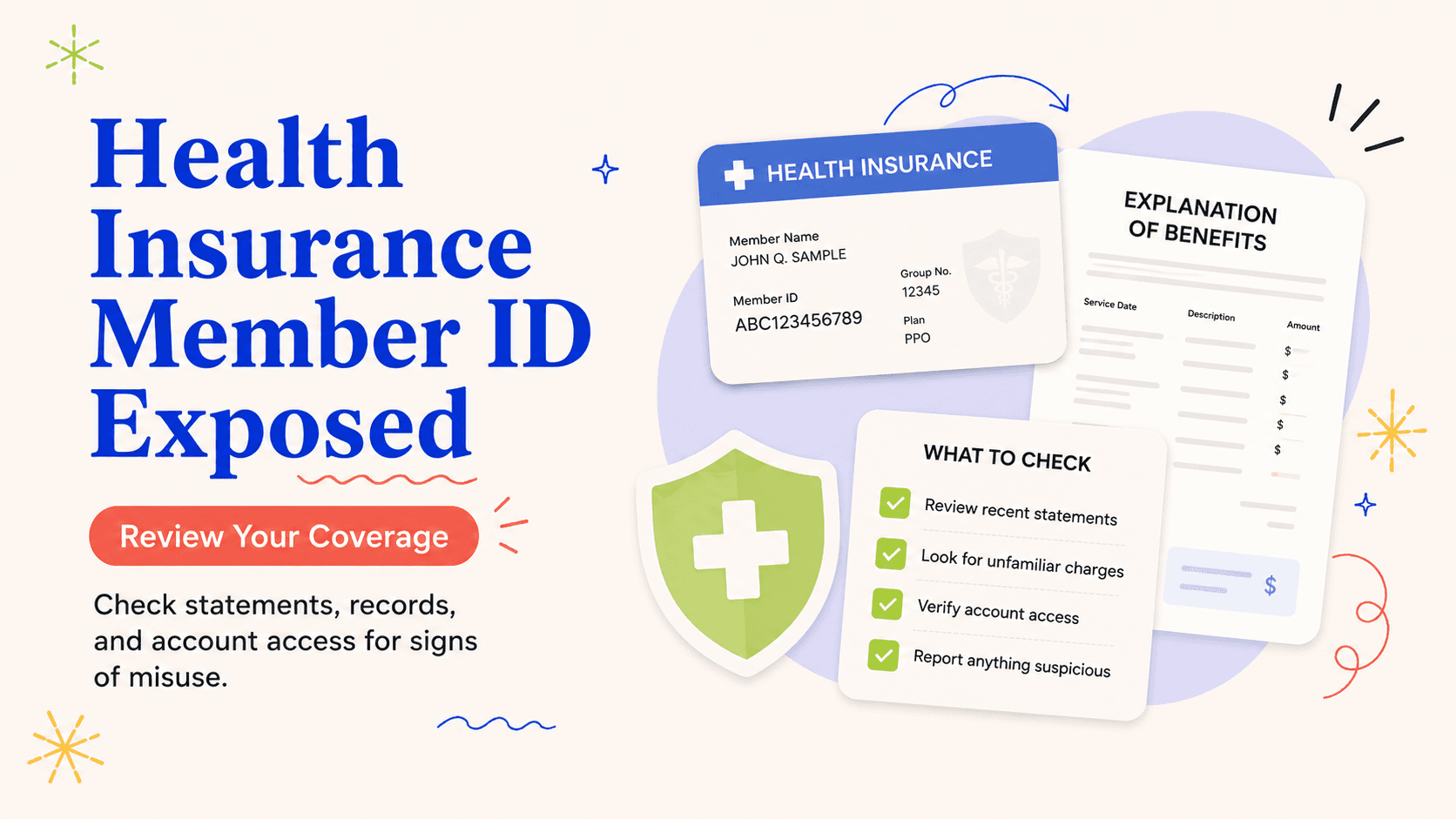
A health plan breach notice lists your member ID and demographic information, and you want to know whether credit monitoring alone is enough.
Treat the member ID as a health-record risk first
Start by treating an exposed health-insurance member or subscriber ID as a specific response problem rather than as proof that every part of your identity has been taken over. HHS describes medical identity theft as use of another person's identity information to submit fraudulent claims or obtain health services, which can affect both billing and the accuracy of medical records. Identify whether the breach involved only this identifier or also SSNs, login credentials, diagnosis information, Medicare identifiers, or financial data.
Before reaching out to anyone, hold onto the notice, record the date, and pin down exactly what data or account it covers. Health-plan misuse may never create a traditional credit account, so credit monitoring cannot substitute for reviewing insurer claims and provider records.
Start with the health plan or insurer that issued the member number. Ask whether the identifier is being replaced, whether a new card will be issued, and how the plan wants suspicious claims reported. A member ID can be used inside health-care billing systems, so the relevant monitoring is not limited to a consumer credit report.
Secure the insurer portal and contact information
The first move should reduce the most immediate pathway to misuse. Change the health-plan portal password if credentials were involved, verify recovery contacts, and ask the insurer how it wants members to flag suspicious claims or replacement identifiers.
It helps to rank the risks rather than chase all of them in parallel. An unexplained claim, benefit-limit problem, or provider entry deserves faster attention than an optional promotional monitoring offer.
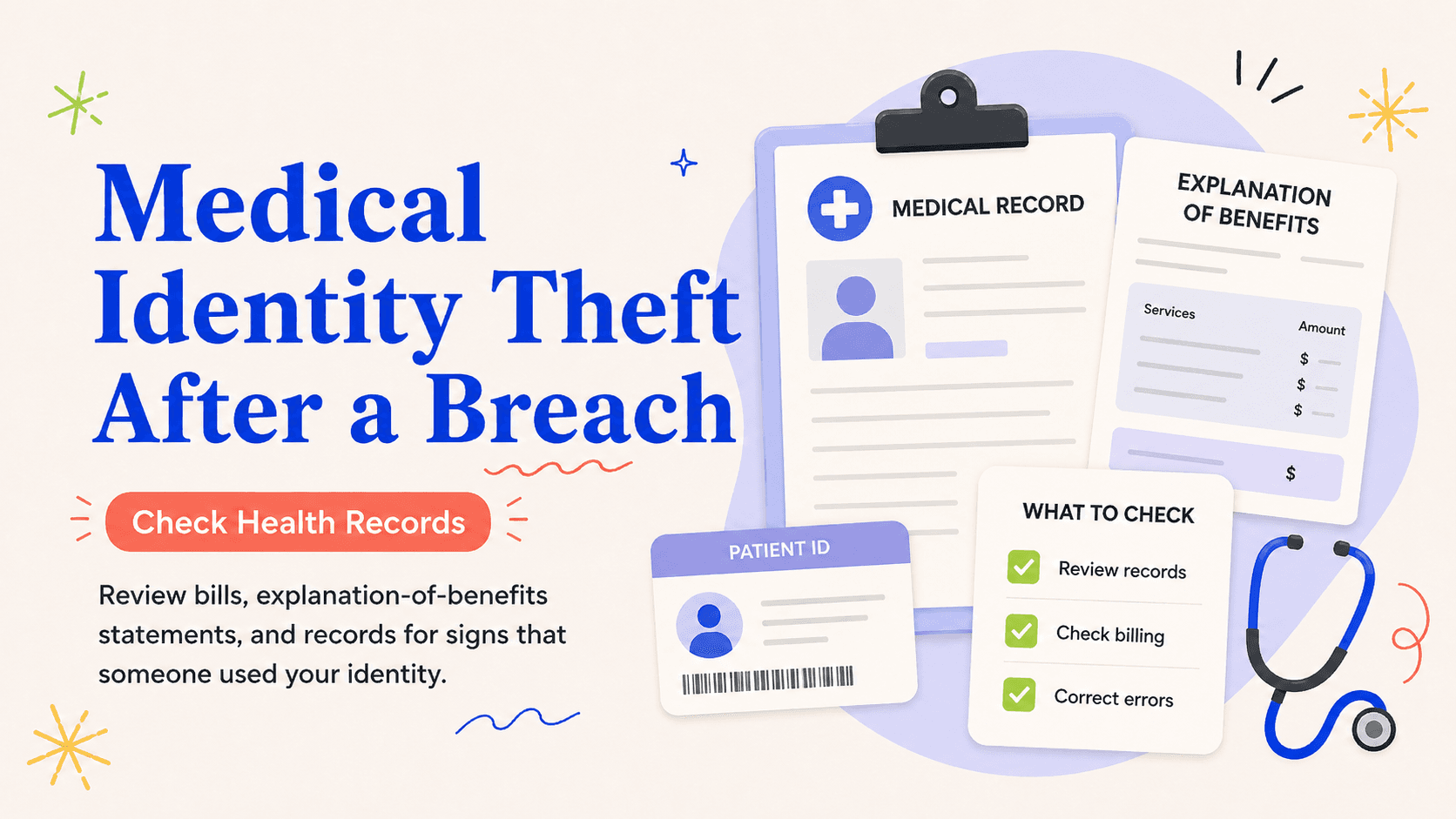
Read explanations of benefits even when the amount owed is zero. An unfamiliar provider, procedure, prescription, date of service, or dependent can be an early sign that someone used your insurance identity. Contact the plan's fraud or member-services channel to verify the entry before assuming it is fraud, because billing names and service locations can differ from the clinic name you remember.
Review claims, explanations of benefits, and provider records
The health plan can explain claims, benefits, replacement member cards, and internal fraud procedures, while a provider can verify whether a listed service was actually delivered.
When identity verification documents get requested, check the channel is real before handing anything over. Use the member-services number on a known card or official plan website rather than a callback number in an unexpected breach text.
If the medical record itself contains information that is not yours, tell the provider and insurer in writing which entries you dispute. Medical identity theft can create clinical as well as financial problems: allergies, diagnoses, medications, and histories may be attached to the wrong person. Keep copies of corrected records and the correspondence that explains why a change was requested.
Do not rely on a credit freeze to detect medical misuse
Consider a credit freeze only if this particular exposure creates a realistic path to new credit or reporting fraud. A credit freeze addresses new-credit risk only when the breach also involved data useful for credit applications; it does not correct a false diagnosis or insurance claim.
Credit monitoring, where relevant, starts with a baseline: pull a dated report from annualcreditreport.com before anything else. Compare explanations of benefits and provider statements for dates, services, and locations you do not recognize, including small claims that could be tests of an identity.
Preserve records before asking for corrections
Records built now are working parts of the resolution, not filing to do later. Save suspicious EOBs, bills, provider messages, and the breach notice before requesting corrections so you can show what the record looked like at each stage.
If you find actual misuse connected to the exposed identifier, shift from breach preparation to identity-theft recovery. If questionable charges involve Medicare or another federal health program, HHS OIG provides reporting channels; privacy-rule concerns involving a covered entity can also be raised through HHS OCR.
A credit freeze addresses a different system. It can help if the same breach exposed information that could be used to open new credit, but it cannot stop a fraudulent medical claim from being submitted to an existing health plan. Pair the tool with the risk: insurance records for medical misuse, credit files for new-credit misuse, and account security for compromised portals.
Know the difference between billing fraud and a privacy complaint
One control rarely fixes every consequence of a case like this. A replacement insurance card does not automatically repair medical records already created under the stolen identity.
Also separate exposure from confirmed misuse. An ordinary coding error can look like identity theft, so confirm the service with the provider before assuming every mismatch is criminal misuse.
Be suspicious of breach-related insurance calls
Expect follow-up scams that reference the exposed identifier. Post-breach callers may offer a new insurance card or “benefit verification” while asking for SSNs, payment information, or one-time codes.
A legitimate recovery process should be verifiable through an established channel. End the call and contact the plan through a known member-services channel if the caller asks for information unrelated to the stated correction.
Keep checking until questionable claims are resolved
Don't leave follow-up dates to memory; write them into a calendar as the final step here. Revisit claim history after the next statement cycle and keep watching until corrected services, balances, and medical details are reflected consistently.
You should know whether the exposed identifier led to an actual claim, which organization owns each inaccurate record, and what confirmation proves the correction is complete.
If a provider or plan does not resolve a privacy or security concern, use the complaint path published by HHS OCR when it applies. For suspected medical identity theft, HHS OIG also provides consumer guidance. Keep the breach notice, EOBs, disputed records, and case numbers together so later corrections have a clear chronology.
Also verify dependents and pharmacy activity if they share the same plan. A fraudulent claim can appear under a family member or through a pharmacy benefit even when your own recent doctor visits look normal. Ask the insurer how to obtain a claims history that covers the relevant breach period and what process it uses to flag identity misuse. If the plan issues a replacement member number, confirm that the old identifier can no longer be used for ordinary member access and that automatic pharmacy or provider links will follow the new credential. Keep the replacement notice because a future provider may still have the old number in its records.