You have confirmed that a loan or credit card on your report was opened by someone else after a breach, and you want it off all three reports as quickly and permanently as possible.
Two tools, and why the block is stronger
There are two ways to challenge a fraudulent item on your credit report. A standard dispute tells the bureau you believe an item is inaccurate; the bureau then has about 30 days to investigate with the creditor, and if the creditor "verifies" the account, it can stay on your report while you keep fighting.
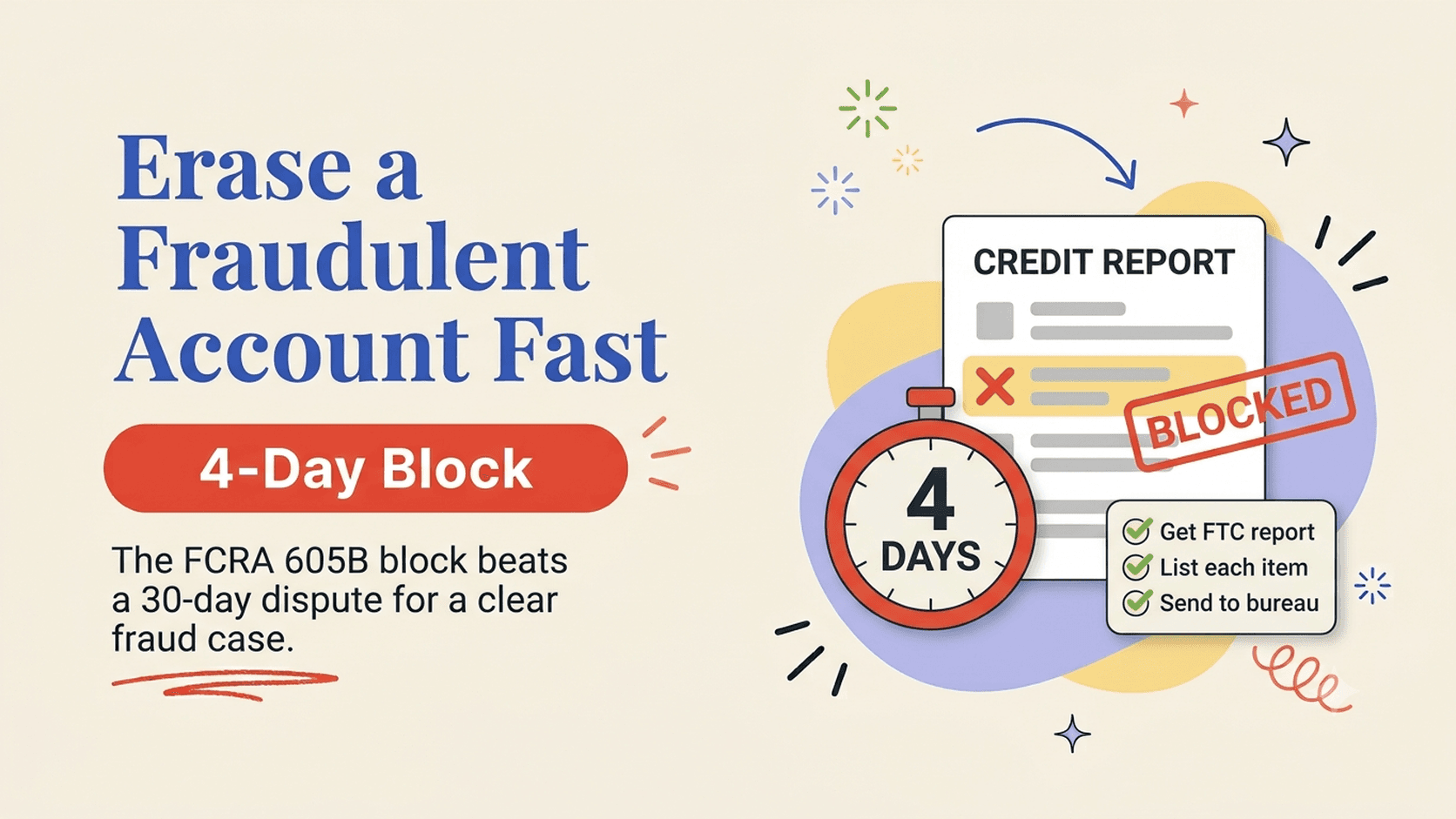
The identity-theft block under Section 605B of the Fair Credit Reporting Act is different. If you give the bureau a valid identity-theft report and proof of your identity, and you clearly identify the fraudulent items, the bureau must block them from your file within four business days and notify the creditor that the information may be the result of identity theft. The creditor is then barred from continuing to report it and from selling or transferring the debt for collection.
The block is the right first move for a clear-cut fraudulent account. The dispute is the fallback for items the block does not cover or a bureau refuses to block.
Get the FTC Identity Theft Report first
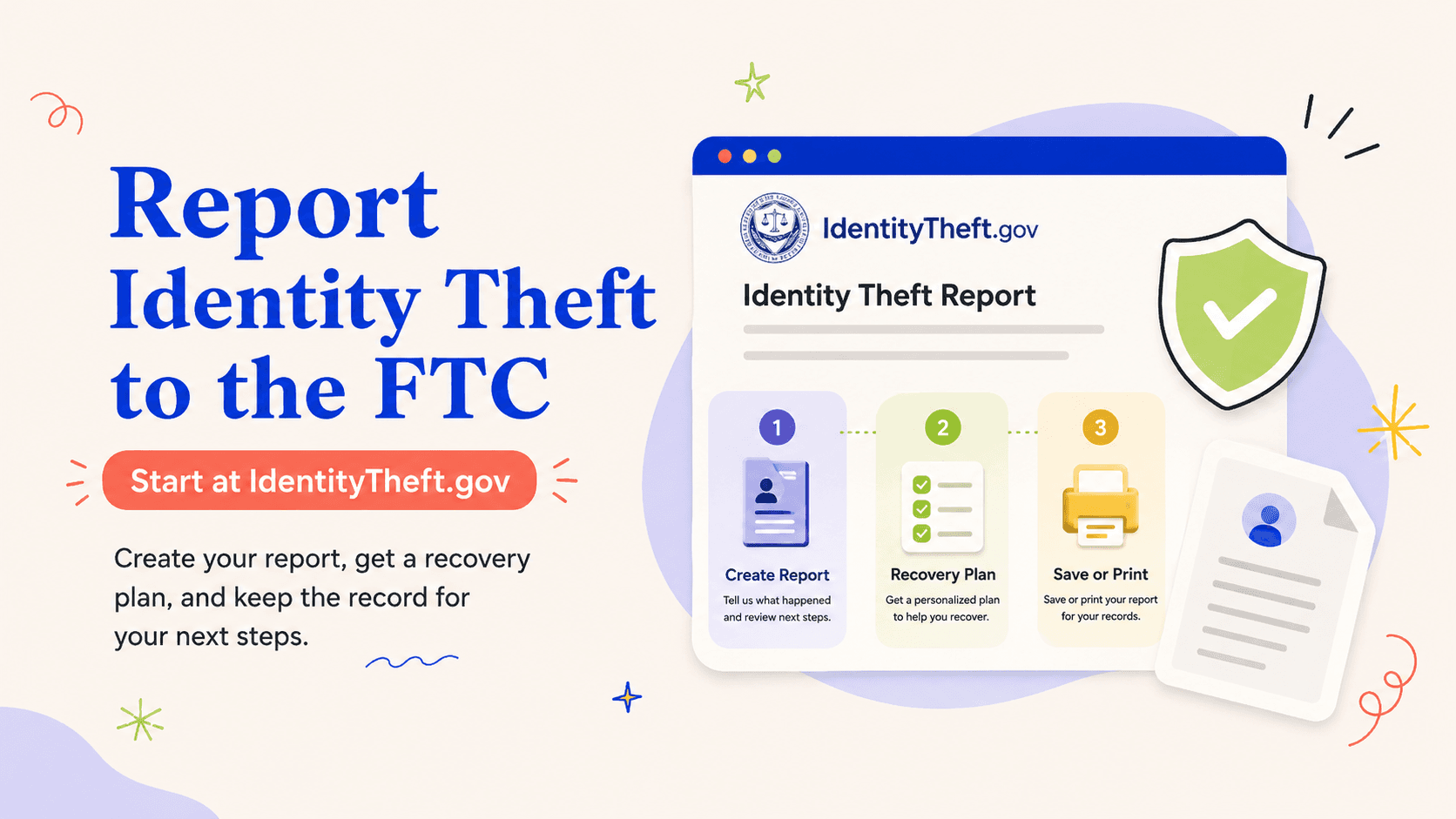
The block requires an "identity theft report." The baseline version is an FTC Identity Theft Report, which you create for free at IdentityTheft.gov by describing what happened. The site generates the report and a personalized recovery plan.
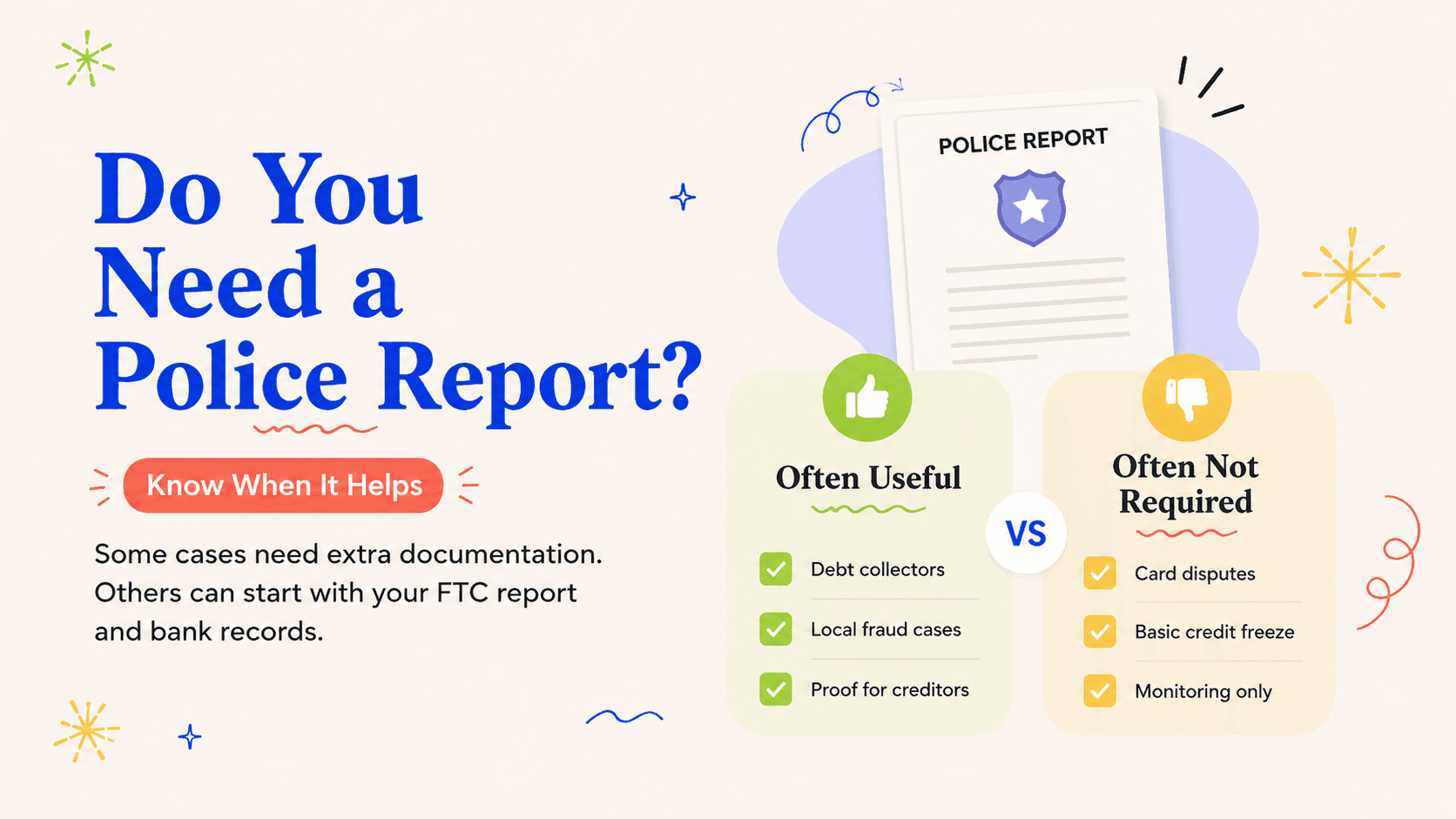
A police report is not required for the block, and a bureau cannot reject a valid 605B request just because you do not have one. Some individual creditors ask for a police report before they will act on their end, so filing one with your local department can be worth it — but do not let the absence of a police report stop you from sending the block request to the bureaus.
Send the block request to each bureau
Each of the three nationwide bureaus keeps its own file, so a fraudulent account usually appears on more than one and you send the request to each bureau that shows it.
IdentityTheft.gov provides prefilled letters for this. Your request should include your FTC Identity Theft Report, a copy of a government ID, proof of your address, and a clear list of every item you want blocked — each account by creditor name and partial account number, and any hard inquiry tied to the fraudulent applications. State plainly that these items resulted from identity theft and that you are requesting a block under FCRA Section 605B.
Send it by a method that gives you proof of delivery. The four-business-day clock runs from when the bureau receives a complete request.
What you have to identify, and what a bureau can refuse
The block is only as good as your list. Vague language — "remove all fraudulent accounts" — gives the bureau nothing to act on. Pull your reports, and for each item write the creditor name exactly as it appears, the last few digits of the account number, the date opened, and the type (credit card, personal loan, auto loan, collection).
A bureau can decline or later rescind a block in narrow circumstances: if it reasonably determines the request was made in error or based on a misrepresentation, if you received goods or services on the account, or if the information is not actually the result of identity theft. If a block is refused, ask in writing for the specific reason, fix what you can, and use the standard dispute process in parallel.
Also go to the creditor
Blocking the item at the bureau does not fix the creditor’s own records. The account still exists in the lender’s system as an open, unpaid obligation in your name until you address it there.
Contact the creditor’s fraud department, state that the account was opened through identity theft, send your FTC Identity Theft Report, and ask them to close the account as fraud, absolve you of the balance, and confirm in writing that they have instructed the bureaus to remove it. This is also where you request the application records — under the FCRA you can ask the business for the records related to the fraudulent account, which can reveal how it was opened and help with other fraud opened the same way.
Why a blocked item can come back
If the creditor keeps furnishing the account to the bureaus — because you blocked it at the bureau but never resolved it with the creditor — it can reappear on your report in a later reporting cycle.
This is the most common reason people think the block "did not work." The fix is to close the loop on both sides: the block at each bureau, and a written fraud determination from the creditor. Keep both, because a debt that was not fully cleared at the creditor can also be sold to a collection agency and surface under a new name.
Inquiries, collections, and address artifacts
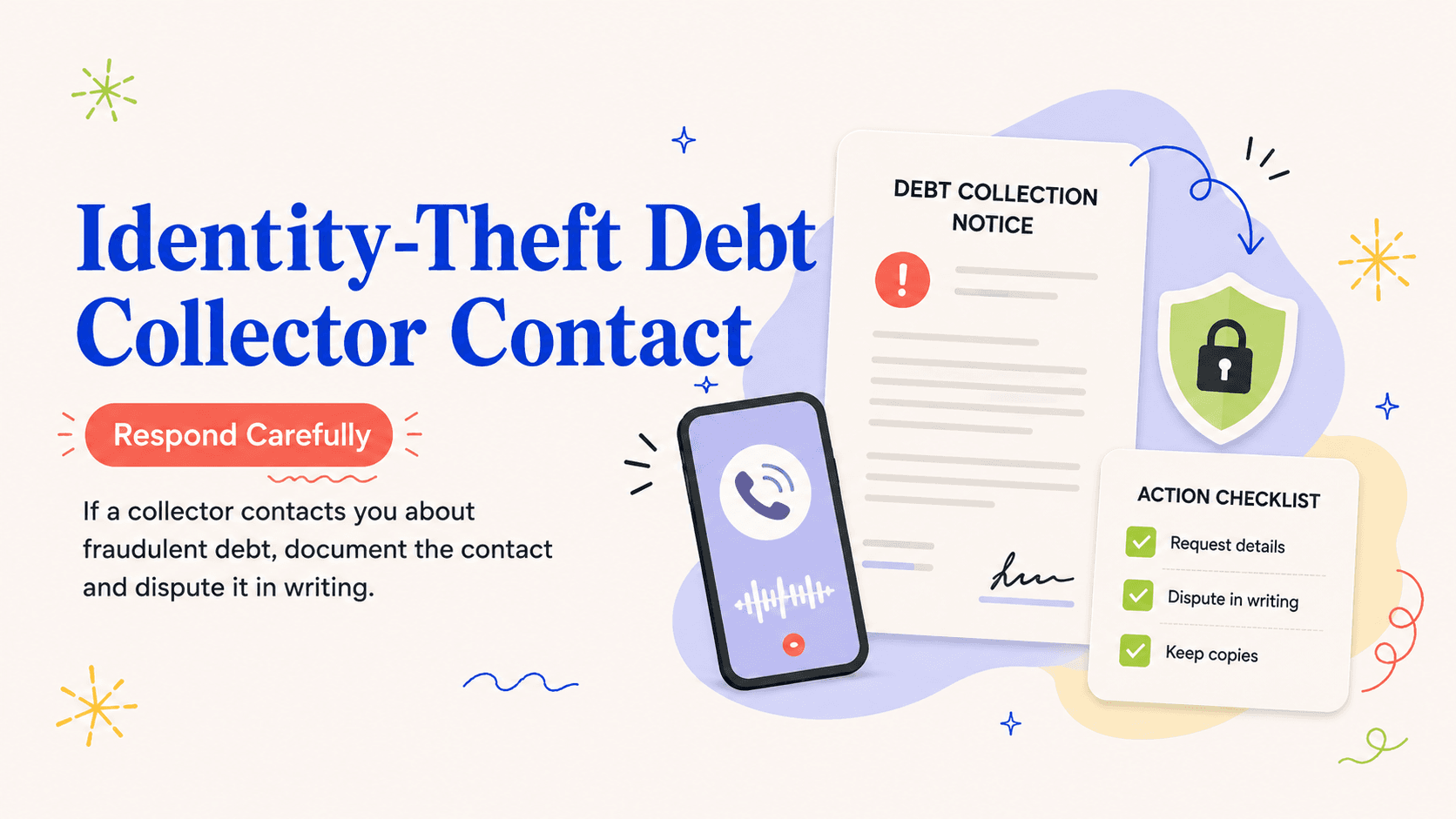
A fraudulent application usually leaves a hard inquiry as well as an account. Name the inquiry in your block request too. If the fraudulent balance has already gone to a collector, the collection tradeline is a separate item — block it at the bureaus and dispute it in writing with the collector, telling them it resulted from identity theft.
An unfamiliar address attached to the fraudulent account is evidence, not just clutter. Note it, and only ask to have it corrected after the account itself is resolved, so you do not remove a link between fraudulent accounts before you have traced them all.
Timeline and follow-up
Expect the bureau block to take effect within four business days of a complete request, the creditor’s fraud investigation to take longer — often 30 to 90 days — and the whole picture to settle over a few reporting cycles.
Re-pull all three credit reports about a month after you send everything. Confirm the account, the inquiry, and any collection are gone from each report, not just the one you started with. If an item is still there, check whether it is the bureau block that did not take or the creditor that is still reporting, and push on the right party.
How to format the list of items in your block request
Bureaus process block requests faster when each item is unambiguous. Use one line per item, in this format, rather than a paragraph describing the fraud:
- Creditor name exactly as it appears on the report, e.g. "Capital One"
- Account type, e.g. "credit card" or "personal loan"
- Last four digits of the account number
- Date opened, if shown on the report
- A one-line statement: "This account resulted from identity theft and I did not open it."
Frequently asked questions about the 605B block
- What if the bureau denies my block request? Ask in writing for the specific reason — the FCRA allows denial only in narrow cases, such as the bureau believing you received goods or services on the account. If you disagree, respond with evidence and file the standard 30-day dispute in parallel so you are not relying on the block alone.
- Does the block remove the item permanently? It stays blocked as long as the creditor does not re-furnish it and you do not ask to have it unblocked. If the creditor keeps reporting it because the fraud was never resolved on their end, it can reappear — which is why contacting the creditor's fraud department directly still matters.
- Can I use a 605B block for fraudulent utility or medical debt on my report, not just loans and cards? Yes. Section 605B covers any information resulting from identity theft, including utility accounts and medical debt collections that were not actually yours, as long as you identify the specific item and provide the same proof.
- Do I need a lawyer to file a 605B block? No. It is a consumer-initiated process using the bureau's own request form or a written letter with your FTC Identity Theft Report attached — no attorney is required, though one can help if a bureau or creditor refuses to cooperate after repeated attempts.
Worked example: a fraudulent card and a collection
You find a credit card you never opened on your Experian and TransUnion reports, plus a collection account on all three for the unpaid balance, and a hard inquiry from the card issuer.
You create an FTC Identity Theft Report at IdentityTheft.gov. You send each of the three bureaus a 605B block request listing the card (issuer name, last four digits, date opened), the collection (collector name, amount), and the inquiry, with your report and ID attached, by certified mail. Within four business days the items are blocked. Separately, you contact the card issuer’s fraud department and the collector in writing, send them the report, and get written confirmation from the issuer that the account was fraud and the balance is zeroed. A month later you re-pull all three reports: the card, the collection, and the inquiry are gone everywhere. You keep the full packet in case the balance is ever resold.