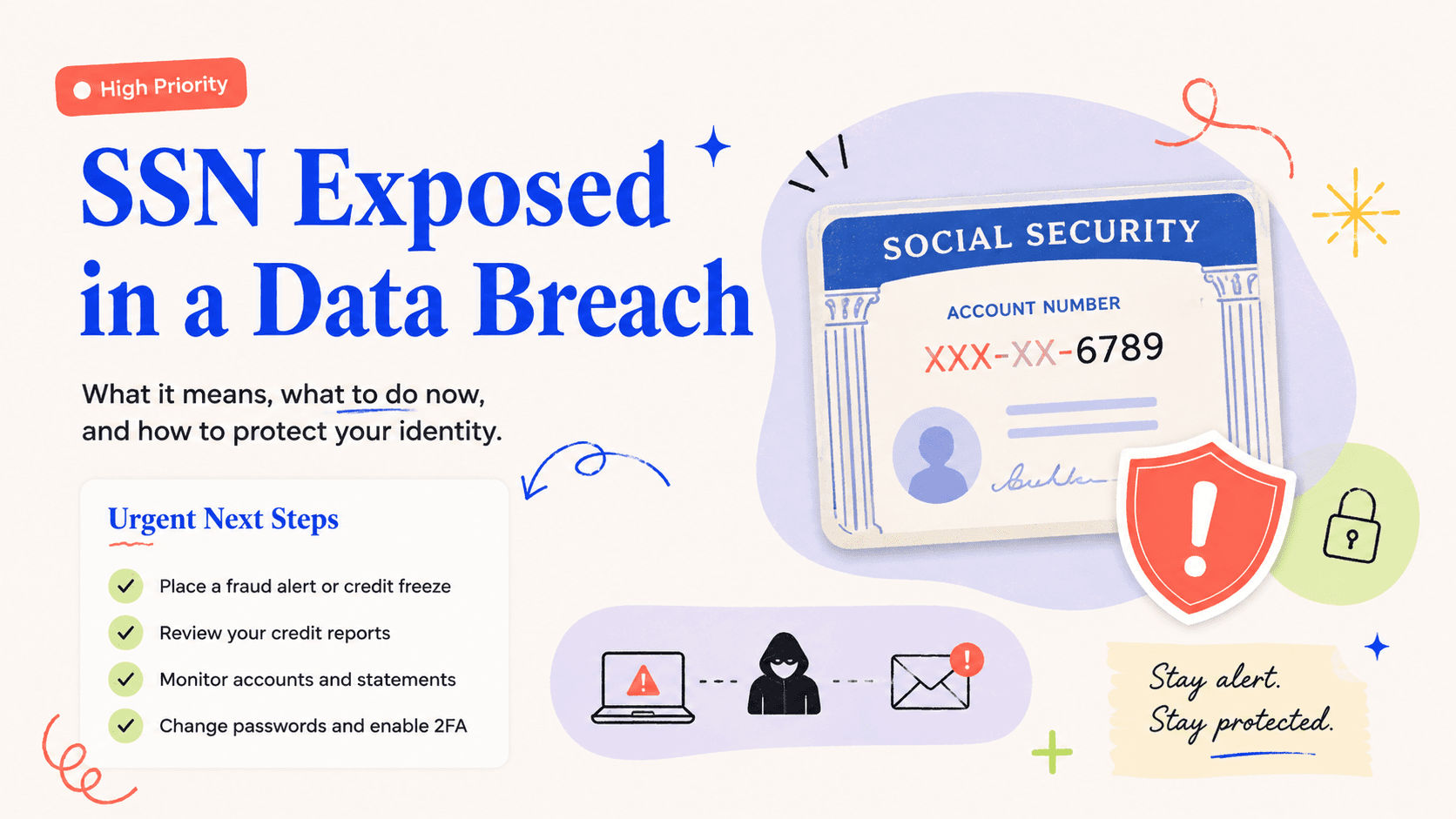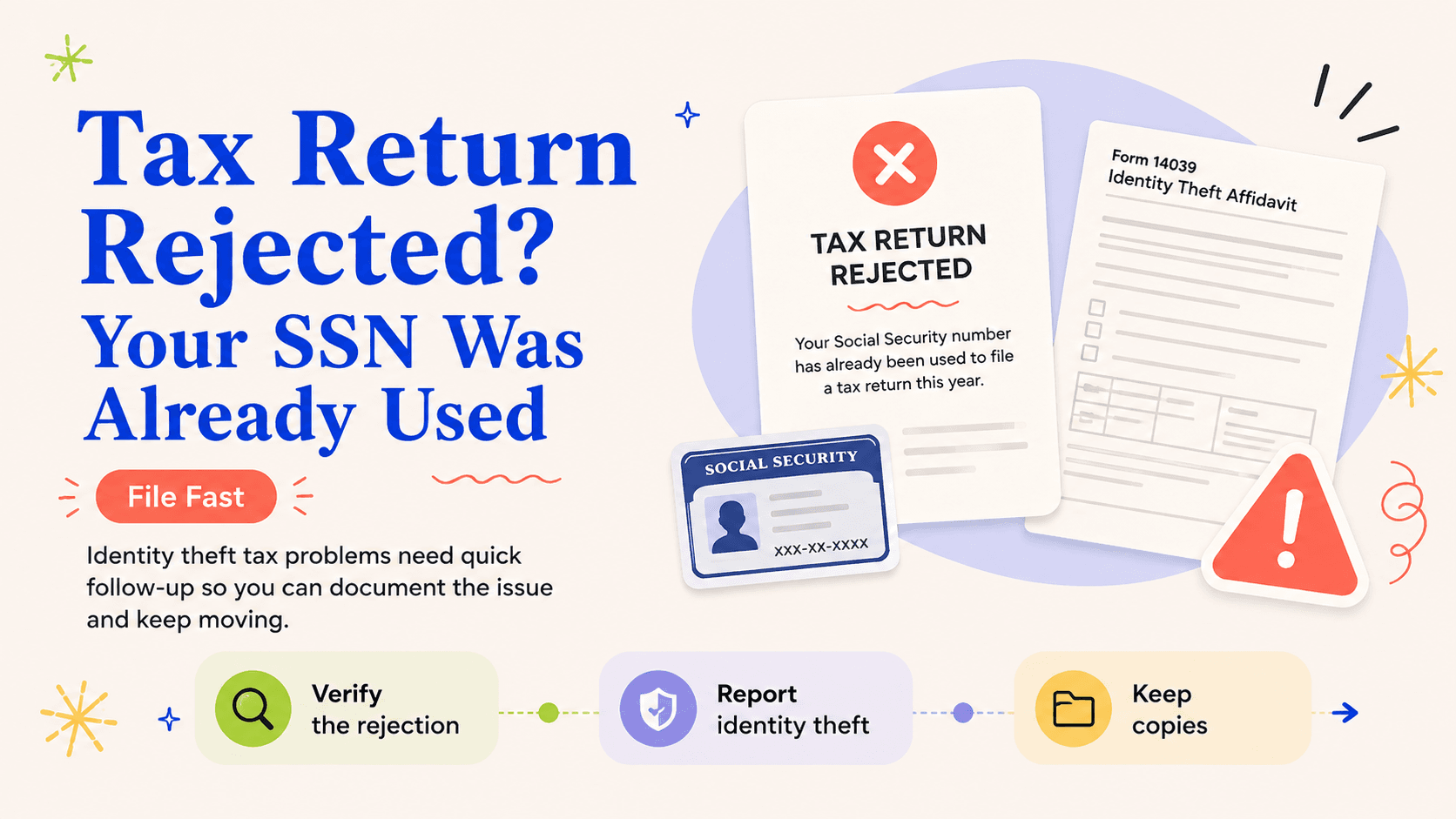
Your Social Security record shows wages from an employer you never worked for in an earlier year, after you learned that your SSN was exposed.
First decide whether the earnings are actually wrong
Start by treating an incorrect Social Security earnings record after identity theft as a specific response problem rather than as proof that every part of your identity has been taken over. SSA uses earnings records in benefit calculations, so inaccurate wages or missing wages can matter even when the identity-theft event happened years earlier. Compare the record with your W-2s, tax returns, pay stubs, and actual employers, and remember that very recent earnings may not appear immediately.
The notice, the date it landed in your hands, and the exact data or account named inside it all need to be on record before you make a single call. An unfamiliar employer or wage amount can result from reporting error or SSN misuse; the record itself does not identify who caused the discrepancy.
Review the earnings history in your Social Security record year by year and compare it with W-2s, tax records, and employers you actually worked for. An unexpected employer or wage amount can reflect a reporting error as well as identity misuse, so collect the documents that show what your earnings should have been before asking SSA to correct the record.
Compare SSA history with W-2s and tax records year by year
The first move should reduce the most immediate pathway to misuse. Write down the exact year, employer, and amount that appear wrong and collect the documents you have for that period.
Order matters here: address the highest-stakes exposure before moving to lower-priority items. Older incorrect years deserve a documented correction request, while a current or immediately prior year may need time to post before you conclude it is missing.
SSA provides Form SSA-7008 for requesting correction of an earnings record. Read the current form instructions and gather the evidence it lists for the period in question. Do not send wage documents or a Social Security number to a contact that reached you unexpectedly; use SSA's official channels and keep copies of what you submit.
Use SSA’s earnings-correction process for a confirmed discrepancy
SSA Form SSA-7008 is specifically designed to request a correction to an earnings record and asks for employment details and evidence.
Verify first, upload second: that's the rule for any identity document request in this process. Use SSA.gov, a verified SSA phone number, or an SSA office rather than a caller who claims it can “fix” wages for a fee.
A credit freeze does not change Social Security wage history. The correction has to happen in the SSA record, while any separate fraudulent credit account needs its own bureau and lender process. Keeping those systems separate avoids a common recovery mistake: completing one identity-theft task and assuming every government or financial record updates automatically.
Keep tax identity theft and Social Security correction in separate lanes
Freeze your credit if — and only if — this exposure realistically threatens new-account fraud. A credit freeze does not correct an SSA wage record because the earnings system is separate from consumer credit files.
Start credit monitoring, if relevant, with a dated report from annualcreditreport.com rather than jumping straight to alerts. Review your full earnings history periodically after a known SSN exposure and compare future tax documents for employers you do not recognize.
Gather proof before you ask SSA to change a record
Good documentation habits here aren't extra credit; they're part of the actual fix. Keep W-2s, tax returns, pay records, and the submitted correction request because SSA may need evidence of what you actually earned.
Actual, confirmed misuse converts this from a preparedness task into an identity-theft recovery one. If the wrong wages also create a tax notice or employment-related identity-theft issue, follow the IRS process for that tax account separately.
If the wrong wages also affect a tax return or trigger IRS correspondence, address the tax issue through the IRS channel shown on the verified notice or official IRS identity-theft guidance. The same stolen SSN can create different problems in tax and Social Security systems, and each agency maintains its own record and correction process.
Do not assume every recent-year gap is fraud
One control rarely fixes every consequence here. SSA can correct its own earnings record, but that does not automatically remove a fraudulent credit account or solve a tax return filed by someone else.
Also separate exposure from confirmed misuse. A name change, employer reporting error, self-employment timing issue, or recent posting delay can create a mismatch without identity theft.
Watch for fake Social Security “correction” calls
Expect follow-up scams that refer to the discrepancy. Impostors may threaten benefit suspension or demand payment to correct an SSN record, even though legitimate agencies do not require gift cards or cryptocurrency for this process.
A legitimate recovery process should be verifiable through an established channel. End the inbound call and navigate to SSA.gov yourself before discussing the earnings discrepancy.
Recheck the record after SSA finishes its review
Set actual calendar dates for follow-up as the last step — this is not a step to leave to memory. Calendar a later review of the earnings record and keep the SSA response so you can verify the corrected year and amount.
The issue is resolved when the earnings history reflects the correct employers and amounts and any related IRS or identity-theft case has its own separate resolution.
After SSA processes the correction, review the earnings record again rather than relying only on a phone confirmation. Save the updated record and the case documentation. If the incorrect employer or wage returns in a later year, that is a reason to reopen the issue with the prior evidence already organized.
Look at the effect of the error, not just the incorrect line. Earnings history can influence future Social Security benefit calculations, so an old discrepancy deserves correction even if no money is currently missing from a bank account. Keep W-2s, pay stubs, tax returns, or employer statements that support the correct amount, and note any employer name that is completely unfamiliar. If you suspect identity misuse rather than a payroll reporting mistake, keep the SSA correction separate from the broader identity-theft report so each agency receives the documents relevant to its own record.