A breach notice arrives from a company name you don't recognize, and you're trying to work out whether it's a real letter and how your information ended up there in the first place.
How your data got to a company you never signed up with
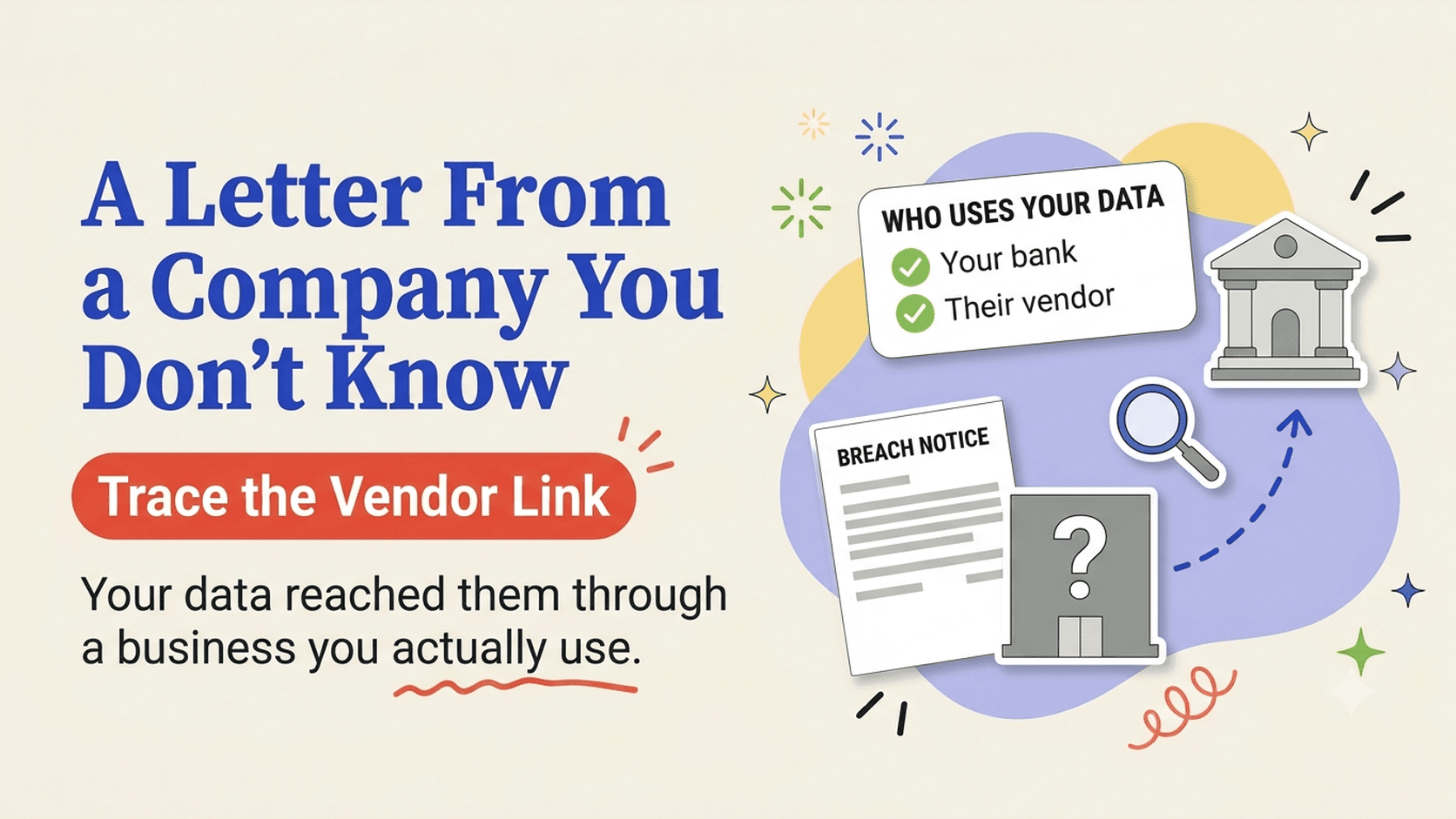
Businesses routinely hand pieces of your data to outside vendors to get work done: a payroll company to cut paychecks, a billing processor to handle invoices, a background-check firm to screen job applicants, a benefits administrator to manage health coverage, a cloud storage or file-transfer tool to move records between departments. You never chose any of those vendors — the business you actually deal with did.
When one of those vendors is breached, the vendor (or the business that hired it) is generally required to tell you, because your personal information was exposed even though your direct relationship was with someone else entirely. The letter carries the vendor's name because that is who legally experienced the security incident, but the reason you're on the list at all is the business relationship you do recognize.
Read the letter for the relationship it's pointing to, not just the company name
A vendor breach letter almost always names, somewhere in the body, the client relationship that explains why you're receiving it — phrases like “we provide services to your employer,” “we process transactions on behalf of your healthcare provider,” or “your information was provided to us by [company you recognize].” That sentence is the most important line in the letter.
If you can't find that connection anywhere in the letter, that's a reason to be more cautious, not less — a real vendor-breach notice is generally specific about which of your relationships is implicated, because the vendor's own legal obligation is tied to that client relationship.
Verify it's real before you act on it
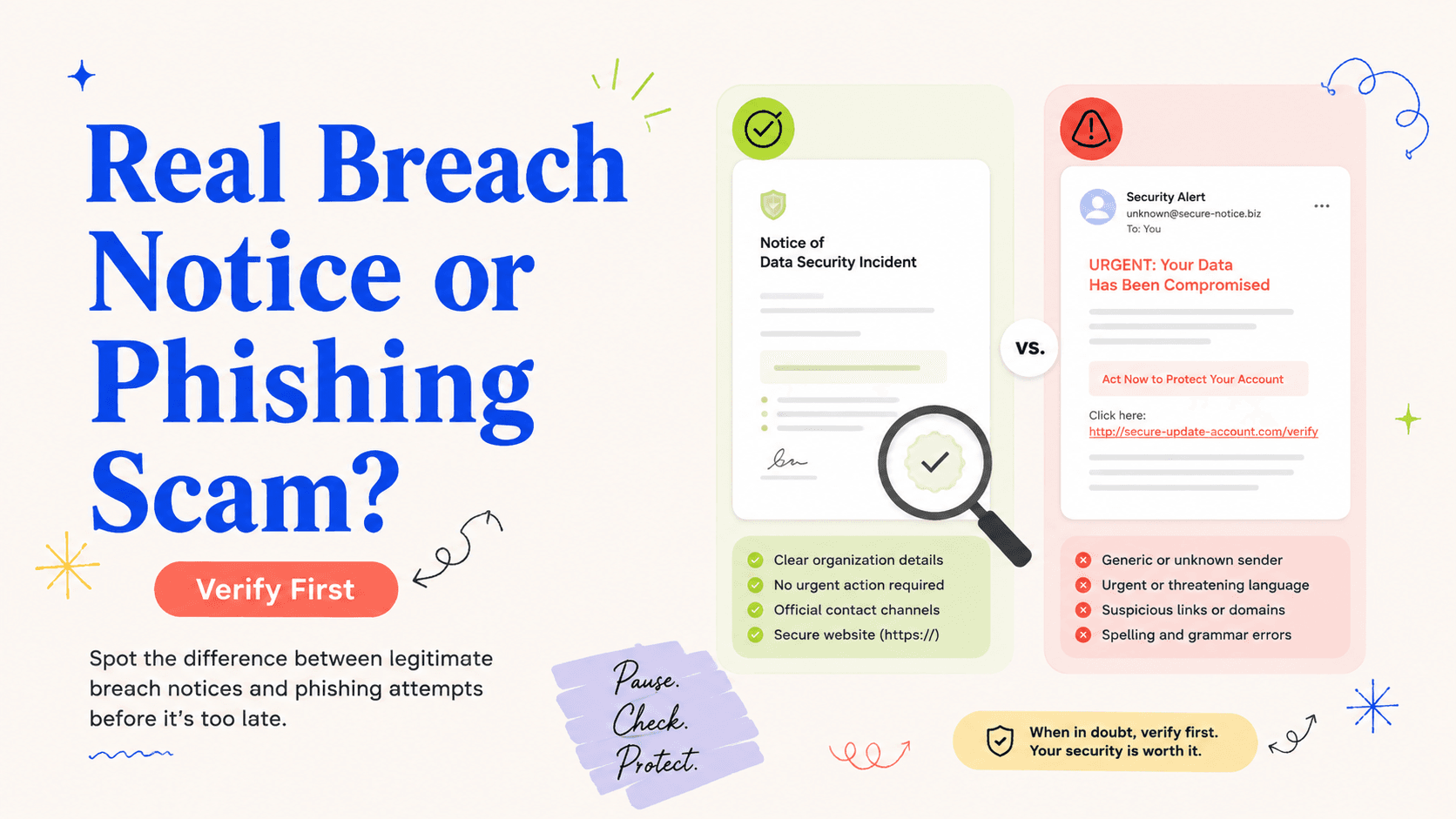
Unfamiliar company names are exactly the setup phishing scams try to imitate, because the real thing is confusing enough that people don't push back. Before clicking any link or calling any number printed on the letter, look up the company independently — search its name plus “data breach” and see whether reputable news outlets or the company's own official site describe the same incident.
If the letter mentions a specific business you use (your employer, your doctor's office, a store you shop at), call that business directly through a number you already have on file — not one from the letter — and ask them to confirm they use this vendor and that the breach notice is genuine.
Common vendor relationships behind these letters
A few categories account for most of these letters:
- Payroll or HR software used by your employer — exposes your name, Social Security number, and pay information
- Billing or claims-processing vendors used by a healthcare provider or insurer — exposes medical and insurance details
- Background-check or tenant-screening companies used by an employer or landlord — exposes identity and history data you provided during an application
- File-transfer or document-management software used across an entire industry — exposes whatever records a company happened to route through that tool at the time
- Debt collection or accounts-receivable vendors — exposes account and balance information tied to a bill you owed
Why one vendor incident can generate letters from many unrelated companies
A single vendor often serves hundreds of client businesses at once, so one security incident at that vendor can trigger breach letters from many separate, unrelated companies — your employer, your bank, and your doctor's office could all send you a notice about the same underlying vendor incident within the same few weeks, each one naming a different vendor or describing it slightly differently.
If you receive more than one letter around the same time and they describe a similar kind of incident, it's worth asking each company directly whether they were affected by the same vendor — it changes nothing about how you respond, but it explains why your mailbox suddenly has several of these letters instead of one.
What to actually do once you've confirmed it's real
The response does not change just because the sender is unfamiliar. Check what type of data the letter says was exposed and follow this site's guide for that specific data type — a Social Security number, a payment card number, and a medical record number each call for a different set of next steps.
If the letter offers free credit monitoring or identity protection, that offer is unaffected by whether you recognize the sender — it's tied to the exposure, not to any relationship you have with the vendor.
If you can't find any connection to the letter at all
Sometimes the letter genuinely doesn't explain the link, or the explanation is vague. In that case, call the vendor directly using a number you find independently (their official website, not the letter) and ask them plainly which of your relationships led to your data being in their system. A legitimate vendor should be able to tell you, even in general terms, which client relationship is involved.
If you still can't get a straight answer and something about the letter feels off — urgent demands, requests for payment, or a request for your Social Security number to “verify” the claim — treat it as a possible phishing attempt and report it rather than responding.
Frequently asked questions about vendor breach letters
- Is the vendor or the company I actually use responsible for protecting my data? Both can share responsibility depending on their contract, but from a consumer standpoint, the practical point is that the company you chose to do business with is the one that decided to share your data with that vendor in the first place — it's reasonable to ask them directly about their vendor's security practices.
- Should I stop doing business with the company I recognize because of a vendor's breach? That's a judgment call, not a security requirement — many large, reputable companies use outside vendors for common back-office functions, and a vendor incident doesn't necessarily reflect on how the company you use handles the data it keeps itself.
- Can I ask the company to stop using that vendor? You can ask, and some companies do respond to customer feedback about vendor choices, but there's no legal right that forces a company to switch vendors because of a breach at that vendor.
- What if two different vendor letters describe what sounds like the same underlying incident? Large-scale vendor breaches sometimes get reported slightly differently by each of their client companies — if the incident type, timeframe, and vendor name line up, it's reasonable to treat them as the same event even if the wording differs.
A payroll vendor you'd never heard of
A letter arrives from a payroll-processing company whose name means nothing to you. Buried in the second paragraph is the line: “We provide payroll services to your employer.” That's the connection — your employer outsources payroll to this company, and the company, not your employer, was the one breached.
You call your employer's HR department using the extension already in your phone, not any number from the letter, and confirm they do use this payroll provider and that they're aware of the incident. With that confirmed, you treat the exposure like the Social Security number exposure it is: freeze your credit at all three bureaus and watch for tax-season identity theft, since payroll data is exactly what's used to file a fraudulent tax return in someone else's name.