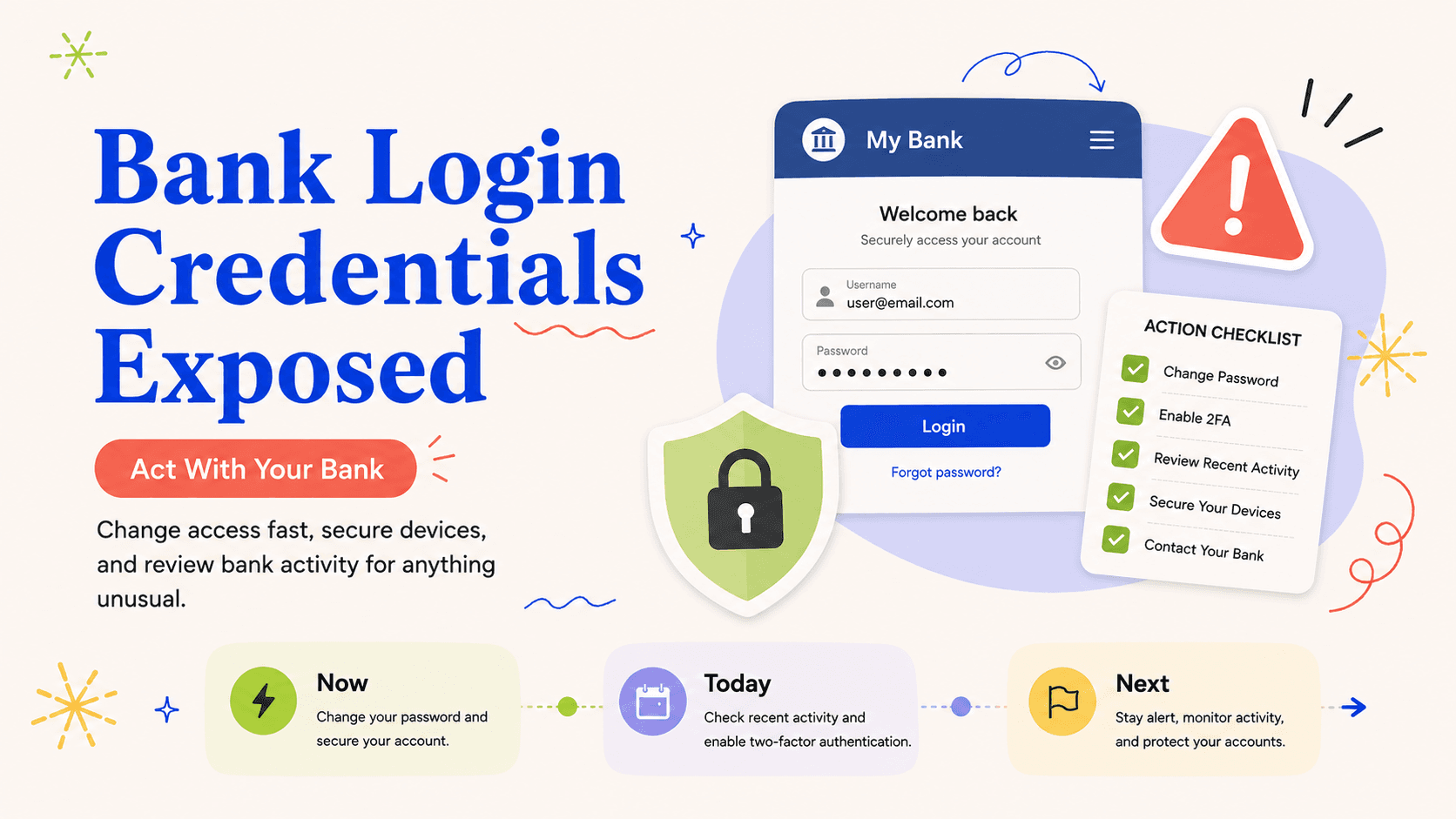
A credential breach includes the username and password you used for online banking, and you can still access the account but do not know whether anyone else has logged in.
Treat banking credentials as an existing-account emergency
Start by treating exposed online-banking credentials as a specific response problem rather than as proof that every part of your identity has been taken over. A valid banking username and password can affect an existing account immediately, so this is different from data that is useful mainly for opening new credit. Confirm whether the password was actually exposed and whether it was reused on the bank, email, or another account that can reset banking access.
Before contacting anyone about exposed online-banking credentials, save the notice, note when you received it, and write down the exact data element or account the notice says was involved. The response should cover login control, money movement, trusted devices, payees, external accounts, and recovery settings rather than focusing only on credit reports.
Contact the financial institution through its official app, the number on your card, or another known route. Tell the fraud or security team that login credentials may have been exposed and ask whether it recommends a password reset, username change, token revocation, or new account number. The bank can see account-specific controls that a generic breach notice cannot.
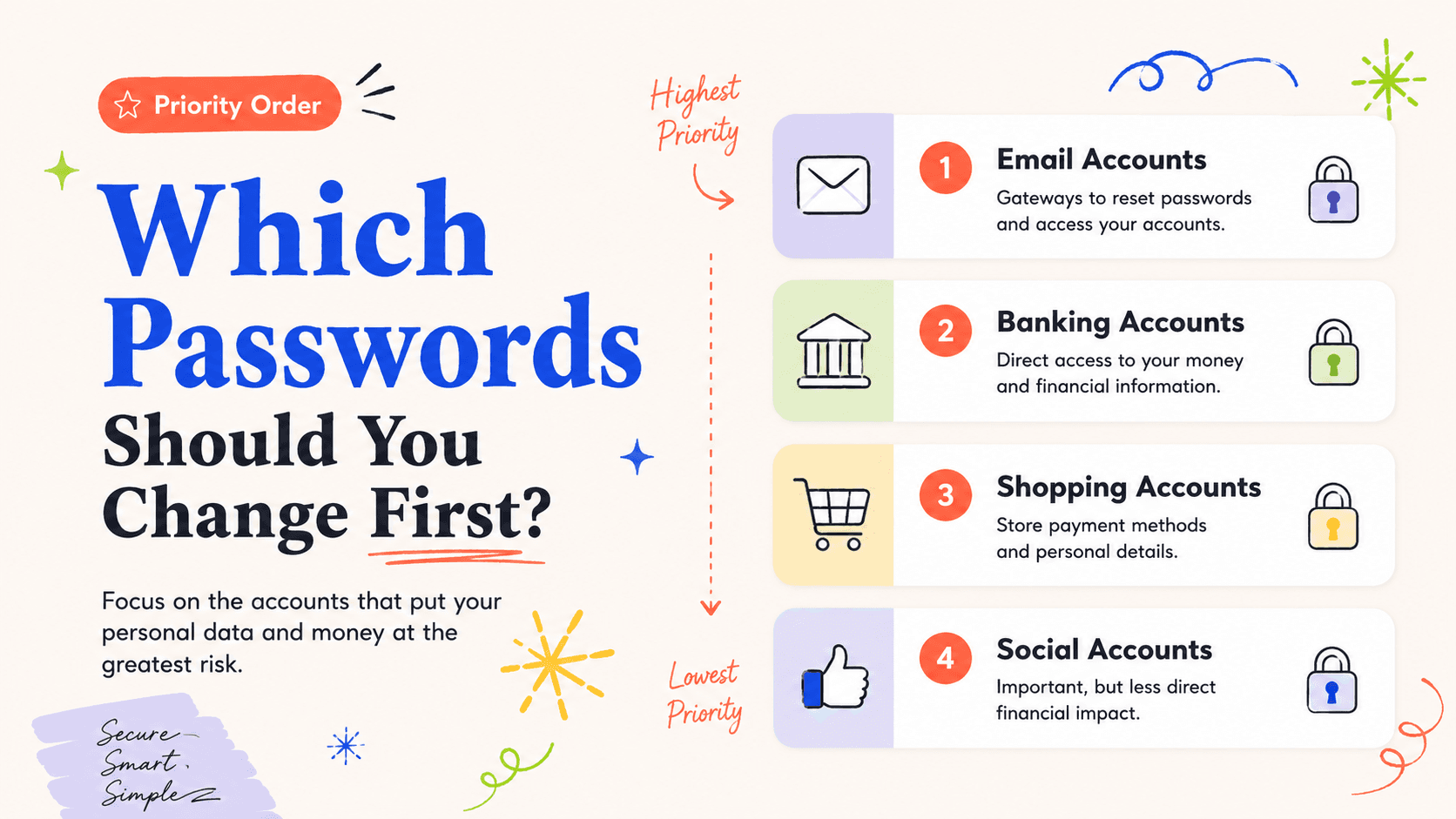
Change access before reviewing lower-risk accounts
The first move for exposed online-banking credentials should reduce the most immediate pathway to misuse. Contact the bank through its official app, the number on a known card, or a saved website and change the credential using a trusted device.
Do not try to solve every possible consequence of exposed online-banking credentials at the same time. If the bank offers a way to sign out other sessions, lock online access, or place a fraud hold, ask whether that is appropriate before spending time on unrelated passwords.
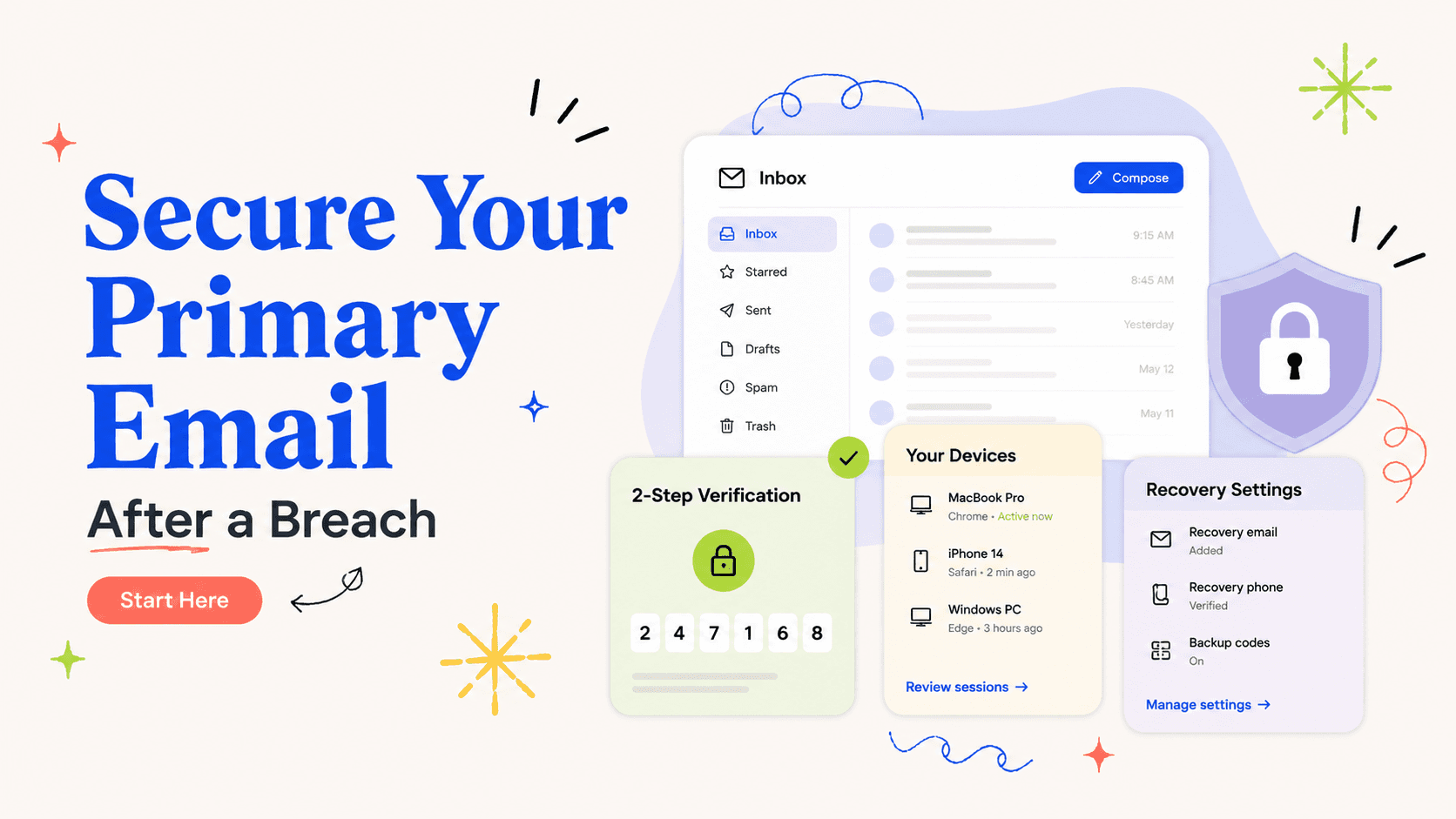
After changing credentials, inspect the account rather than stopping at the password screen. Review recent transfers, bill-pay recipients, linked external accounts, contact information, alert settings, and signed-in devices if the bank exposes those details. An attacker who entered before the password change may have created a durable payment path that survives a simple reset.
Inspect payees, transfers, devices, and recovery details
For exposed online-banking credentials, the bank or credit union controls online access, transaction investigations, transfer limits, card replacement, and any account-number change it decides is necessary.
When an organization asks for identity documents while fixing exposed online-banking credentials, verify the destination before uploading anything. Do not give a one-time banking code to a caller who says the code is required to reverse fraud; call the institution back through a known number.
Treat one-time codes as approval instruments. A caller who says a code is needed to 'reverse fraud' may actually be using it to authorize a login or transfer. End the call and reach the institution independently. A real fraud case should still exist when you call back through the official channel, and the representative should not need you to relay a code sent for authentication.
Know why a credit freeze is not the main control here
A credit freeze or credit-report review can be useful around exposed online-banking credentials, but only when the risk actually touches new credit or a consumer report. A freeze can help with new-account identity theft but does not stop someone who already has valid credentials to an open bank account.
If credit monitoring is relevant to exposed online-banking credentials, save a dated baseline from AnnualCreditReport.com and compare future reports against it. Review recent transfers, bill-pay recipients, Zelle or similar payment activity, linked external accounts, contact information, and device history where available.
Capture unauthorized activity before it disappears from view
Good records are part of the remedy for exposed online-banking credentials, not paperwork to do later. Download or screenshot unfamiliar transactions and profile changes before they are reversed, and record when you notified the financial institution.
If you find actual misuse connected to exposed online-banking credentials, shift from breach preparation to identity-theft recovery. The CFPB advises contacting the bank or credit union promptly about unauthorized transactions because federal protections and investigation timelines can depend on the type of transfer and notice.
If money moved without authorization, report the transaction promptly and keep the bank's case number. CFPB guidance explains that consumer protections and investigation duties can depend on the type of electronic transfer and when the institution is notified. Save the statement line, transaction date, amount, and your first notice to the institution.
Separate credential theft from card-number exposure
One control rarely fixes every consequence of exposed online-banking credentials. A password change may not remove a malicious payee, compromised recovery email, or linked device that was added before you regained control.
Also separate exposure from confirmed misuse. A transfer you do not recognize is stronger evidence of account misuse than a breach notice that only says credentials were present in an exposed database.
Reject inbound “fraud desk” pressure
Expect follow-up scams that refer to exposed online-banking credentials. Fraudsters often impersonate bank security teams and create pressure to move money, share a verification code, or install remote-access software.
For exposed online-banking credentials, a legitimate recovery process should be verifiable through an established channel. If the alert is genuine, the bank should be able to see the issue after you independently reach its fraud department.
Keep watching after the password is changed
Finish the initial response to exposed online-banking credentials by creating a follow-up calendar instead of relying on memory. Check the account again after the next statement and verify that promised reversals, new credentials, alerts, and contact information remain correct.
The bank account is contained when access is controlled, unauthorized movement has a case number, and no unknown recovery path or device remains active.
A credit freeze cannot secure an account that already exists. Use it only for the separate risk that stolen identity information could be used to open new credit. For compromised banking credentials, the core work is access control, transaction review, removal of unknown payees or devices, and written confirmation of any disputed transfer.
Before considering the banking issue closed, verify how the institution treats previously authorized sessions and connected financial apps. Some banks invalidate all sessions after a credential reset; others may leave trusted devices or third-party connections active. Ask whether open-banking links, budgeting tools, digital wallets, or payment tokens need to be reauthorized. If the breach involved both the password and account number, ask the institution whether it recommends a new account number in addition to new login credentials. Record the answer and the date so a future unauthorized debit can be compared with the bank's own containment steps.