You have an FTC report and need to remove a loan that was opened by an identity thief.
Confirm that the item is actually identity theft
Identity-theft blocking is for debts and information caused by someone using your identity. If you recognize the account but disagree with the balance, payment history, or contract terms, you generally need the ordinary credit-dispute process instead.
Write down why you know the item is not yours and preserve the report page showing how it appears.
Create the identity-theft documentation
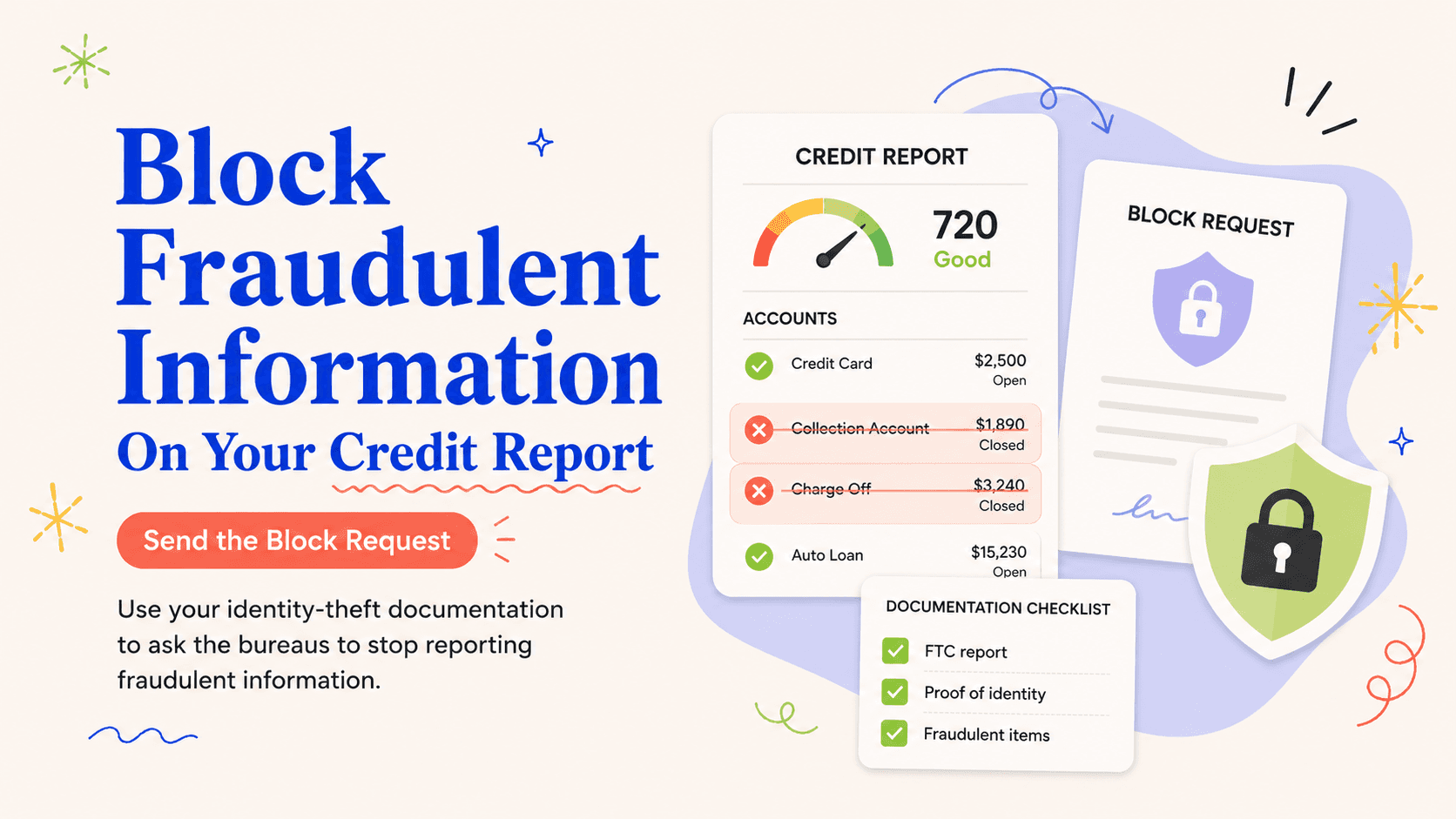
Report the identity theft through IdentityTheft.gov and save the FTC Identity Theft Report. Gather proof of your identity and prepare a letter that clearly identifies each fraudulent account, debt, address, or other item you want blocked.
Send only the documentation required through a verified bureau channel and keep copies of everything.
Send the request to each bureau showing the item
An item may appear on one, two, or all three credit reports. Build your list bureau by bureau and submit the identity-theft blocking request wherever the fraudulent information appears. Use confirmation numbers or tracked delivery so you can prove when the request was received.
Do not assume a block at one bureau will automatically clean the other files.
Know the federal blocking timetable
The CFPB states that credit reporting companies must block fraudulent information within four business days after receiving a complete identity-theft blocking request, and must notify the companies that supplied the information. The rules allow a bureau to refuse or rescind a block in certain circumstances, such as incorrect information or a debt that was not actually caused by identity theft.
If a bureau says the submission is incomplete, ask specifically what is missing rather than starting over without a checklist.
Follow the creditor as well as the bureau
Contact the company that furnished the fraudulent account and complete its fraud process. Ask for written confirmation that you are not responsible and that its reporting will be corrected. A bureau block solves the credit-file symptom, but the underlying account also needs to be closed or corrected.
Continue reviewing future reports in case the same debt is re-reported or transferred.
Build a bureau-specific attachment list
For each bureau, create a cover sheet naming the exact fraudulent items shown on that bureau’s report, with account names, partial account numbers where available, and the report section where they appear. Attach the FTC Identity Theft Report and the proof of identity required by the bureau’s process. This makes it easier for a reviewer to see what you are asking the bureau to block.
Do not send unrelated identity documents simply because you have them. Follow the current bureau instructions and minimize unnecessary copies of sensitive records.
Keep the four-business-day rule in context
The CFPB’s current guidance says the credit reporting company must block identity-theft information within four business days after receiving a complete request. That timing depends on the bureau receiving the documentation necessary for the identity-theft blocking process. A request that lacks required information can trigger follow-up rather than a clean four-day resolution.
Record the receipt date and the bureau’s confirmation so you know when to follow up. If the bureau refuses or rescinds a block, ask for the stated reason in writing.
Correct the source of the information as well as the report
A credit bureau receives account information from a creditor, lender, collector, or other furnisher. If the underlying fraudulent account remains open or marked as valid at the source, it can create additional problems even after a bureau block. Complete the fraud process with the furnishing company and ask for written confirmation of closure or correction.
Keep that letter with the bureau result. The strongest record shows both the source account and the consumer report were addressed.
Example: blocking a fraudulent auto loan
Save the page from each credit report showing the auto loan, the related hard inquiry, and any fraudulent address. Report the identity theft at IdentityTheft.gov and print the FTC Identity Theft Report. Contact the lender’s fraud department and ask for its identity-theft packet and a written case number. Then prepare a separate bureau request for Equifax, Experian, or TransUnion wherever the loan appears.
Each bureau packet should identify the exact fraudulent items, include the FTC report, provide the required proof of identity, and follow the bureau’s current delivery instructions. Keep evidence of the date the bureau received the complete submission. The CFPB’s four-business-day blocking rule applies to a complete identity-theft blocking request; if the bureau says something is missing, ask exactly what is required and document the response.
Continue working with the auto lender until it confirms that the fraudulent account is closed or corrected at the source. Then check later credit reports to make sure the loan, inquiry, or collection information does not reappear. A strong recovery file contains both sides: the bureau result and the furnisher’s written confirmation.
- Use identity-theft blocking only for theft-related information.
- Prepare a separate list for each bureau.
- Track the date a complete request was received.
- Correct the lender’s source account too.
- Review later reports for re-reporting.
Verify the block on a later report
After the bureau confirms the identity-theft block, obtain a later report and check that the fraudulent account, associated balance, and related information are no longer presented as valid. Keep the original and corrected reports together. If the item reappears, use the saved FTC report, furnisher confirmation, and prior bureau result to show that the issue was already handled. The paper trail is what turns a recurring problem into a follow-up instead of a complete restart.
Make sure the bureau treats the request as an identity-theft block
If a bureau response uses a general dispute result instead of clearly addressing your identity-theft block request, compare the response with what you submitted and contact the bureau through its official channel. Keep the distinction clear: you are asking to block information resulting from identity theft, not simply arguing that a legitimate account contains an error.