Your credit reports are clean, but you are concerned that an exposed SSN may be used for employment.
Why the earnings record is a separate check
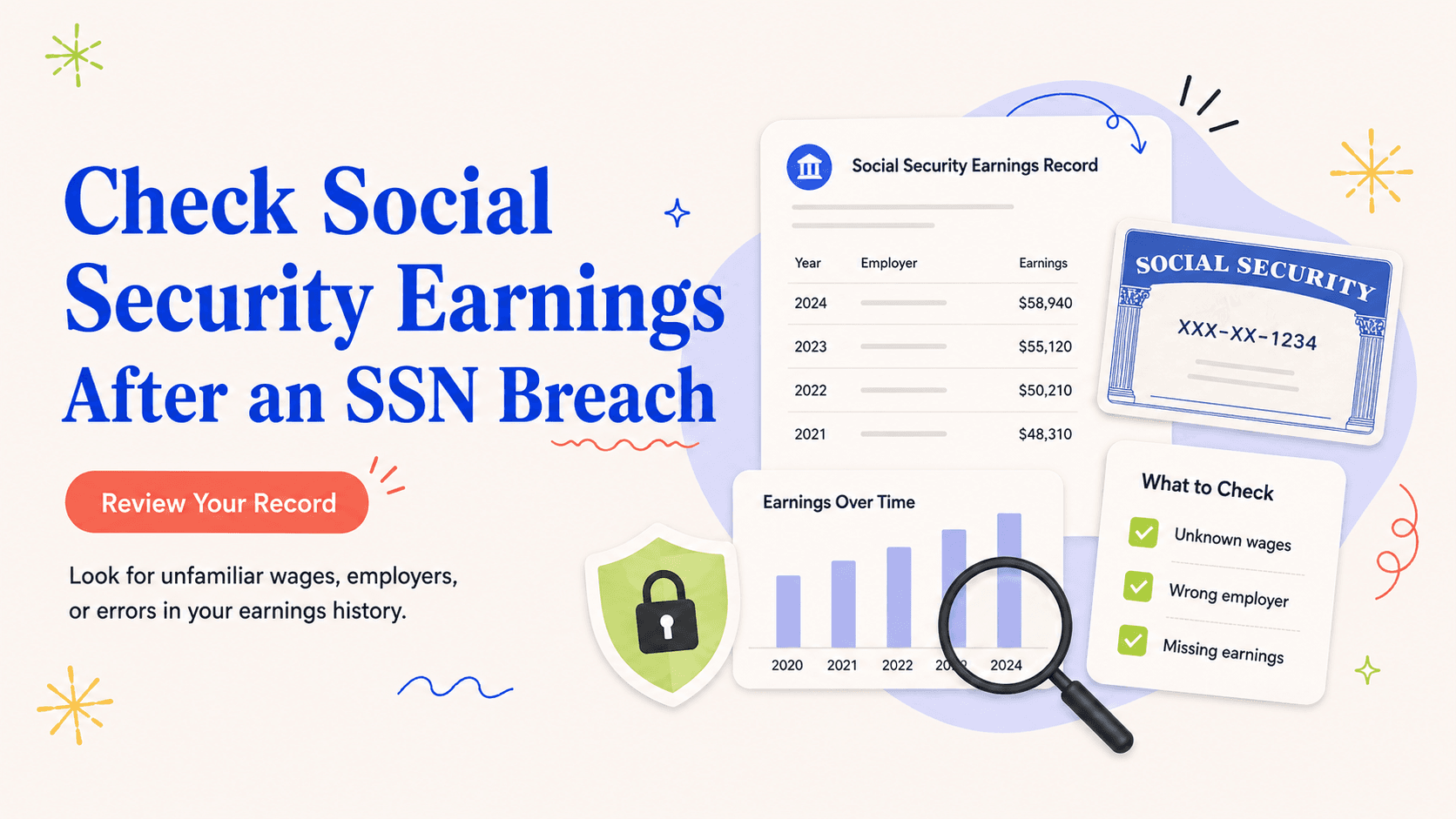
A credit report is built around consumer credit. Employment misuse of an SSN can appear instead in the earnings history maintained by Social Security. The SSA advises people who think someone is using their SSN to review the earnings posted to their record and report inconsistencies.
Checking both systems covers different types of misuse rather than duplicating the same task.
Use your personal Social Security account
Sign in through SSA.gov using a URL or bookmark you trust and review your earnings record year by year. Compare it with your W-2s, tax returns, and employment history. A small mismatch can have an innocent explanation, so gather your records before assuming fraud.
Never enter Social Security credentials through a link in an unsolicited text or email that claims to show a breach alert.
Document earnings that do not belong to you
Record the year, employer name, and amount you believe is wrong. Save the supporting wage and tax documents that show your actual employment. The SSA has a process for correcting earnings records and may request additional information.
Keep this task separate from a credit-bureau dispute; the organizations maintain different records.
Check the tax side if employment misuse is plausible
The SSA directs consumers to the IRS when they believe an SSN is being used to work or commit tax-related abuse. Review IRS guidance, your tax account, and consider an IP PIN for future federal returns.
An earnings anomaly can be a clue that the same identifier is being used in more than one system.
Report actual identity theft through the federal recovery system
If the record confirms someone used your identity, report the identity theft at IdentityTheft.gov and keep the FTC recovery documentation with the SSA correction records. The SSA itself directs identity-theft victims to the FTC for the broader identity-theft process.
Preserve corrected records after the case is resolved so you can compare future statements.
Compare the record against tax documents year by year
Use W-2s, 1099s, filed tax returns, and employment records to confirm the wages you expect to see. A company name on the Social Security record may differ from the brand on your paycheck, so compare amounts and tax documents before concluding that an employer is unfamiliar. The goal is to identify a true inconsistency, not simply a naming difference.
If you find a discrepancy, note the year and amount and gather the documents supporting the correction before contacting Social Security.
Use the current SSA correction path
The SSA’s current guidance explains that some people may be able to request an earnings correction online, while others need to visit a Social Security office and may be asked for Form SSA-7008 and supporting documents. Because eligibility for the online path can change, check SSA.gov for the current process rather than relying on an old instruction sheet.
Save the correction submission, appointment notes, and any confirmation that the earnings record was changed.
Keep credit, tax, and earnings checks connected but distinct
An exposed SSN can create problems in several systems. A suspicious wage belongs with SSA; a fraudulent tax return belongs with IRS; an unfamiliar loan belongs with the creditor and credit bureaus. Use one incident folder to connect the evidence, but follow each agency’s procedure for its own record.
That division of responsibility prevents you from sending a credit-bureau dispute to the SSA or expecting an FTC report alone to correct a tax or earnings record automatically.
Example: an unfamiliar employer appears on the earnings record
Suppose your Social Security statement shows wages from an employer in a state where you never worked. Compare the amount and employer name with your W-2s and tax returns because payroll entities can use legal names that differ from the brand you remember. If the wages still do not belong to you, save a copy of the record and collect documents showing your actual employment and income for that year.
Use the current SSA.gov correction instructions. Depending on your eligibility, the SSA may allow an online correction request or direct you to a local office and supporting form. Record the submission date, appointment details, and any case or confirmation information. If the issue suggests someone used your SSN for work, review the IRS identity-theft guidance too because employment misuse can create tax consequences.
Keep this record with your breach notice, credit reports, and FTC documentation if you report identity theft. After the SSA corrects the earnings, save the corrected statement and compare future years. The purpose of this check is to catch a type of SSN misuse that a normal credit report may never show.
- Compare SSA wages with W-2s and filed returns.
- Verify unfamiliar employer legal names before assuming fraud.
- Use the current SSA correction method.
- Review IRS implications when employment misuse is possible.
- Save the corrected record for future comparison.
Recheck after the SSA says the record is corrected
Save a fresh Social Security statement or earnings view after the correction and compare it with the version that showed the unfamiliar wages. Keep both with the supporting W-2s, tax returns, and SSA correspondence. If the false wages affected an IRS filing or notice, follow the IRS process separately. A corrected earnings record is the endpoint for the SSA task, but the larger identity-theft file should remain available in case the same SSN is misused in another system later.
Recheck later because SSN misuse can surface long after the breach
Reviewing the earnings record once after a breach is useful, but a later check can be worthwhile when the exposed SSN is long-lived and the initial record is clean. A future unfamiliar wage can be easier to identify when you saved the earlier statement and already know what your legitimate employer history should look like.