A breach exposed information for your household, and you want to protect a young child, an elderly parent whose finances you help with, and settle whether anything needs to be done for a relative who died last year.
Three situations, three sets of rules
People assume freezing a family member’s credit works the same way as freezing their own. It does not. The law treats a young child, another competent adult, and a deceased person very differently, and using the wrong process wastes time or gets rejected.
The short version: for a child under 16, a parent or guardian has a direct right to freeze. For any other adult, you need legal authority — you cannot freeze your spouse’s or your parent’s file just because you help with their money. For someone who has died, there is no freeze at all; the tool is a deceased flag on the file.
A minor under 16: freeze it directly
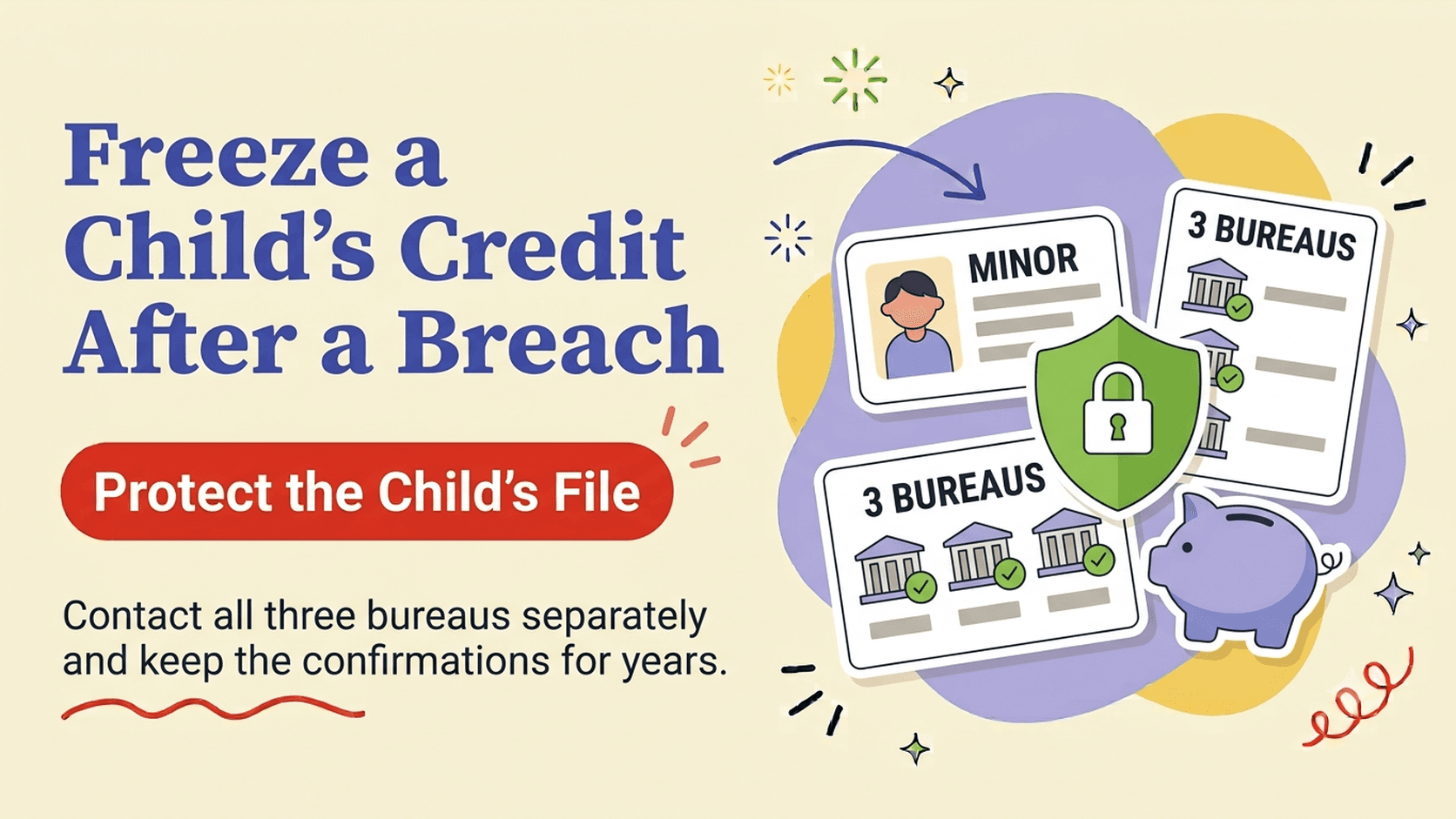
Federal law lets a parent, guardian, or other authorized representative place a free freeze on the credit file of a child who is 15 or younger. Most children have no credit file, so the bureau creates one for the purpose of freezing it — which is the point, because there is then nothing for a thief to build on.
You contact each of the three nationwide bureaus separately. Requirements are stricter than an adult freeze: expect to provide the child’s birth certificate, the child’s Social Security number, proof of your address, and a copy of your own government ID, plus documentation of your authority if you are a guardian rather than a parent. Send these only through each bureau’s verified channel. When you request the freeze by mail or through the online or phone process, the bureau places it within the required timeframe.
Keep the confirmation or PIN from all three somewhere you will still find it in fifteen years, because the child will need it lifted when they first apply for credit, a phone, or an apartment.
A teenager 16 or 17, and a young adult
At 16, the minor-freeze right for a parent no longer applies in the same way. A 16- or 17-year-old can generally request their own freeze, and a parent can help them do it. Once someone turns 18, they place and lift their own freezes; a parent has no special authority over an adult child’s file.
If a breach affected a teenager, the practical move is to sit with them and place the freeze together, and to check whether a credit file already exists — if one does, and it has accounts on it, that is a sign of earlier child identity theft that needs its own cleanup.
An aging parent or another adult: you need legal authority
You can place a freeze for another adult only if you are their legal guardian or conservator, or you hold a power of attorney broad enough to cover it. Helping a parent with bills, being on a joint account, or being named in a will does not give you that authority.
If your parent is competent, the cleaner path is for them to place their own freeze with you assisting — you can be on the phone with them, help them navigate the websites, and organize the confirmations. If they are not able to manage it themselves and you do not already have a power of attorney or guardianship, that legal step has to come first, and it is worth doing for reasons well beyond a credit freeze.
Documents the bureaus require for a third-party freeze
When you act for someone else — a minor, or an adult under your guardianship or power of attorney — each bureau will ask for a package of documents, typically:
- Proof of your authority: your own birth certificate or the child’s (for a parent), or the guardianship order or power-of-attorney document (for another adult)
- The other person’s Social Security number and date of birth
- A copy of the other person’s Social Security card or a document showing the number
- Proof of address for the other person (a utility bill, a bank statement)
- A copy of your government-issued photo ID
Someone who has died: there is no freeze
You cannot place a security freeze on a deceased person’s credit file. What you can do is notify each of the three bureaus to mark the file as deceased, which adds a notation — often phrased as "deceased — do not issue credit" — so that any company pulling the report is told the person has died and no new credit should be extended.
This is done by mail. Each bureau wants a copy of the death certificate, and, if the request comes from someone other than the surviving spouse, a copy of that person’s ID and proof of authority such as the will, the letters testamentary, or a power of attorney that was in effect. Send certified mail and keep the receipts. It can take several weeks for the notation to appear on all three files, so follow up.
Order a copy of the deceased person’s credit report first if you can, so the estate has a record of the open accounts that need to be closed.
The other death-notification steps
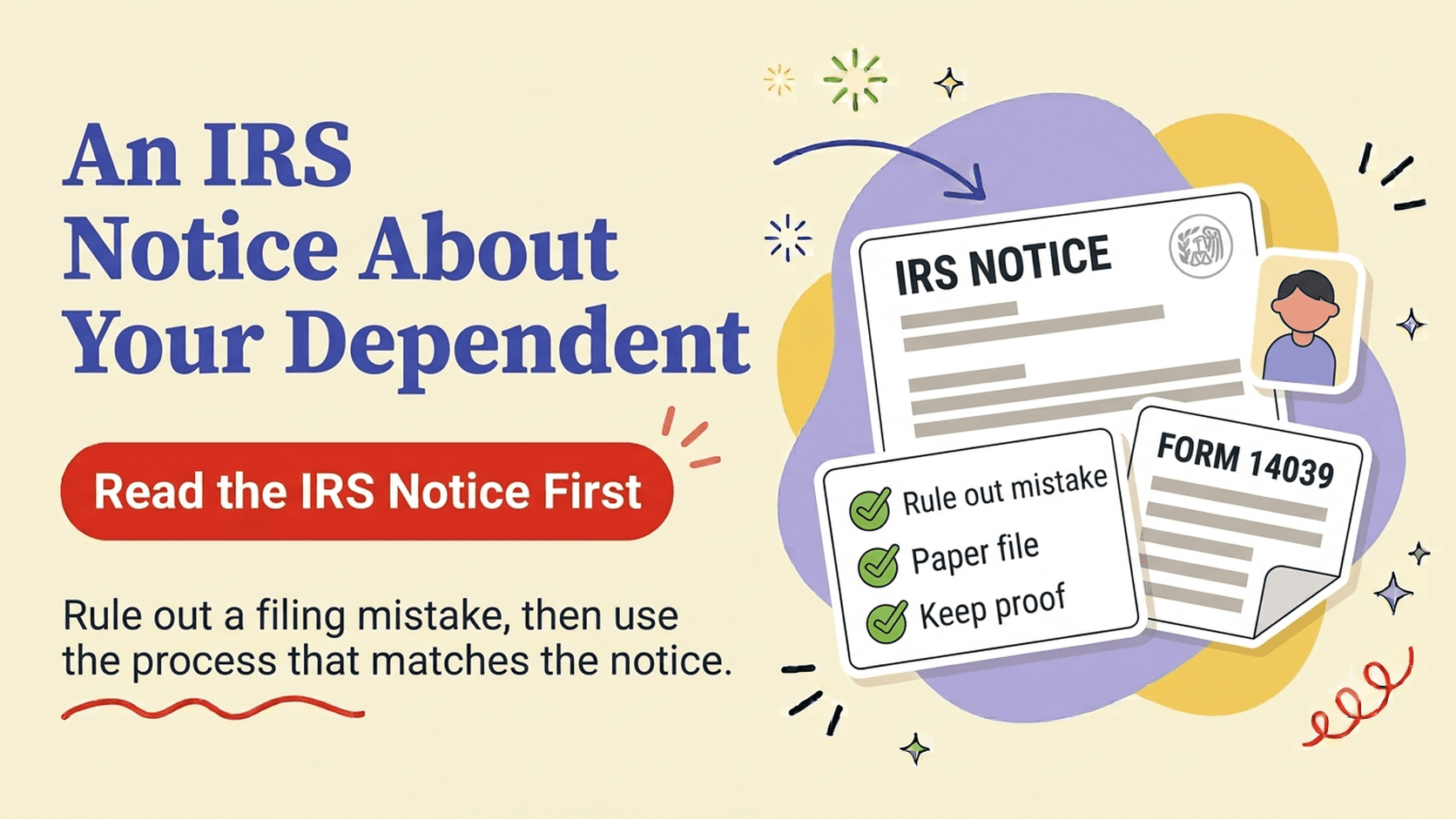
The deceased flag at the credit bureaus works best alongside two other notifications. The funeral home usually reports the death to the Social Security Administration, but confirm it happened, because the SSA’s record is what many systems check. And the estate should notify the IRS when filing the final return, since a deceased person’s Social Security number is a target for fraudulent tax returns in the year or two after death.
Close the open accounts the credit report showed, and tell each creditor the account holder has died so the account cannot be reactivated.
What to watch for afterward
For a frozen child or a flagged deceased relative, the warning signs are mail-shaped: a pre-approved credit offer, a new-account welcome letter, a collection notice, or a call about a debt, all in that person’s name. Any of those means the protection was bypassed or has not fully taken effect, and it is worth pulling the credit report again and contacting the bureau.
For an aging parent whose file you helped freeze, keep an eye on their mail during visits and ask them to tell you about any account or lender contact they do not recognize.
Quick reference: which situation, which authority, which process
- Child 15 or younger — authority: parent or guardian, direct right under federal law — process: freeze created and placed at each bureau with the child's birth certificate, SSN, and your ID
- Teen 16–17 — authority: the teen themselves, parent may assist — process: same as an adult freeze, done together
- Adult (including an aging parent) — authority: the adult themselves, or you if you hold guardianship/conservatorship/a broad power of attorney — process: standard freeze, or third-party freeze with proof of authority
- Someone who has died — authority: surviving spouse, or an executor/administrator with proof — process: deceased notation by mail with a death certificate, not a freeze
Frequently asked questions about family freezes
- Can a grandparent freeze a grandchild's credit? Only if the grandparent is the child's legal guardian. A grandparent who is not the legal guardian has to go through the child's parent, the same as any other relative without legal authority.
- What if my child's credit file already has a fraudulent account on it? Freeze the file first to stop further damage, then use the identity-theft block described in the fraudulent-account guide to remove the existing item — freezing does not erase what is already there.
- Does the minor-freeze law apply the same way in every state? Yes for the free federal right described here, since it comes from a 2018 federal law that applies nationwide; some states also had their own earlier minor-freeze laws with slightly different procedures, so check your state attorney general's site if the bureau's process does not match what you expect.
- How long does it take for a deceased notation to actually stop mail and offers? Expect several weeks for the notation to reach all three bureaus and longer for lenders who buy marketing lists to update theirs — pre-approved offers can keep arriving for months even after the flag is in place, which is normal and not a sign the process failed.
Worked example: a parent passes away
Your mother died in the spring. A few months later, a pre-approved credit card offer arrives in her name, and you realize nothing was ever reported to the bureaus. You order her credit report as the executor, which lists two old cards and a store account.
You send each of the three bureaus a certified letter with a copy of the death certificate, a copy of your ID, and a copy of the letters testamentary, asking that her file be flagged as deceased. You confirm with the Social Security Administration that the death is on record. You call the three creditors, tell them she has died, and close the accounts in writing. Over the next month you check that all three bureau files show the deceased notation, and you keep the certified-mail receipts with the estate paperwork.